
When Weil brought intellectual property trial veteran Jeff Homrig back to the firm in August, there was speculation that the notable summer lateral would be its opportunity to open an Austin office. Six months later to the day, it’s official: Weil has a new office in Central Texas, its third in the state, the firm announced early Monday morning in a news release.
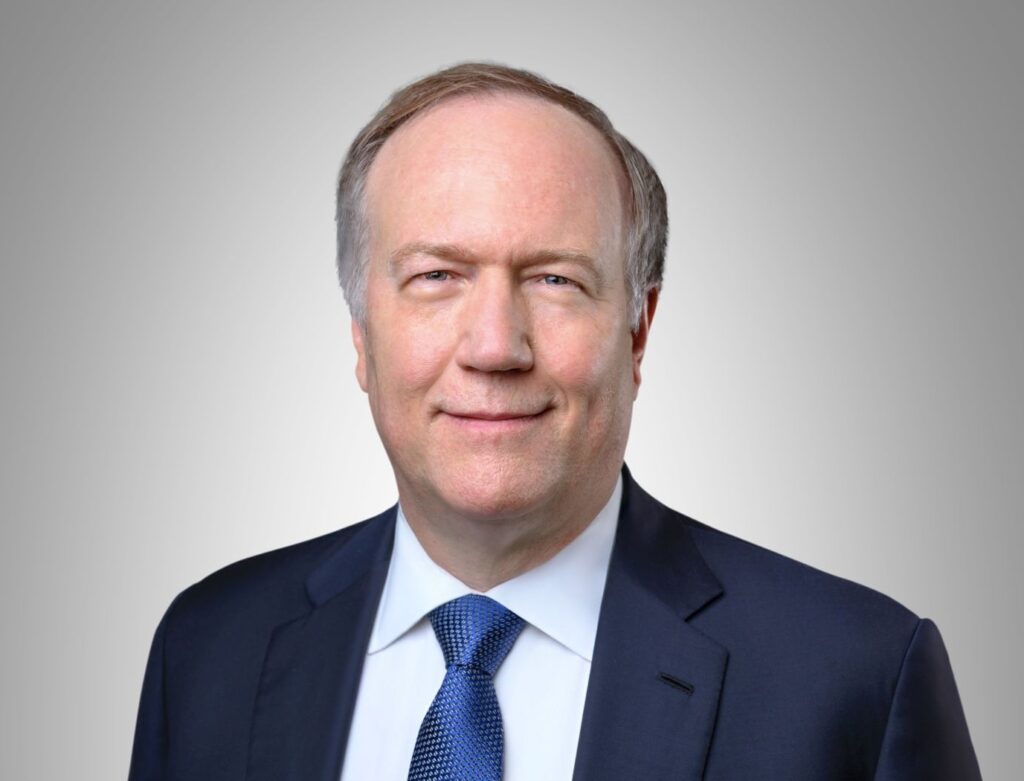
The new office will offer commercial litigation and corporate practices, with IP litigation serving as its initial focus, according to the firm.
“We are excited to be continuing our investment in this important market by opening an office in Austin – a key destination for IP, tech driven commercial litigation and corporate transactions,” said Weil Executive Partner Barry Wolf in the release. “We are committed to delivering top-tier expertise and client service to companies across the city’s fast-growing tech and life sciences sectors.”
After graduating from law school at the University of California, Berkeley in 2001, Homrig began his career at Weil. He returned to the firm last summer to serve as its Co-Head of IP, Technology & Science Litigation practice, specializing in high-stakes disputes involving technology and life sciences companies.
He spent more than a dozen years at Latham & Watkins, where he was the firm’s vice chair of IP litigation in Austin. Before that, he was a partner at Kasowitz in its Silicon Valley office, which he joined after a decade with Weil in Silicon Valley.
“Our new Austin office is a cornerstone of our broader Texas strategy,” said Homrig in the release. “We are making significant investments in growth across the region, and Austin’s technology ecosystem and deep talent pipeline make it a natural home for IP and commercial litigators — and, increasingly, corporate dealmakers. We aim to quickly become the go-to firm for these critical matters in this highly competitive market.”
The new office also positions Weil to capitalize on being at the center of the regulatory and technological shifts shaping the state.
“Demand is driven by complexity rather than cyclicality,” said Todd Jordan, the Austin Market President of Texas Capital. “Companies across Central Texas are choosing to outsource specialized expertise instead of building permanent overhead, which means advisory services are becoming a core operating input rather than a discretionary expense.”
Jordan also noted that Austin has moved “beyond being known solely as a talent hub to being a headquarters destination where key strategic decisions are made” and that professional services like law firms are going to follow decision makers.
Over the past few years, Austin has experienced an influx of national firms, from Kirkland & Ellis (2021), Latham & Watkins (2021), O’Melveny (2021), Quinn Emanuel (2021), Baker Hostetler (2025), Kane Russell (2025), Prince Lobel (2025) and others.
“The city continues to attract talent without the legacy cost structures of larger coastal markets with over half of Austin business leaders reporting little or no difficulty finding and retaining talent over the past year,” Jordan told The Texas Lawbook. “We are seeing big market expertise across technology, finance, legal and engineering combine with more mid market economics compared with places like San Francisco, New York or Boston.”
Joining Homrig to jumpstart Weil’s first phase of growth in Austin is corporate partner Nicholas Doloresco, along with a founding team of associates focused on IP litigation, according to the release.
The Austin announcement comes after Weil renewed its 10-year lease in Dallas, signing onto nearly 69,000 square feet in the Crescent, as well as the firm’s celebration of four decades in Houston in November.
The new office in Austin is located at 600 Congress Avenue in the 32-story skyscraper also known as One American Center.
“Wherever capital flows, professional services follow, and Texas, Central Texas in particular, continues to see sustained capital formation,” said Jordan. “Private equity, venture capital, and strategic M&A activity are fueling demand for transaction, tax, legal and diligence services, creating repeat, relationship-based revenue streams.”
The Austin financial executive also added that expansions such as Weil’s are likely to continue for the foreseeable future.
“From other Texas cities, Austin can still look like a high-growth outlier,” he said. “When you are here, you see and feel how integrated and connected the Austin business ecosystem has become. Banks, investors, advisors and operators are far more connected than others realize, which makes our market faster to move, more relationship-driven and more collaborative across sectors. For business leaders willing to engage locally, the connectivity and collaborative nature of our business ecosystem offers a real competitive advantage.”
According to the Texas Lawbook 50, Weil increased its revenue generated by its Texas lawyers by 13 percent to $103.9 million in 2024.
Homrig took time to answer a few questions from The Lawbook about Weil’s new office in the Q&A below:
The Texas Lawbook: How does the Austin office fit into the firm’s long-term Texas strategy? What will distinguish it from Dallas and Houston and what does integration look like?
Jeff Homrig: The Austin office is a core component of Weil’s broader Texas strategy. Texas is a destination market and the Firm is making significant long-term investments across the state. While there is meaningful overlap among Dallas, Houston and Austin on both the corporate and litigation sides, each market brings a distinct strength to the platform.
Historically, Houston has been more energy- and restructuring-focused, Dallas has grown from private equity and corporate to be a full service office, and Austin is more concentrated on technology and intellectual property. Austin adds a strong tech dimension to the Texas footprint, which is important not only for IP but also for corporate work given the concentration of technology companies, both established and emerging, operating there.
Integration across Texas is key. The Firm operates as a fully integrated Texas platform with lawyers collaborating fluidly across offices. My own practice, which is based in Austin, Dallas, and Houston, is a great example. Austin strengthens our platform by deepening the Firm’s connection to a fast-growing technology ecosystem while remaining closely aligned with Dallas and Houston.
The Lawbook: How will Nick Doloresco split his time between Austin and Silicon Valley?
Homrig: Nick is a core part of what we are building in Austin. He has lived in Austin for a long time and will continue to do so while splitting his practice between Austin and Silicon Valley.
One of the defining features of the Austin market is the strong connection to Silicon Valley. There is constant movement of people, companies and capital between the two regions and that dynamic is reflected in our practices. Nick’s ability to operate in both markets is a real advantage for clients.
In practice, Nick has been living full-time in Austin while regularly spending time in Silicon Valley. That balance has worked well for him and his clients and we expect that rhythm to continue.
The Lawbook: Austin has been a hot market for years. What changed recently that made this the right moment for the firm to establish an office there?
Homrig: Building a new office always starts with people. This initiative grew out of the Firm’s efforts to build a national IP platform. I have lived in Austin for some time and when we began expanding the platform I was clear that Austin was both where I wanted to be and where I believed the Firm should invest. The Firm sees the same opportunities here in Austin that I do.
Austin is a strategic market not just for Texas but for IP nationally, making it the right place for the firm to expand its presence. Ultimately, the Firm approached Austin as an opportunity to build around the right leadership, the right practice strengths and a market that continues to play an increasingly important role in where clients are doing business.
The Lawbook: How do you think about growth and hiring in Austin over time?
Homrig: Both Austin and Texas are increasingly attractive alternatives to traditional coastal markets, drawing both established lawyers and younger talent who are seeking opportunities in a dynamic growing region. Many lawyers and professionals who might have historically pursued careers in Silicon Valley or other major coastal cities are now choosing Austin for its thriving technology ecosystem, growing companies and quality-of-life advantages.
This combination of market opportunity and talent migration provides a strong foundation for sustainable growth, allowing the Firm to build organically and attract lawyers who align with its long-term vision for Texas.
My philosophy on growth is that it should be organic. Rather than setting numerical targets the focus is on identifying the right people at the right time. Austin is a particularly dynamic market both in terms of its business environment and the legal talent it attracts.
We are also open to lateral hiring and will be opportunistic when the right fit presents itself. Austin is an important part of both the Texas strategy and the national IP strategy and growth will follow high-quality client service.
The Lawbook: Given how competitive Austin is for lateral hiring, how are you approaching recruiting and team size in the first few years?
Homrig: We are intentionally starting small. The Austin office is launching with a core leadership team spanning Intellectual Property and Corporate, consisting of approximately two to three partners along with a small associate group. We do not have any predetermined headcount targets.
We expect active growth over time, particularly on the IP side where demand and opportunity are already significant. That said, our approach remains organic. Headcount growth will happen as and when the right opportunities arise.
The Lawbook: What kinds of disputes or technologies do you expect to define the Texas docket over the next few years?
Homrig: Patent litigation will continue to be a central feature of the Texas docket. The Western and Eastern Districts of Texas are already among the leading venues for patent cases and recent policy shifts are likely to drive additional filings in those courts.
Trade secret litigation is another area poised for growth. Austin already ranks among the more active federal jurisdictions for these cases and the same factors that have made Texas attractive for patent litigation apply equally to trade secret disputes.
More broadly, Texas remains one of the few jurisdictions where trial practice continues to thrive. As fewer cases go to trial nationally, Texas-based trial experience has become a distinct credential that clients increasingly seek out across IP, commercial and other complex litigation matters.
The Lawbook: Are there regulatory or policy issues in Texas where having lawyers on the ground in Austin materially benefits clients?
Homrig: Texas is a key jurisdiction for incorporation, corporate governance and complex business activity. As more and more companies choose to settle here, familiarity with the courts, legislature and legal culture is increasingly important. That local knowledge has long been recognized as essential in litigation, and is just as valuable for corporate and regulatory work. Texas has economic, political and legal significance that continues to grow, and our investment in Austin — and in Texas more broadly — reflects that reality. Being on the ground in Austin reinforces the Firm’s engagement with Texas in a deep and sustained way as the State continues to grow.