
Norton Rose Fulbright partner Julie Searle was inspired to become a lawyer by her parents, who came to the U.S. for their education.
“Education had always been something that was very much emphasized in my family,” Searle said.
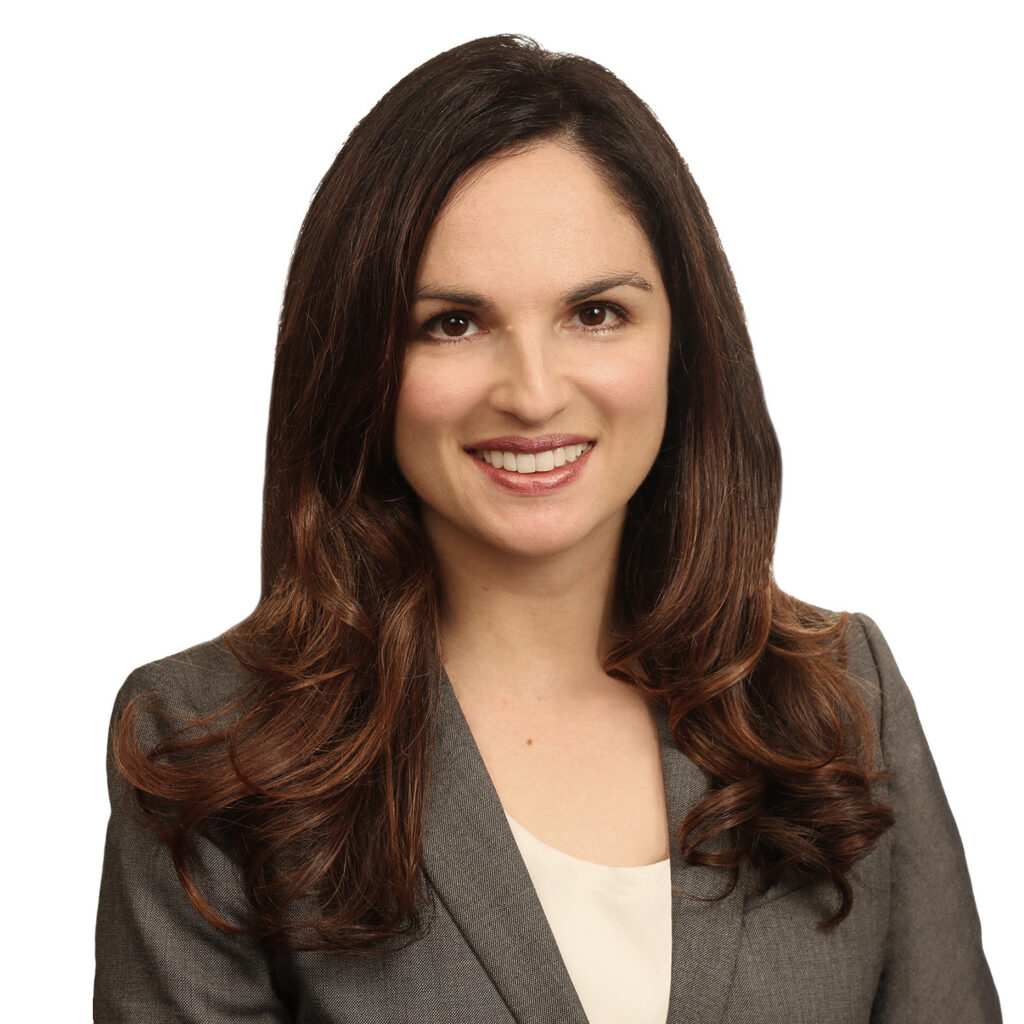
Her mother came to the U.S. from Venezuela for college, and her father came from India for graduate school. Searle recalls that while her father was going through the process of becoming a U.S. citizen, he would praise the court system.
“He would tell me how the U.S. court system was literally one of the best systems in the world. And he would tell me how in the United States, just the power of the contract — and the fact that you can enter a contract and that it would be enforceable — is something that maybe we take for granted here in America,” Searle said.
Searle earned her undergraduate degree in economics and government from Claremont McKenna College in California and her law degree from Duke University School of Law.
After law school, the El Paso native returned to the Lone Star State to clerk for U.S. District Judge Melinda Harmon in Houston.
Searle spent a decade as an assistant U.S. attorney in the Southern District of Texas. She left the Department of Justice in 2019 to take a job as a senior director of U.S. ethics and compliance for Walmart. For the last five years, the trial lawyer has been a partner in Norton Rose Fulbright’s Austin office, handling complex business litigation, compliance and internal investigations.
Searle recently sat down with The Texas Lawbook to discuss her experience working at the Department of Justice and more. The following conversation has been edited for length and clarity.
Texas Lawbook: What trends are you seeing in your practice area?
Julie Searle: I think certainly we are seeing a lot of various state U.S. attorneys use civil enforcement actions, or use more civil enforcement actions, to enforce various laws against corporations. I think you’re seeing this trend across the nation with state attorneys general nationwide.
Lawbook: You previously worked for the DOJ on both the civil and criminal sides. How have you taken that experience into what you do now?
Searle: I loved being an AUSA, both on the civil side and on the criminal side. On the civil side, I did a mixture of labor employment cases as well as civil enforcement actions, and both of those experiences I’ve definitely taken into private practice.
And then on the criminal side, I did a lot of fraud cases. I was also part of the special prosecutions division, which does public corruption as well as human trafficking cases. And I got to try a lot more cases as a criminal AUSA versus a civil AUSA. So I think the whole experience of being an AUSA was outstanding, because you really had to own your cases, and you had to own every decision that was made within the cases. But then you also had to present those cases for trial, where there were a lot of substantive hearings in all those cases. And so you really learn the oral advocacy piece of being a lawyer, or at least I did when I was in AUSA, which was great.
Lawbook: How did you end up doing both civil and criminal?
Searle: I started off as a civil AUSA. My initial job focused on providing labor and employment advice to a lot of different government agencies as they were, kind of managing their employees but also handling a lot of labor and employment cases. And after I’d done that for maybe a year or a year and a half, I got invited to the ACE division. That was the civil enforcement cases, where basically the government will prosecute, for lack of a better word, a company for violating various laws. But instead of being on the defense side, you’re on the prosecution side. It was somewhere around that time period the Southern District of Texas was very busy. In fact, it’s actually one of the busiest dockets in the nation. There were some criminal AUSAs who needed some help with some upcoming trials, and so I started off volunteering, helping out with trials, and then before long, they’re like, “Hey, why don’t you switch to the criminal side?” Because I was getting more and more involved in a lot of the trial work there, and so eventually I made the full transition to being a criminal AUSA. I was there for 10 years. The Southern District of Texas is just a really great place to learn, and there are a lot of opportunities.
Lawbook: What was your biggest takeaway from clerking for Judge Melinda Harmon?
Searle: I felt very spoiled getting to work for Judge Harmon, because she was not only an amazing judge to work for, but she was also a mentor. I had this great first job out of law school, where I got to be a clerk for a federal judge. And since I knew I was interested in litigation, I think having that experience was great, because I not only got to see how Judge Harmon approached deciding motions and cases, but as her law clerk, I got to sit in on a lot of trials and a lot of hearings. I got to see what worked and what types of arguments didn’t work. I thought it was very educational, and I got to learn a lot from a very great judge, who was very much a mentor as much as my boss.
Lawbook: What has been the most memorable moment or case in your career so far?
Searle: I got to work on the Google cases. We represented the state of Texas in a civil case, and we worked in conjunction with the attorney general’s office in a civil enforcement action where we sued Google for violations under the DTPA and CUBI.
That was a significant matter, but so was a lot of what I did at the U.S. attorney’s office, particularly being able to bring cases where we prosecuted human traffickers, sex traffickers and labor traffickers. Those cases had a lot of personal significance to me. It was a real privilege to be able to work on those cases and to help, obviously, reduce — or eradicate, in some cases — human trafficking rings that were going through Texas and going through Houston. And being able to help a lot of these young women out and get them out of some pretty bad situations was really meaningful for me.
Lawbook: What was your experience like working for a large corporation like Walmart?
Searle: It was fantastic. I really enjoyed my time at Walmart, and I got to work with a lot of incredible individuals at Walmart. And it was really neat being able to see from a company’s perspective how litigation affects them or the inner workings of a compliance program, because Walmart has a fantastic compliance program. And so I got to see, really and truly, one of the nation’s best U.S. compliance programs and how they set it up and how they supported it. I think that was a very educational and eye-opening experience for me, and I got to be part of it. And so it was definitely an experience that I value — and I got to meet a lot of great people at Walmart, too. So, I really enjoyed it.
If you or someone you know would like to be profiled in a future edition of Asked & Answered, please let us know at tlblitigation@texaslawbook.net. Check out our other Asked & Answered interviews below:
Beck Redden partner Russell Post shares how he went from resisting the idea of attending law school to contemplating a career as a law professor. For Post, who recently secured a win at the U.S. Supreme Court, becoming a law professor is no longer a goal of his, but teaching isn’t out of the question.
Quinn Emanuel Urquhart & Sullivan partner Chris Porter discussed what he loves about being a trial lawyer, his early dreams of being a restaurateur and how the door closing on his football career opened other opportunities.
Hilgers partner David Sillers talked about his First Amendment practice and shared the most memorable moments in his career so far. Sillers recently joined the firm and reunited with managing partner Grant Schmidt and partner Cynthia Schmidt, whom he met while clerking alongside them for former U.S. District Judge Barbara M.G. Lynn.
Mo Lovett Law’s founder discussed opening a new office in the Dallas-Fort Worth area and growing her law firm a year after opening. She also talked about mentorship and the state of the profession.
Trial lawyer Chrysta Castañeda reflected on her career and offers advice for young lawyers. While she has closed her firm, retiring for good is not in her plans.