
After over a decade of running her own law firm, Chrysta Castañeda is looking forward to what’s next in her career.
Castañeda stopped taking new cases a few years ago as she prepared to retire. She closed her law firm, The Castañeda Firm, at the end of 2025.
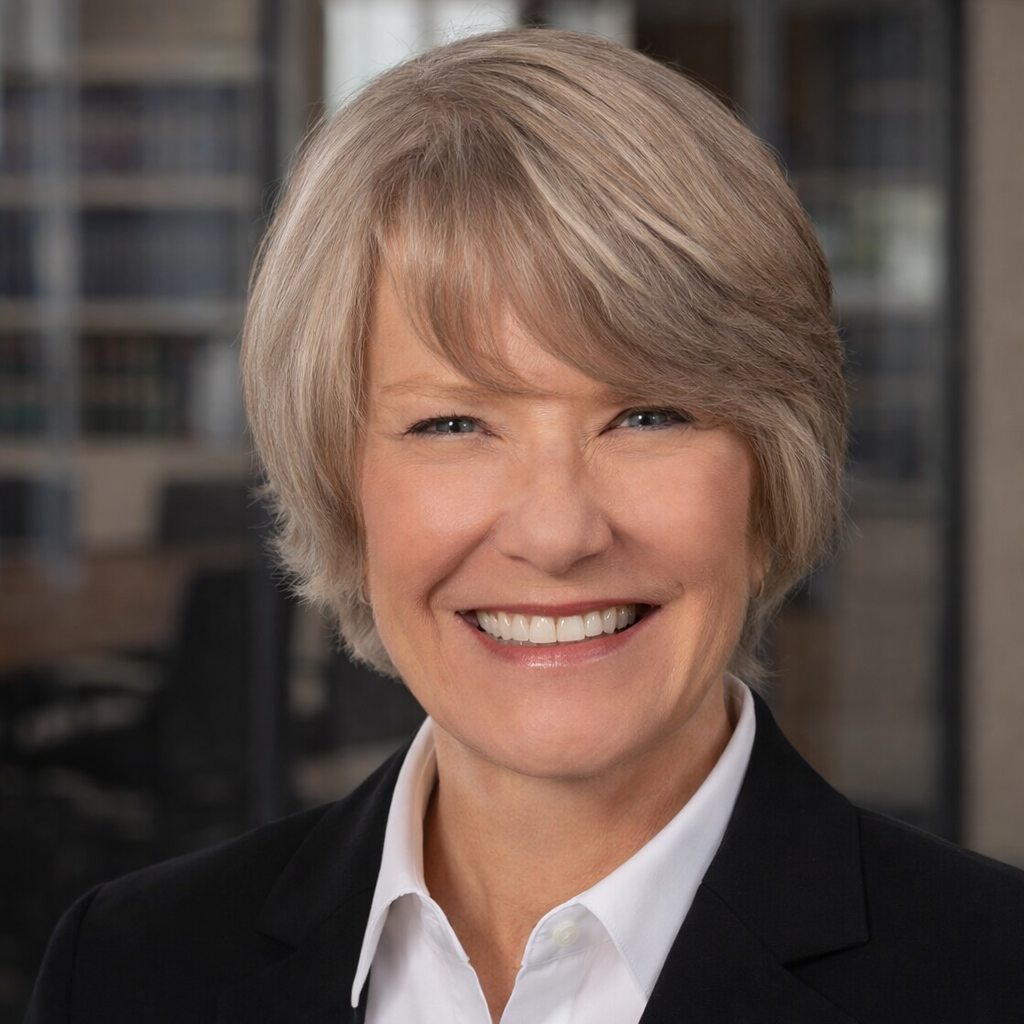
(AI enhanced photo courtesy of Chrysta Castañeda)
She recently spoke to The Texas Lawbook about winding down her firm, her career and the path she took to get there.
After high school the Kansas native attended Harvard University in 1981, but the cost of tuition forced her to return to her home state, where she earned her bachelor’s degree in industrial engineering from Kansas State University, which gave her a full scholarship.
Her first job was writing software for the oil and gas industry, where she discovered she enjoyed consulting but did not enjoy writing code.
So, on a “whim,” she applied to Southern Methodist University Dedman School of Law, earning a full scholarship there, too.
“I just had amazing experiences all the way along. It’s such a great career, if you’re inclined to do it. And for me, litigation was always the way to go, because it’s so creative,” she said, sipping her decaf latte. “I don’t think I would have been a very good deal lawyer, but litigation was always super fun to figure out how to tell the stories.”
She began her career in law as an associate at Jones Day. One of the highlights of her career was securing a $145 million verdict on behalf of T. Boone Pickens and Mesa Petroleum Partners in 2016. She wrote a book on the experience, The Last Trial of T. Boone Pickens.
However, relaxing and taking it easy in retirement is not on her to-do list.
She has wanted to return to Harvard University and finish what she set out to do for years. Castañeda has petitioned the Ivy League school twice to allow her to finish her degree. The university limits undergraduate enrollment to those without bachelor’s degrees.
Castañeda hasn’t given up.
She has applied to Harvard Kennedy School of Government to study data science and AI.
While she awaits her fate, she plans to travel.
“I have worked continuously since age 14. That was a long time ago, so I’m figuring I can maybe take six months and not work,” Castañeda said.
The following conversation with The Lawbook has been edited for length and clarity.
Texas Lawbook: What was your favorite thing about having your own firm?
Chrysta Castañeda: Running that for several decades, it was an amazing experience. I loved being able to set the direction of what I wanted to do professionally and what I wanted my team to do professionally, without the pressure of a certain number of billable hours or a certain amount of revenue or taking clients I really didn’t want to work for. The beauty of having your own bespoke law firm is you get to choose the client relationships that are right, the ones where you can actually contribute meaningfully to the outcome of a situation and not just keep bringing in the same kind of business over and over, just because you’ve got a quota on your back. That was my experience — I was in Big Law for 20-plus years — and it was really nice to have that independence and control, and it was super rewarding.
Texas Lawbook: Do you have a memorable case or moment in your career?
Castañeda: I have to say the trial for T. Boone Pickens that we had in West Texas over him being cut out of an oil deal was one for the ages. It was just super interesting. It was super fun. I wrote a book about it.
Texas Lawbook: Are there any other books in your future?
Castañeda: Maybe. I’ve started playing around with the idea of writing a sequel. The Last Trial of T. Boone Pickens was factual. It was things that actually happened in the trial.
Well, one of the things that actually happened was there was an expert witness named Ricardo Garza, who was kind of the main witness for our side. He was tragically killed on his weekend property outside Texas A&M. He was killed by a forestry mulcher, which is a piece of equipment that you attach to the front of a Bobcat and it will mow down standing trees that are up to eight inches in diameter. He had hired somebody to come on and do that, and ended up dead as a result of an accidental interaction with that machine. Come to find out six months earlier the manufacturer decided to remove an automatic brake that stops it when the operator gets out of the cab to clean the machine. We filed a lawsuit alleging that it resulted in Ricardo Garza’s death. I think that would make a very interesting follow-up story, because we had a trial over that lawsuit as well.
Texas Lawbook: What are your thoughts on the growing concern over “nuclear verdicts”?
Castañeda: Here’s what I think about jury verdicts in general. I think that juries are smart and sometimes in ways that judges can’t foresee, and I think juries try to get it right. If there’s a nuclear verdict, clearly they’re seeing something that needs attention right now.
In the hands of the right lawyer with the right court, you’re always going to have appellate points, right? My experience is that even when a jury says what a verdict is, the judge is still going to say that that’s the verdict, that’s the judgment. Then the court of appeals has got to pass a blessing on it. And in Texas in particular, because our supersedeas bond requirements are fairly low, I would say that companies in general should be able to survive a nuclear verdict. If it’s not well supported by law or evidence, then take it up on appeal. But if you’re publicly traded, always something to keep in mind is your stock price is going to take a hit.
I think I get more concerned about the decision makers on both sides who maybe don’t make the best economic decisions for their clients in light of the risks. I think there are sometimes lawyers who can possibly give the wrong impression about how something’s going to come out, either because they don’t really know or they’re not experienced in the legal field that they’re litigating. And that can lead to misinformed decision-making about whether to go forward or not. It’s a cast of personalities as well as the objective facts of the law.
Texas Lawbook: How do you see AI impacting the legal profession?
Castañeda: I think it’s an amazing tool. It’s a limited tool, still. I really didn’t get to employ it in my practice much. But obviously, it’s very useful if you’ve got a massive set of documents that you need to search through. And you can ask it questions, like, “What was John Doe’s involvement in issue X?” And it can return a lot of stuff for you much more quickly than young lawyers reviewing millions of documents. That’s been written about, and that’s obvious, but I also think it’s very interesting.
One of the things I thought about doing in the last jury trial I had, we did online e-verdict research. You can get a sample size of 100 or 250 actual individuals to whom you present your facts and your legal arguments and some of the key evidence, and they tell you what they think of the case, and they tell you here’s what I would have awarded, or why I wouldn’t award you anything. And the people who organize that represent — and I believe that they can come up to a statistically meaningful result — right to where you know what the value of your case is. Now, imagine you have AI that you can train on your issues. One of the things you get back from that is the jury profile of the people who are more likely to vote for your side and award you more money if you’re the plaintiff, or vote for your side and award zero damages if you’re the defense. You get the jury profile, you get a venire panel, and you figure out that there’s a mismatch. The categories you want don’t line up with the categories you’re most likely to get. It could immediately tell you, once you get your jury list and the questionnaires, digest that in 10 minutes. Throw it up against social media profiles and say you need a jury shuffle or you’ve got to pivot to a whole different voir dire than maybe you prepared in advance, depending on what your venire looks like. So that you can, in real time, better prepare for selecting your jury, which can be one of the most important parts of the case.
AI is going to make things that take hours to do — and couldn’t necessarily be done because of the time pressures of trial — that much faster. People have already talked about how you can get your daily transcripts, and it can digest those in a minute and tell you here’s the inconsistencies or three things to explore — whatever it is that you want. I think AI can help you be very creative and save time. AI cannot guarantee that it hasn’t hallucinated yet and that you still may need to check those things. I don’t think it’s going to just replace the lawyers willy nilly, unless it’s just a very routine task — there’s still too much judgment involved. I don’t know if it’ll ever get there. I do think it’ll be a very useful tool.
Texas Lawbook: You ran for Texas railroad commissioner and for a U.S. House seat. Will you run for public office again?
Castañeda: Right now, I’d say I’m in my post-political phase, but maybe it’s my political interregnum.
Running for railroad commissioner is probably the hardest thing I’ve ever done. Forget about writing books and trying cases and passing the bar and all that stuff. I learned that there is a very hard structural advantage in favor of Republicans in Texas that, frankly, we’re doing nothing to confront. I spent time and money studying after the election on what it would take to change that. It’s possible for it to be changed, but it takes a sustained investment and communicating with communities that never hear from Democrats.
We have such a hard-baked partisan divide based on what media ether-sphere you’re listening to or watch, that it’s really hard for Democrats to convince people who don’t typically vote for Democrats that it’s okay to vote for a Democrat. And we have to lose less in the places where we lose by a lot — that is part of the ticket to success. I don’t think it’s an either-or thing. I don’t think it’s just a matter of messaging. I don’t think it’s a matter of not turning out the voters we need to turn out. It’s also a question of softening up the hard resistance to Democrats elsewhere. And it matters. Our educational institutions are under attack, as we know, women’s reproductive rights have taken a huge step back — all these things. It matters. It matters that we get it right and that Texas becomes a bit more purple.
Texas Lawbook: What do you think is in store for the Texas legal community in the coming years?
Castañeda: It seems like we’re still a very attractive market for the national firms to come in. And so that, to me, says there must still be a ton of legal work.
Our population is growing, and companies are coming here. I think it’s still a very attractive career if you’re planning on staying in Texas. I am a little concerned about the Supreme Court’s decision to dissociate from ABA accreditation. Hopefully, none of our law schools are going to make that choice to not be ABA accredited, because if you want to work elsewhere than Texas, most state bar associations are still requiring ABA accreditation in order to get your license. So that concerns me a little bit.
I hope we get to a point where the business of law changes. I hope we get to a point where people can choose to value their time over more income, which is not the way the Big Law firms have historically worked. Power is money and money is power, and so the people who make decisions in those firms are typically the ones who command the most dollars, both in terms of their own salary but also obtain power by commanding the most client dollars — which leads to, I think, very linear thinking about what a law firm is and what a law firm can accomplish.
Part of the beauty of having my own law firm was I got to make that decision for myself — how much money do I need, and how much time do I need. I found doing it my way yielded an abundance of both over being in a Big Law firm. I think the Big Law firms that are going to survive, or the law firm structure that’s going to survive, is going to need to be a lot more flexible about how it offers those trade-offs and opportunities.
Texas Lawbook: What advice do you have for young lawyers?
Castañeda: Find the best mentors you can, whether they’re in your firm or outside your firm, and learn from them. And do not be afraid of hard criticism — it is an absolute gift to you. Because if nobody tells you you can do this better, you don’t know that you can do it better, and you don’t end up doing it better. And you suffer professionally. Your clients suffer professionally. So do not be afraid to be challenged by the people who are around you, which I think can be really difficult for young people, in particular. It seems like we’ve gotten away from the “hard go back and do this again.” It’s not good enough to do something softer that maybe feels better in the moment but is not good for your development as a lawyer. You really want to develop a lights-out career as a lawyer? You take the hard advice, and you internalize it. And the product that you spit out is, “I’m going to do this better than anybody else.” If you’ve got that gear, then you’re still going to have tons of opportunities.
Texas Lawbook: What do you hope your legacy will be?
Castañeda: That’s the thing I struggle with most, because I feel like I’ve spent four decades acquiring my unique view on this thing that I do — the intersection of technical litigation and oil and gas and trial law. And what I really wish I could do is gift that to other people. Knowledge transfer is not an easy thing to do in this profession.
Hopefully, I’ll find a way to either mentor other people or, I don’t know, find a way to continue to allow other people to benefit from what I’ve learned the hard way — that would be nice. But I would say, in general, most of us want to not keep our knowledge and our expertise to ourselves, and I think that’s, frankly, why it’s so hard for some people to gracefully retire from the profession, because they don’t know how to do that. If the law could provide that avenue more easily, I think that would be a huge, huge benefit to everybody involved.
If you or someone you know would like to be profiled in a future edition of Asked & Answered, please let us know at tlblitigation@texaslawbook.net. Check out our other Asked & Answered interviews below:
A&O Shearman partner Billy Marsh discussed trends he’s seeing in shareholder, securities and mass tort litigation. He also talked about what it was like as a first-year associate to defend the NFL against fraud claims brought by a group of fans.
Reid Collins & Tsai senior founding partner William Reid discussed his new book, Fighting Bullies: A Case for a Career in Plaintiffs’ Law. In late November, Reid led a team in South Carolina that secured a $112.3 million jury verdict for their client.
Haynes Boone counsel Catherine Robb talked about media defamation cases and what drew her to a First Amendment practice. Robb also discussed her family’s legacy and what she hopes hers will be.
Susman Godfrey partner Justin Nelson talked about settlements against Fox News and the AI company Anthropic, along with where he sees AI regulation headed. Nelson also discussed lessons learned in his career from clerking for U.S Supreme Court Justice Sandra Day O’Connor to running for Texas attorney general.
Kirkland & Ellis partner Kasdin Mitchell talked about getting to argue in the U.S. Supreme Court, where she once clerked for Justice Clarence Thomas, as well as her time before law school, working in the White House for First Lady Laura Bush. Her mother’s pursuit of a law degree inspired her own path.