
Haynes Boone counsel Catherine Robb grew up in a family committed to public service, which she says drew her to First Amendment law.
Robb’s father, Charles Robb, is a former senator and governor of Virginia, and her grandfather is former president Lyndon B. Johnson. While her family’s legacy is steeped in politics, she is not interested in being a politician herself.
It wasn’t until taking a business law class at the University of Virginia that Robb realized she had an interest in law.
“The first three years of my life, I lived in Charlottesville, and my dad was [taking classes] at UVA law school, and so maybe that sort of got into part of my nurture,” Robb said.
She decided to take the LSAT and didn’t tell anyone in her family.
“I wasn’t going to tell anyone until I had figured out if it was something I thought I was seriously interested in. I went and bought a big LSAT study book and studied — just studied on my own,” Robb said.
She eventually called a family friend who had been the dean of a law school to ask him questions about law school. She left a message for him, and he called her father, trying to reach her.
“I thought, oh, well, I was busted,” Robb said. “That didn’t work very well.”
Robb graduated from the University of Virginia in 1992 and earned her law degree from the University of Texas School of Law in 1998.
At Haynes Boone, she has represented Book People in its fight against Texas’ READER Act that would have required booksellers and publishers to rate the content of every book sold to schools. She was also recently part of the team that got the defamation lawsuit against actress Blake Lively dismissed.
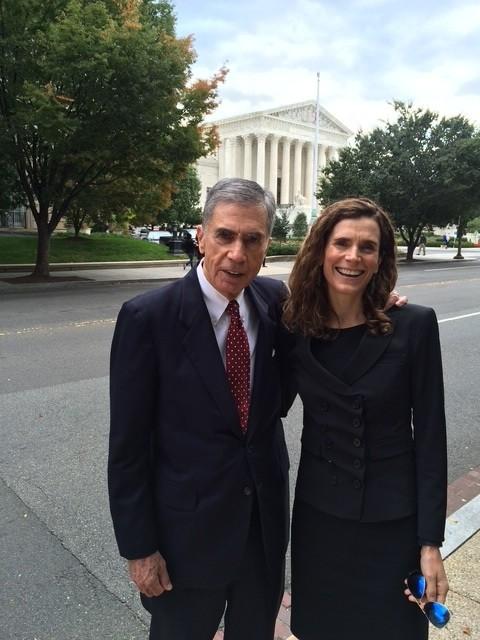
Robb recently sat down with The Texas Lawbook to discuss her career and more.
The following conversation has been edited for length and clarity.
Texas Lawbook: What trends have you seen in defamation cases and the parties who are bringing them?
Robb: It’s always sort of feast or famine. I think a lot of people experience that in litigation generally, but I think especially in the area of defamation. I think you see, sometimes you sort of see things in threes, or you see sort of the same things all kind of come up at once. I don’t know if those people are influenced by other cases or incidents, but it continues to be busy. That is the blessing and the curse, I guess, is that we are never lacking for something to do.
I think they go through phases and are probably getting busier as things heat up in our society, generally. I think the big thing is, there are so many more ways people can communicate and get their speech out, in a sense. For years the defamation cases were, at least the stuff we would do in terms of the media, were really print and broadcast. And now you see so many new avenues for content to be distributed and new ways for people to speak. Depending on the medium people are in, especially in the media industry, people are more or less thoughtful about what they communicate prior to doing so. But I think within a lot of our clients, you always want to make sure people remember those same standards, however they’re communicating.
Texas Lawbook: It seems like more and more defamation cases have a strong political side to them. Are you seeing this?
Robb: We really see things across the board — when people feel that someone has said something that they are unhappy about, they will sue. … I think you certainly see more heated rhetoric in the political arena, as people are speaking out more and more on all sides of an issue.
Texas Lawbook: Do the out-of-court settlements by CBS and other TV networks have any long-term impact on media litigation?
Robb: I think they do in that they make plaintiffs more interested in suing, because they sort of think there’s something more going on. I think in Texas, we have a really strong anti-SLAPP law, which is great. Part of the benefit of that is being able to get cases dismissed at an early stage where they’re really just being filed to either try to prevent speech or punish speech.
I think the more you have people think that that’s a viable option — that if I can sue whatever organization it is or whatever person it is to quiet them or perhaps to get some sort of settlement or perhaps to prevent them from doing that in the future — that just ramps all of that up. We’re lucky here that we have such a good anti-SLAPP law, and we can sort of, early on, distinguish those cases that have merit and those that don’t. But there’s a wild landscape of cases and decisions being made. … I think there are people who are always going to try to figure out “Where do I fit into this and how can I use this on either side to my advantage?”
Texas Lawbook: Why do we see TV networks settling but the newspaper fighting? Are there differences in their cases that favor newspapers?
Robb: Some of the more recent stuff is probably a lot to do with the fear of backlash from the [Federal Communications Commission], and that’s probably one of the one of the biggest factors. … I think a lot of the cases you’ve seen recently have been companies that have perhaps had a lot of going on, and certainly, a lot more than just the facts of that specific case. I think they’re in a unique position because of the FCC oversight.
Texas Lawbook: The Book People case was fascinating. How did you get involved, and what was the impact of the Fifth Circuit decision?
Robb: That’s one of those cases that got going very, very quickly, because the law was just about to come into effect. We had to file pretty quickly. We had that hearing pretty quickly. The ultimate effect right now is wonderful for our clients, which is that the law has been permanently enjoined.
We had a bunch of clients who were in a position where, very soon after the law was passed, if we hadn’t been able to get an injunction, they would have been required to speak against their will. They would have been required to review every book they had ever sold to a Texas school district before they could sell a new book, which is problematic for all the reasons we laid in our briefing. From a financial standpoint, it was going to be very, very difficult to do that. In particular with the two bookstores, they just didn’t have the financial resources to do that, and certainly not in that in that short timeframe. But also it was going to require them to rate books with unconstitutional definitions, they felt, and to speak both when they didn’t want to speak, in terms of having to make ratings that they didn’t agree with and then potentially have speech attributed to them if they were later told that they made the wrong decision.
The injunction was great news for all of our clients to be relieved of not only the constitutional burden, and the burden on their speech and their expression, but also the financial burden that they would have felt if they had had to comply with the law. So right now, we have the Fifth Circuit decision, which is great. We got the permanent injunction in the district court, and I think our clients are very happy that the law has been declared enjoined, and so they’re not under those constraints suddenly. So, we’ll see. But it was good news for speech and good news for our clients, and good news for the Constitution.
Texas Lawbook: Have you ever considered a career in politics?
Robb: I have not. I have considered not going into politics. I used to joke that I did all I really wanted to do campaigning for my father growing up, and I have a tremendous amount of respect for anyone who does, because I think it’s a very difficult job. It is frequently a thankless job.
Like in any profession, you’re going to have some people who are better than others, are doing it for more honorable reasons than others. But I think generally it’s a very tough place to be, and I think probably a lot tougher now. I have never thought of doing that myself, although I have had people suggest to me that I should, but I’m very happy not to do it. It’s funny because before I went to law school, I deferred law school for a year to help my father campaign. I’m very, very shy. I don’t like public speaking. It was completely contrary to my nature. Which also [makes] you wonder, with all that, why I was going to law school, because there are not necessarily great traits for being a lawyer, either.
But I cared. I cared very deeply about that home state where I grew up and cared very much about thought [my father] did a great job, wanted to ensure that Virginia was in good hands, and it mattered a lot to me to be a part of that. I deferred law school and went on my own little, we called it the “Chuck Wagon Tour” for my dad, who was around Virginia campaigning. I’m glad I did it for a number of reasons, but I think it was probably really helpful to me when I went to law school and then got out of law school, because I’m still terrified of public speaking, but it got me a little more comfortable with a lot of those skills, and I got to see a lot of a really beautiful state. But it also did make me think that is not the way I want to serve.
I’d always been used to growing up as a kid in a family of politicians; you always end up getting involved in some way, whether it’s going to some parades or riding in some parades or whatever else. But that was the most direct involvement I had, and I really enjoyed doing it — terrified me every day, but I really enjoyed doing it.
But it did also make me think there are other ways I can serve.
Texas Lawbook: Were you drawn to First Amendment law as part of your family’s legacy of public service?
Robb: I think so. I don’t know that it was a straight line. I don’t know that I necessarily realized it right away.
I grew up in a family of public servants who drilled into us the importance of public service, whatever that looks like; it doesn’t have to be running for office or in all of its different manifestations. I think when I first started to go to law school, I actually thought about going into some sort of public interest law, or maybe U.S. attorney’s office or something else.
And through a lot of really good luck, I found myself working for a small firm that did a lot of media and First Amendment work. I thought, wow, this is what I want to do. This is the niche I like. My grandmother [Lady Bird Johnson] was a journalism major at the University of Texas and started a little radio and TV station. And my father spoke out against the flag-burning amendment when he was in the Senate and sort of got up and essentially said, “Look, I fought in Vietnam, I understand. But the First Amendment is paramount.” That stuck with me. I was really proud of him for doing that and for recognizing the First Amendment principles and freedom of expression. But I think it was all these little things that probably led me, as I was thinking about my own life, of how to be a public servant in some way or how to serve the public, whether professionally or in my volunteer life, or extracurricular or whatever.
I think there were probably all these little sort of droppings of the First Amendment gems throughout there that I came around to and realized, yeah, this matters, this is really important. This is critical to who we are as a nation. I got there maybe a little more circuitously, but I had a lot of people along the way that I think were influencing that.
Texas Lawbook: Did you ever get to visit the White House when your grandfather, Lyndon B. Johnson, was in office?
Robb: I was actually not born until after he left office, so I knew him a little bit, but only when I was very, very little. My older sister actually lived there briefly, though, because my parents got married, and soon thereafter, my dad went to Vietnam and my mother got pregnant — but I don’t think she knew when he left — and so my mother was relatively young, pregnant, and she moved back in with her parents for a few months. So my older sister got to live there, very, very briefly, which is kind of a fun little fact for her. I did not, but we have been fortunate to be able to go back over the years.
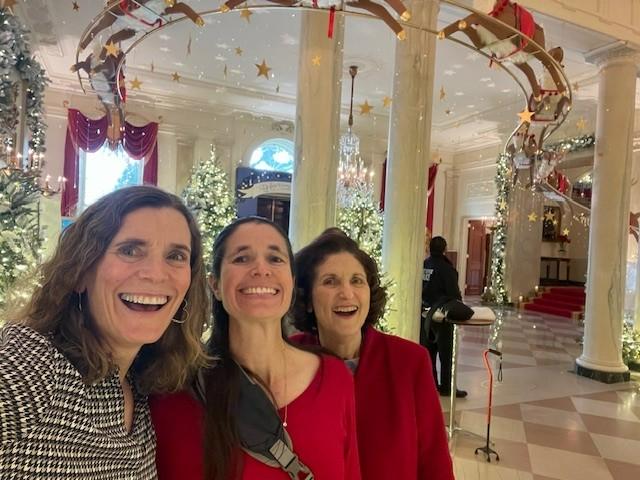
This shows you the good Texas roots and just the kindness of fellow Texans. Both President Bushes were very, very kind to us. Our family always had a very good relationship with them, and they were very generous when we came back and let us go around and see some of mom’s old stomping grounds. So that’s fun, and we sometimes will go back around Christmas. My parents’ anniversary is actually in December, and so we will sometimes go back around their anniversary to see the White House set up for Christmas and stuff, and we’ll go to the East Room and take pictures where my parents got married, all of that. I’ve been fortunate to get to see some of it. But not when my grandfather was alive, or not when he was in office.
Texas Lawbook: I read in a 2018 article that you were close with your grandmother, Lady Bird Johnson, and would meet every Tuesday, but then you filled your Tuesdays with volunteer work after she passed. Do you still help your church on Tuesdays or have you found something else to fill your time?
Robb: When I decided to stay in Texas after law school, part of the reason was because I thought, oh, my grandmother’s here. I was very close to her, and I thought, what a great opportunity to spend some time with her. And then, like a lot of young lawyers, I got really busy and wasn’t seeing her as much. And so she and I sat down and said, let’s have a standing dinner date every Tuesday night. If either of us gets a better offer, you can cancel. And of course, there wasn’t a better offer than my grandmother, as far as I’m concerned. And so we had dinner about every Tuesday night for the last eight and a half years of her life.
I felt like I wanted to do something else on Tuesdays to honor her and her legacy. I’ll have to say, some of her friends and other people, the first few Tuesdays after she passed, they would come and take me out because they knew that it would be hard on me, which was really nice. But then once I sort of got through things, I thought, is there some way I can continue that special nature of Tuesday doing something. And so I started volunteering at my church with our homeless ministry. I still do that. I’m not in the office Tuesday mornings. Usually most Tuesday mornings, I will walk to Trinity Center and go volunteer there, helping people get identity documents and whatever else I can do. It’s sort of my little lasting connection to my grandmother.
Texas Lawbook: How do you prep for an oral argument?
Robb: The first time you do anything like that, it’s a real learning process. And so, for me, part of that was just sitting down and applying myself. Watching other oral arguments, talking to other people who had a lot more experience than I had and then practicing. I have a very great group of both very good and very generous colleagues who were willing to sit down and be an audience or be someone I could bounce things off of, and practice and then practice some more and then practice some more, and then try to get over my nerves, and then go for runs.
And actually, that’s my key, is when I run. That’s my break for me to practice my oral argument. That’s when my brain gets to just go and break free and do whatever it wants or needs to do. I had an injury and hadn’t been able to run as much, and I finally just said, alright, I’ve got to go run because I need to go get this out. I try not to say anything out loud when I’m doing it. That’s the other thing for me is just being able to go and figure things out in a space where I can do that without other distractions.
Texas Lawbook: Have you ever been stumped by a question from the court?
Robb: Yes. I know there was one where I didn’t have a good answer. I can’t remember what it was, though. Ideally, you prepare enough that you aren’t. But I think it’s inevitable. At some point, you’re going to be, not actually stumped, but maybe caught off guard and without an answer that you had sort of thought through in advance. I think that’s when you really have to be on your toes to figure out how do I respond in a way that answers as best I can, but that actually answers, so I don’t get the response of “That’s not what I asked” or “I need you to answer the question.”
You have to try to do your best to answer. And sometimes the answer is, “I simply don’t have a good answer for you.” I’m probably not trying hard enough if I haven’t ever been stumped, but ideally, it doesn’t happen often. Ideally, you’ve thought through all of that in advance.
Texas Lawbook: Do you have any advice for young lawyers on how to roll with a curveball like that?
Robb: At the end of the day, obviously, you want to be a good advocate for your client, you don’t want to have any own goals, as they say. But I think you also have to have your integrity — you have to be honest. And so I think if there isn’t a good answer, that might be the answer. Because you’ve got to be thinking about longer term.
There’s nothing more frustrating than getting the feeling like someone isn’t really leveling with you. Obviously, there’s a lot of artistry in advocacy, but I think at the heart of all of that, and then the reason our system works, is if we’re all remembering our ethical obligations to be honest and to have candor toward the court — so obviously doing that while trying to put your best foot forward at the same time.
Texas Lawbook: You’ve been elected chair of the PBS board of directors. What have you learned so far?
Robb: What haven’t I learned? I’ve been on the board for a few years now, and I’ve been the vice chair of the board for a few years, so I’ve been pretty involved for a while now, but it is a whole new game.
I think becoming chair of the board – I’m extremely honored to do that. My friends keep saying, “You picked a really great time to do this, Catherine, you know that, right?” There’s a lot going on, you may have heard. But it’s also a great time to do it, because it’s something I believe in so strongly. To be able to be in the thick of things, to try to figure out how do we continue to provide PBS. The “S” is service, because it is a public service. As we think about how do we continue to provide that public service going forward, it’s an exciting time to really be learning about that.
What I learn every day is that there’s so much more for me to learn. I served on the Austin PBS board of directors for — I want to say since birth, but it’s not quite that bad — but I think maybe 17 years total and chaired that board for a few years. I had some experience, but I got to the national PBS board and learned just how little I knew, because there is so much going on, and the amount of work that happens there is sort of extraordinary. It’s been really interesting to learn.
It’s been really nice to see how supportive so many people around the country have been as we’ve gone through losing federal funding and some of the other challenges. To see people step up and say, “You helped my child read” or “You helped me read when I was young” or “This is the one thing I can do with my grandmother, whatever program it is, we can watch together” or “I learned how to count or speak English” or whatever it is, around the country. … That’s what we’ve heard from people around the country.
It’s just been really neat to see sort of how the system works all around the country. I had a pretty good view of it here in Austin, but it’s been really neat to see so many really committed public servants around the country that are doing that work in their communities every day. And to see the reach we have, and to see the people that have been affected by PBS over the years and to learn all the acronyms — and there are a lot — so it’s been a real learning experience. I sort of laughingly say, I’m doing my PBS homework, because I’m trying to make sure I understand there’s always something new that I hear about that I want to understand so I can be the best board member I can be, or the best board chair now that I can be. We get to go to annual meetings and see Daniel Tiger and things like that. That’s sort of fun. I will show you my Daniel Tiger finger puppet. I have him at my desk when I need a little joy in the middle of the day.
Texas Lawbook: You and Laura Prather have had a string of First Amendment wins. How are you feeling, and do you have any upcoming cases we should know about?
Robb: I think we’re feeling good. Laura and I’ve been practicing together for 19 years now. We sort of joke that we’re each other’s longest relationships. I consider myself incredibly lucky to have just started practicing with her, to have her believe in me 19 years ago and say, “Let’s go give this thing a run for its money.” I think every day is exciting.
I don’t know that there’s any one big thing coming up. Obviously, the Book People case has been one of the most exciting recently, just in terms of feeling the impact and one of the more high-profile ones, but we’ve got a lot of good things bubbling up. Looking forward to what 2026 brings us. There’s always a lot going on. It’s never boring and rarely slow. A lot of interesting things are going on. It’s great to get to practice with someone who you are good friends with, along with good work colleagues. It’s a nice combination, if you can get it.
Texas Lawbook: What is a memorable moment or case in your career so far?
Robb: I can remember my very first hearing, which is not memorable necessarily for any good reasons, because it was the end of a case, and I think I had been sent to clean up the mess. It was right after I’d started working. I think I told the judge I sort of felt like the sacrificial lamb, sent in to lose the final little pieces of what otherwise, I think, would have been a successful matter.
I would have to say, even though it didn’t turn out the way I would like, arguing in front of the Texas Supreme Court earlier this year was pretty exciting. I mean, obviously, I would have liked a different outcome, but it was certainly a case where I felt really good about what we were doing. I felt good about the position we took. Ultimately, the court decided that the Legislature needs to get back involved. But it was an open records case, and it was exciting to get to go argue that, feeling that we were really on the right side, even if, ultimately, the outcome wasn’t what we wanted.
But I think that one was pretty memorable — but again, just because of the support I got from my colleagues and from others. It was my first time arguing before that court. Getting to go do that was a pretty exhilarating experience.
Texas Lawbook: Your family has quite the legacy. What do you hope your legacy is?
Robb: I don’t know I think much about my legacy. I would hope that my friends and family knew how much they were loved. My grandmother used to always say that she was just trying to kind of pay for her rent on Earth. She had been blessed with such a great life, and she was just trying to pay a little bit of it back.
I would sort of say the same thing, which is just I hope that maybe I’ve left things a little bit better and somehow made a few lives a little more vibrant and people feeling a little more hopeful.
If you or someone you know would like to be profiled in a future edition of Asked & Answered, please let us know at tlblitigation@texaslawbook.net. Check out our other Asked & Answered interviews below:
Susman Godfrey partner Justin Nelson talks about settlements against Fox News and the AI company Anthropic, along with where he sees AI regulation headed. Nelson also discusses lessons learned in his career from clerking for U.S Supreme Court Justice Sandra Day O’Connor to running for Texas attorney general.
Kirkland & Ellis partner Kasdin Mitchell talked about getting to argue in the U.S. Supreme Court, where she once clerked for Justice Clarence Thomas, as well as her time before law school, working in the White House for First Lady Laura Bush. Her mother’s pursuit of a law degree inspired her own path.
Crawford, Wishnew & Lang partner Haleigh Jones discussed her career, memorable cases and mentorship. Jones coaches the moot court team at Southern Methodist University, which she says she hopes to do for her whole career. The 2024 team won the American Bar Association competition.
White & Case partner Sean Gorman talked about his roots in becoming a lawyer and building a team at the firm after leaving Bracewell. He also discussed serving on the Texas Ethics Commission.
Dykema member Melanie Fry told The Lawbook how her father’s choice to pursue and earn a law degree when she was a young child positively impacted the family and influenced her own career path. “Watching the power of an education — that’s what drew me into the law,” she said.