
For months in 2016 and 2017, protestors in Morton County, North Dakota, delayed Energy Transfer Partners’ plans to complete construction of the 1,172-mile Dakota Access Pipeline.
As the days ticked by, the financial hit Energy Transfer was absorbing grew. The midstream energy company eventually responded with a lawsuit against those they said were responsible for funding the sometimes-violent protests that caused the five-month delay: climate activist group Greenpeace, whose allegedly defamatory statements about ET had inflamed protestors.
The deputy general counsel and head of litigation for Energy Transfer, Sam Hardy, took the job March 2022, about two years after the state court lawsuit was filed. One of his first assignments was to hire outside trial counsel.
He knew what he was looking for, and after entertaining many auditions, he chose Gibson, Dunn & Crutcher.
“I worked with Trey [Cox] at Lynn Pinker and knew he was a great trial lawyer, and I had been co-counsel with Collin Cox on a case and I saw how good he was in action. Plus, they added Judge [Gregg] Costa to the team. The depth of a law firm’s bench is important to me, and Gibson is deep.
“We do a lot of litigation,” said Hardy, who oversees ETP’s docket of about 800 pending litigation matters. “We are not afraid to be plaintiffs. We litigate cases like we are going to trial. I want lawyers who are experienced at trials and have a history of winning trials and who also understand our culture.”
By the time lawyers for Energy Transfer got the defamation case before a jury in 2025, the company was seeking $350 million in damages against Greenpeace and its allies.
The jury of nine in Mandan, North Dakota, heard 12 days of testimony and deliberated for three days before reaching its decision: Greenpeace owed Energy Transfer $667 million in damages, they determined, a figure that included a whopping $400 million in punitive damages.
“It was incredibly validating to hear the jury’s verdict,” Hardy said. “Juries generally get it right. As the verdict came in, I started texting my executives. Then I was flooded with phone calls from my own team and everyone else as the news of the verdict spread.”
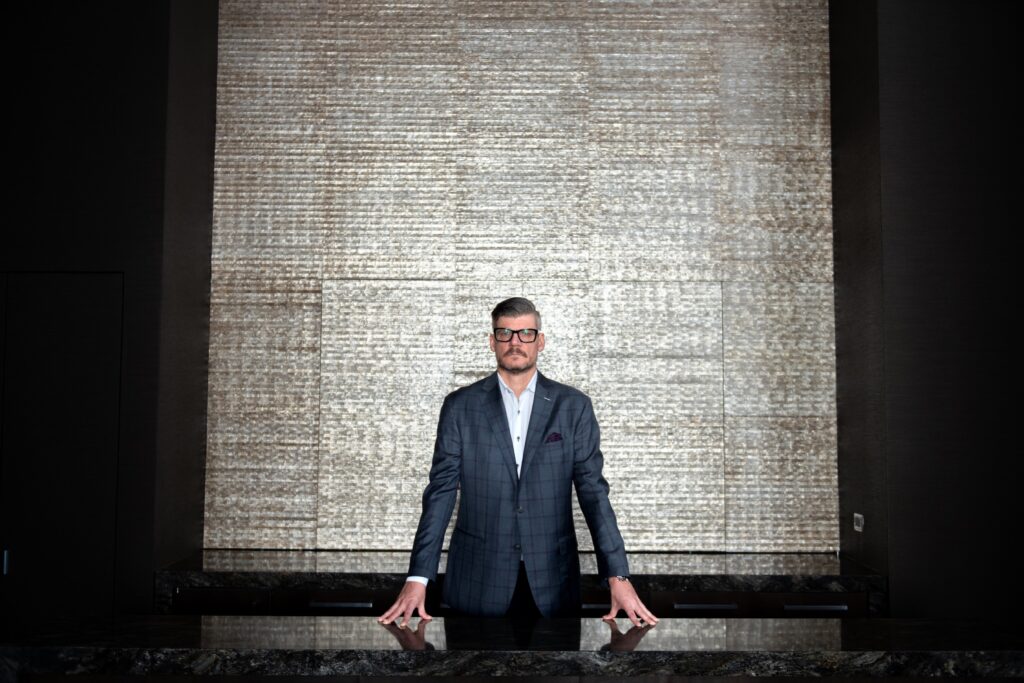
Trey Cox, who led the trial team, was quick to credit Hardy’s leadership in achieving the verdict.
“This was a multiyear, existential legal war against organizations interfering with critical infrastructure. Hardy’s direction resulted in an unequivocal triumph — a $667 million verdict, the largest commercial verdict in North Dakota history, against the defendants for their tortious conduct and defamation related to the pipeline,” he said. “This historic win vindicated the company’s position and protected the integrity of its assets.”
Hardy and Energy Transfer’s legal team had other noteworthy victories in 2025 aside from the Greenpeace case, too. As Cox noted, the team secured a complete defense win against Goldman Sachs in a fraud and breach of contract trial in New York early in the year, zeroing out claims for $150 million in damages in a suit stemming from a pipeline project in Pennsylvania.
Hardy and his team also reached a $15 million settlement in October to bring an end to a securities class action lawsuit in Pennsylvania where the plaintiffs were, at one point, seeking more than $2.1 billion in damages.
“Hardy’s strategy was built on an ethos of ‘ultimate readiness,’ preparing every case for trial, which enabled the team to achieve complete victory and successful mitigation rather than succumbing to costly, prolonged distractions,” Cox said. “These matters collectively demonstrate Hardy’s exceptional ability to manage and win across complex tort, financial and securities litigation, transforming the company’s legal posture from reactive defense to proactive dominance.”
Because of this work, the Association of Corporate Counsel’s Dallas-Fort Worth Chapter and The Texas Lawbook have named Hardy a finalist for the 2025 DFW Corporate Counsel Award for Business Litigation of the Year.
The finalists will be honored and the winners announced Jan. 29 at a ceremony at the George W. Bush Institute. The Business Litigation of the Year award is one of three honors that recognizes in-house lawyers alongside their outside counsel.
Premium Subscriber Q&A: Sam Hardy discusses the traits he seeks in outside counsel, what outside counsel need to know when working with him and more.
Andrew Price, cohead of commercial litigation in the U.S. for Norton Rose Fulbright, has worked with Hardy and offered some thoughts on what has made Hardy so successful in his legal career, as both outside counsel and in-house counsel.
“He is a creative and tenacious advocate, and he expects his outside counsel to bring the same qualities to the table,” he said. “Above all, he treats outside counsel as true partners, and he genuinely enjoys engaging on strategic issues.”
“Sam is thoughtful in offering his own perspective, drawing on years of experience, and he pushes back when appropriate. This collaborative approach ensures clear alignment on strategy from the outset.”
A ‘Rather Winding Path’
Hardy was born in North Augusta, South Carolina, which he described as a bedroom community just across the border from Augusta, Georgia. His father was a banker for Georgia Railroad Bank, which became First Union, and his mother was a schoolteacher.
In 1996, Hardy earned a bachelor’s degree in English from the University of South Carolina and went to work as a high school English teacher and coach for the next six years. In 2003, he earned a master’s of education in language and literacy from the Harvard Graduate School of Education.
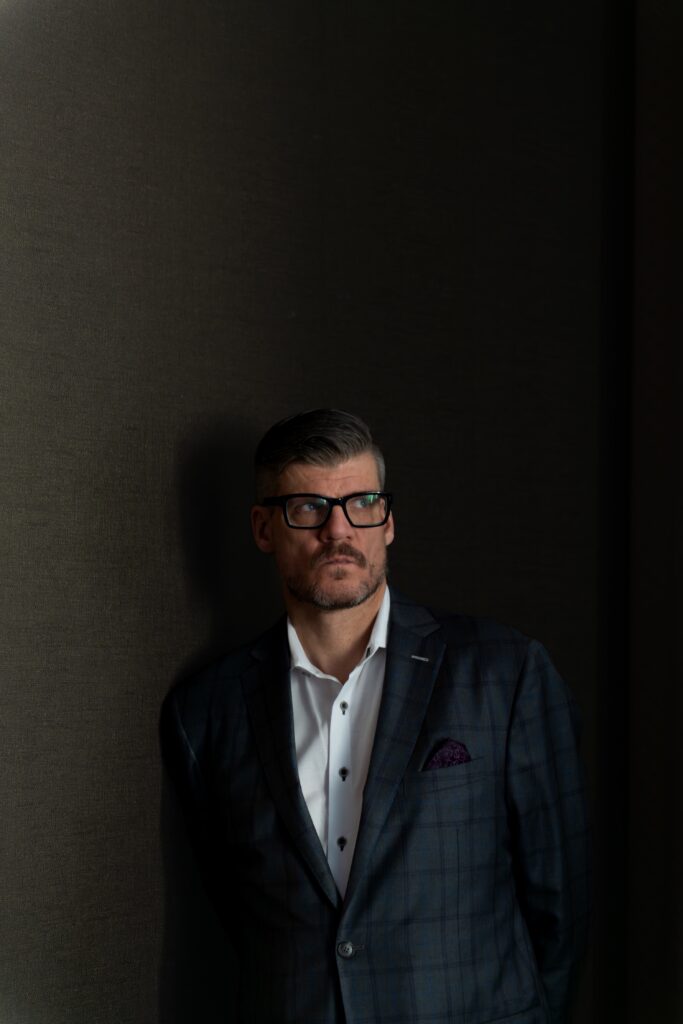
With no lawyers in his family and no lawyers as friends, at that point in his life he had never considered a career in the law. But from 2003 through 2005, when he was in a Ph.D. program doing research at the University of South Carolina in language processing, Hardy worked at the business school’s writing center. There he met and got to know a student who was a joint juris doctor and master’s of business administration candidate.
While he loved the “intellectual aspect” of the research he was conducting, Hardy admitted it is an “isolated profession” that stood in stark contrast to his work as a teacher, which gave him the “immediate gratification of seeing your work make an impact on real people doing real things.”
After working with the law student for a year, he started seriously considering law school.
“It is a happy medium balancing the intellectual challenge with a practical and meaningful impact,” he said of a career in the law.
Hardy would complete a master’s degree in linguistics from the University of South Carolina and then go to the University of Alabama School of Law, graduating in 2008.
“There isn’t really any defining moment in my life that I can point to as leading my career where it is, though I do firmly believe my rather winding path to where I am now has definitely made me a better lawyer and professional than I would otherwise be,” he said. “Standing in front of teenagers teaching Julius Caesar every year is a pretty good preparation for standing up in court.”
After law school, he served as a law clerk for a federal judge in the Northern District of Alabama and later for the U.S. Court of Appeals for the Fifth Circuit.
In 2010, he joined Lynn Pinker Hurst & Schwegmann. Mike Lynn, founding partner of the firm, noted that while Hardy had left teaching behind at that point, there were things he took with him from that job.
“Sam is loyal, and is first and foremost a teacher,” he said. “He looks at a jury as a new class to be won over and taught, not as a group of people to be persuaded. That characteristic saves him from his passion.”
Lynn described his former law partner as “passionate almost to a fault” and praised his “good instincts,” saying he “tries the moral question in a case, not just the legal issue.”
“Sam has tried tough cases and understands litigation in his soul,” Lynn said. “He knows what quality is in counsel, and he has great instincts in addition to being completely honest in his assessments.”
Price also has noticed some lingering skills from Hardy’s days as an English teacher.
“He is extremely well read, and you can expect some literary or historical quotations when you are talking to him,” he said.

For Cox, he sees imprints of Hardy’s days in the classroom and on the field in his approach to law, too.
“His philosophy, rooted in his coaching experience, is a reliance on fielding the ‘best team’ and trusting them to ‘go catch the pass and score the touchdown,’” he said. “This translates to a process of relentlessly scouting for top talent among the nation’s best law firms.”
Cox said Hardy’s English teacher background has given him understanding that lawsuits are battles of competing narratives, noting that Hardy was heavily involved in “shaping and refining the core legal narratives to ensure the company told the most compelling story to the jury or the court.”
Hardy was at Lynn Pinker for 11 years and six months. During that time, he had worked on a significant amount of litigation matters for Energy Transfer, including the company’s major win (which was later overturned on appeal) against Enterprise Products Partners in a partnership dispute.
“I really enjoy being a trial lawyer and was very happy at Lynn Pinker,” Hardy said. “I wasn’t looking to make any kind of change.”
But in September 2021, Energy Transfer’s then-deputy general counsel and head of litigation, Tonja De Sloover, left for a job at IBM.
“When Tonja left, it opened up an opportunity I had never contemplated before,” Hardy recalled. “Once I started thinking about it, I felt like it was a great new challenge to try.”
And in March 2022, he made the move.
“I walked into a department that was, top to bottom, excellent,” he said. “There were big shoes to fill. I hope that I continued to build on what [De Sloover] started. Our group has grown and changed some as the company has grown and changed, but she laid an outstanding foundation.”
Confronting the Adversary
One of Hardy’s first assignments was hiring trial counsel to pursue the Greenpeace case, but as Cox explained, Hardy stayed heavily involved in the case all the way through, describing him as the “strategic architect, master talent scout, and ultimate decision maker, directly responsible for the successful execution of the company’s litigation philosophy.”
Most importantly, in Cox’s estimation, was Hardy’s philosophy of “ultimate readiness.”
“This innovative strategy dictates that every case, even seemingly clear settlement cases, is prepared for trial. This posture transformed the company’s legal defense from reactive to proactive dominance, ensuring maximum leverage in all disputes,” he said.
Nearly nine years after the first protestors began demonstrating over the Dakota Access Pipeline project, the case was finally before a jury.
Energy Transfer accused Greenpeace of using paid protestors to disrupt its construction project, and of coordinating and financing efforts by the Standing Rock Sioux Tribe to halt the project, which the tribe claimed would illegally traverse lands it owned and occupied.
In its efforts to disrupt the project, Energy Transfer alleged Greenpeace distributed false and defamatory information about the project to inflame protestors and raise funds to further its goals. Among the false claims Energy Transfer alleged Greenpeace spread was that the energy company defiled Native American cultural boundaries.
In mass mailings and news releases, Greenpeace had accused Energy Transfer of a wide variety of illegal behaviors. At least one letter sent to Energy Transfer lenders charged the company — without evidence — of having desecrated Lakota Sioux burial grounds.
“That’s like digging up bodies,” Cox told The Lawbook in an interview the day the verdict was returned. “And that’s about as evil as you can get. No matter what culture you are or where you live or what era you live in, that’s the definition of defamation.”
Energy Transfer presented the jury with evidence that it had made 140 changes to the pipeline’s route to avoid any disruption of sacred sites.
“Greenpeace maliciously misrepresented events within this community in an unrelenting attempt to stop by any means the construction of a pipeline that had already obtained all the necessary legal approvals,” Cox said after the verdict. “These are the facts, not the fake news of the Greenpeace propaganda machine.”
“Peaceful protest is an inherent American right; however, violent and destructive protest is unlawful and unacceptable,” Cox continued. “This verdict clearly conveys that when this right to peacefully protest is abused in a lawless and exploitative manner, such actions will be held accountable.”
Hardy was watching the courtroom proceedings on closed circuit television from his Dallas office when the jury returned with the verdict March 19.
“It was in the middle of the afternoon, and I remember the clerk, not the judge, read the verdict. There was this incredible pregnant pause by the clerk, and then he started announcing the verdicts and the numbers for damages just kept coming. It was incredible. I was trying to write down each of the numbers, but there were so many — and the numbers for the damage award just went on and on. It was a complete, sweeping victory.”
Reflecting on the win, he said watching the verdict come down has been his best day working at Energy Transfer and called it “a verdict of a lifetime.”
He also credited the work of Ali Henderson, Energy Transfer’s assistant general counsel, who worked hundreds of hours on the Greenpeace litigation.
“Ali attended the depositions and all the hearings and handled all the pleadings and discovery. She was actively involved in all the decision-making,” he said.
Greenpeace, which at trial argued it was being sued over protected speech, said after the verdict that the damages award could force it to stop operations in the U.S. It has since filed a lawsuit in Dutch court against Energy Transfer that it has touted as “the first test of the European Union’s anti-SLAPP Directive.”
Energy Transfer has asked the North Dakota Supreme Court to block that lawsuit.
While the verdict was rendered 11 months ago, no final judgment has been entered in the case.
Cox explained that the verdict is unique not only because it’s the largest in North Dakota history, but because it established precedent that will protect infrastructure owners like Energy Transfer from interference. The biggest challenge in reaching the outcome was convincing jurors that Greenpeace’s “advocacy crossed the line into actionable tortious conduct and defamation that directly caused massive financial harm,” he said.
“Securing a $667 million verdict required crafting a powerful, clear narrative to cut through the noise of public protest and convince a jury of the profound, documented consequences of the defendants’ actions on a major piece of national energy infrastructure,” he said.
Energy Transfer’s legal department had a banner year in 2025, and Hardy noted that both the Greenpeace and Goldman Sachs cases were examples of the company pursuing “its rights on principle in high-stakes litigation.”
But more challenges lie ahead.
“Our biggest challenge remains managing the ever-growing cost and expense of ever-growing litigation, in balance with our need to defend ourselves and our rights in court, whether contractual or otherwise,” Hardy said. “This is a reality facing all companies of our size, and especially in our industry.”
Mark Curriden and Allen Pusey contributed to this report.
Fun Facts: Sam Hardy
- Favorite book: Lord of the Rings. I read it for the first time in the 4th Grade and have read it every year since then. It totally captured my imagination then and now.
- Favorite music group: Rolling Stones. I am a sucker for blues-based rock.
- Favorite movie: The Empire Strikes Back. Look, I am a child of the 80’s. I vividly remember the scene between Vader and Luke at the end and how it blew my kid mind for weeks.
- Favorite restaurant and food there: Hard to choose. I would say Town Hearth, and the steak. I love that place (great wine library as well).
- Favorite beverage: Old fashioned, with rye.
- Favorite vacation ever: Hunting Cape Buffalo in Zimbabwe with my brother when I turned 50.
- Hero in life: Such a hard question. The truth is I have been a fortunate as a pharaoh with people in my life. I have always been surrounded by better people than I deserve. I would say my father has been a hero to me in that he is a man who exemplifies what being a stand-up guy is. Loves his wife, loves his children, quick with a laugh and quick to stand up for those he loves. Incredibly responsible, hard-working. Has a hard shell sometimes, but also a tender heart once you get past that.