
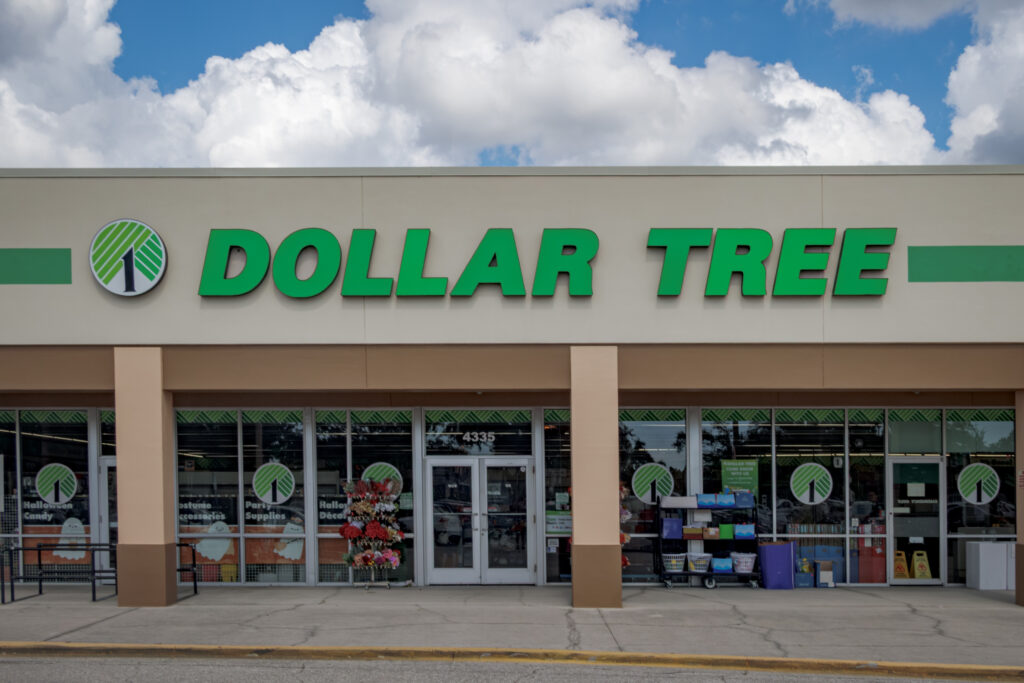
Two years ago, on a chilly December morning in Houston, a woman went with a friend to the Dollar Tree in the River Oaks Shopping Center.
A small business owner, she was looking for props to use in a Christmas-themed photo shoot for a work event. As she perused the aisles, she felt the presence of someone behind her. When she turned to face him, she said, he made a series of vulgar, sexual comments “about all the things that he wants to do to me.”
“I was shocked. My reaction was just, step back, and I said, ‘You’re so fucking disgusting. Get away from me,’” the woman, identified as M.R., testified in a deposition. She found her friend, told her they needed to leave and proceeded to the checkout. But that didn’t end the interaction. As M.R. described it, the man stood at the front door, locking eyes with her, licking his lips. Before she finished checking out, the man left the store on a bicycle.
As she walked to the car with her friend, she felt something wet and cold on her lower back and asked her friend to take a look.
“All I can remember her saying is, ‘Oh no, oh no,’” M.R. testified. “And then I — it clicked, and I was like ‘Please tell me that’s not what I think it is.’” Her friend confirmed her fears and used her just-purchased hand towels to wipe off the apparent ejaculate that had seeped through the fabric of M.R.’s leggings.
M.R. went home to shower and reached out to a family member in law enforcement, who instructed her to return to the store and report what happened to her. After M.R. relayed her story to a clerk at the Dollar Tree, she shouted to her manager in the back office, “We got another one,” and told M.R. she was the third woman who reported such an incident in four days.
In the May 2024 lawsuit M.R. filed in Harris County district court — against Dollar Tree, Fidelis Realty Partners and ADM Security Solutions — Judge TaKasha L. Francis recently orally granted a motion to compel discovery that could paint the clearest picture yet of whether, or to what extent, the corporate office was aware of what M.R. alleges is a trend of sexual assaults occurring at chronically understaffed Dollar Tree stores nationwide. The understaffing of stores is the root cause of the assaults, the lawsuit alleges.
“Despite complaints by Dollar tree employees about unsafe working conditions, the company has failed to adequately respond, demonstrating what one OSHA administrator called ‘a continued disregard for human safety’ that ‘suggests the company thinks profits mater more than people,’” the lawsuit reads.
M.R. is represented by Houston personal injury attorney Anna Greenberg of Blizzard Greenberg.
“I would say it’s a uniquely vile sex crime, and my clients are uniquely injured here because it’s happening to them in a public space,” Greenberg told The Lawbook in a recent interview. “They are customers at a store, minding their own business and often are approached from behind and don’t know what’s happening to them until it’s too late.”
Greenberg represents a total of four women who allege they were ejaculated on while shopping at Dollar Tree stores — one in Miami, one in San Diego, a client in Colorado Springs who was shopping with her mother and 2-year-old child, and M.R. in Houston.
“That kind of crime violates your personal space and changes you forever,” she said. “It really changes your sense of security.”
In a motion to compel discovery filed in September, Greenberg pointed to media and police reports to show the court there have been 10 reports of sex-related crimes, including six incidents where women have reported being ejaculated on at Dollar Tree stores, in the past year and a half.
Dollar Tree’s lead attorney, Wesley T. Welmaker of Segal McCambridge Singer & Mahoney, did not respond to a request for comment. But in arguing against granting the requested discovery, he has told the court the request is unduly burdensome.
“Plaintiff is literally asking that Dollar Tree investigate every Dollar Tree location in the state of Texas, and every Dollar Tree store in the United States of America for ‘complaints’ and ‘allegations’ of sexual assault and/or indecent exposure and/or ejaculation for two and five years preceding the assault,” Dollar Tree argued in an October response in opposition.
“Given that Dollar Tree has 9,522 stores nationwide, approximately 832 of which are in Texas, the time, cost and burden of complying with these gargantuan discovery requests far outweighs the probative information such requests could possible produce — which in this case is none, because plaintiffs’ requests fall outside the relevant scope of discovery identified by the Texas Supreme Court for cases involving the criminal acts of third parties.”
Greenberg said the hope is that the requested discovery will show how many times what happened to M.R. has happened before, what responsive actions Dollar Tree has taken, and their “historical knowledge” of the alleged pattern.
“And if there’s no analysis that’s been done by Dollar Tree, that’s also a real problem in my mind,” she said.
Dollar Tree has also moved to bring an early end to the lawsuit via a motion for traditional summary judgment. On Oct. 29, Judge Francis denied that request.
A week later, Dollar Tree filed a motion asking the court to reconsider, arguing the plaintiff “did not suffer a physical injury during the ejaculatory ‘assault’ which forms the basis of this lawsuit.” Dollar Tree told the court that to recover mental anguish damages, M.R. must have proof of a physical injury; otherwise, summary judgment is “proper and required.”
“Plaintiff’s only damages in this case are her alleged mental anguish damages,” the motion argues. “Plaintiff’s only claims against defendants are negligence claims. The general rule in Texas is that without a physical injury, mental anguish damages are not recoverable.”
The motion quotes from M.R.’s deposition testimony, where she said she didn’t realize she had been ejaculated on until she was in the parking lot, walking to her car.
“Plaintiff’s negligence claims in this case require evidence of a physical injury which plaintiff admitted she does not have,” the motion reads.
M.R. filed a response to the motion to reconsider the summary judgment ruling Nov. 6, telling the court what she alleges happened to her is “a crime and civil assault.”
“Defendants’ argument that plaintiff cannot recover against them under a theory of negligence, simply because she does not have a physical injury resulting from the assault, would prohibit scores of sexual assault and abuse victims from recovering their mental anguish damages from the companies or institutions that facilitated their assault unless they could prove a physical injury like genital injuries, bruises, abrasions, etc,” the response reads.
In a Nov. 17 reply, Dollar Tree wrote that while the defendants agree M.R.’s claims against the John Doe assailant fall within an exception to the requirement of proof of physical injury, her claims against Dollar Tree and others do not.
“For the remaining defendants, whom plaintiff is asserting negligence claims against, the rule that mental anguish damages are not recoverable in the absence of a physical injury governs,” the reply reads. “No exceptions to the rule exist.”
The case is currently set for a February jury trial.
The case number is 2024-31829.