
The famous saying that characterized the American vice presidency as “not worth a warm bucket of spit” was first uttered about 85 years ago.
However, the man behind that famous aphorism is largely forgotten. Lost in the tranquility of history’s footnotes stands a West Texas frontier lawyer and judge whose impact extended far beyond the courtroom. He left a significant mark on the judicial, legislative and executive branches of America’s constitutional republic. That country lawyer from the southwest who became America’s 32nd vice president was John Nance Garner.
At a pivotal moment in history, he stood in the titanic shadow of President Franklin D. Roosevelt. There would be no New Deal without Jack Garner. But after two terms toiling as FDR’s loyal lieutenant, Garner was dumped from the ticket and replaced with a whimsical agricultural secretary from Iowa. Perhaps that’s why the Texan described the office with such disdain.
John Nance Garner was one of the most renowned public figures in the Lone Star State during the first half of the 20th Century. His journey, from prairie lawyer to Congress to vice president of the United States, is one worth remembering.
A historical review of Garner’s 50-year legal and political career is important.
Attorneys make excellent public servants. They are often fierce guardians of constitutional norms. Trained lawyers bring critical traits to public office that serve the public well.
John Nance Garner was no exception. His legal career ultimately led him to the second-highest elected office in the nation. His skills as a litigator served him well in Congress and then as FDR’s VP during the Great Depression.
John N. Garner was born Nov. 22, 1869, in Red River County. He grew up in a log house and walked three miles to school. He was introduced to books by his Aunt Kitty. At 18, he entered Vanderbilt University as a freshman but quit after one semester due to finances.
Returning to the Lone Star State, he headed to the Red River to study law under the tutelage of W.L. Sims, a former Confederate officer who saw Texas admitted to the union in 1845, leave the union in 1861 and then be readmitted to the United States following the Civil War. The old-fashioned law firm of Sim & Wright served as Garner’s alma mater. It was there that Garner learned the sources of all law woven into the Texas code, such as the jus civile or the Nueva Recopilacion.
After admission to the Texas bar in 1890 (just before his 21st birthday), Garner took his father’s advice to “tell the truth and be a gentleman.” He practiced for two years in Clarksville, then, at his doctor’s recommendation, moved south to a drier climate. With a trunk containing his law library, he boarded a day coach and headed to the Rio Grande Valley.
He joined a firm in Uvalde headed by Judge John H. Clark, the most prestigious attorney in Uvalde County. Clark needed a young attorney willing to travel horseback to the nine surrounding county courts along the Rio Grande. Clark took Garner under his wing, eventually making him partner.
The sign over the office door on the second floor above the saloon that read “Clark, Fuller, & Garner,” made John proud. But it came with dangerous travel and little perks. His cases were mostly corporate/transactional, dealing with land and title disputes, with an occasional trial over horse or cattle theft.
Known as the horseback judicial circuit, it was tough duty, with little or no public accommodations. Garner often camped out at night, traveled hundreds of miles through cattle-and-cactus country and kept a single-action Colt .45 next to his law book. He made deals with the tip of a hat, often without leaving the saddle. At times, he was paid with cattle instead of cash for his services. He supplemented his income using his other skills, such as poker or playing baseball.
With his Texas allure, quiet demeanor, and unpretentious personality — not always helpful traits for a lawyer — he built a name for himself on the West Texas frontier, eventually becoming a legend in the land of Stephen F. Austin and Sam Houston. He developed a reputation as a solid attorney who could effectively persuade a jury or negotiate fair out-of-court settlements.
Thousands of settlers came to the former Republic of Texas, many of them with a shady past. At times, Garner would advise his clients to leave town before sundown. He once brushed elbows with Pat Garrett, the legendary lawman famed for killing Billy the Kid.
In 1893, when a seat became vacant for Uvalde County judge, Garner entered the race. His opponent in the Democratic primary was a rancher’s daughter named Mariette Elizabeth Rheiner. Jack won the race and then married Mariette. Maintaining the reputation of a fine lawyer, Garner gave new meaning to the practice of keeping your friends close and your enemies closer.
He served in the Texas legislature, where he earned a reputation as a fair and skillful mediator. During his tenure in Austin, he proposed a bill to divide Texas into five states, which would mean 10 U.S. Senate seats for the territory instead of two. The bill died when lawmakers could not agree on which state would get the Alamo. During a debate over the official state flower, Garner advocated the cactus blossom. From that day on, his nickname was “Cactus Jack.”
Following the census of 1900, West Texas was allotted an additional congressional seat. Garner drew out a new district, easily won the election and went to Washington, D.C., representing Texas in the state’s 15th congressional district in the House of Representatives.
For the next three decades, Garner climbed the Capitol Hill hierarchy. During his freshman year, he made no speeches on the House floor but did introduce a bill to add more federal courts to his congressional district, reducing the distance (sometimes 400 miles) citizens had to travel to get to a hearing or trial. It didn’t hurt that he played late-night poker matches with “Uncle” Joe Cannon at the speaker’s home on K Street.
John Nance Garner was admired and respected by both Republicans and Democrats.
During a White House visit in the early 1900s, Congressman Garner regaled President Teddy Roosevelt with his hunting adventures along the Rio Grande. The next day, the president approved Garner’s pick for postmaster of Uvalde. When Woodrow Wilson moved into 1600 Pennsylvania, Garner earned the trust of the 28th president, not an easy accomplishment since Wilson often considered members of Congress to be his pupils in stern need of a lecture.
Known in Washington, D.C., as “Texas Coolidge,” Garner may have been more of a Henry Clay-type figure. “If you get up early enough you can see him, but you can’t get up early enough to persuade him,” lamented one of his colleagues in Congress.
Garner was the first to introduce the concept of a graduated income tax. His bill initially was dead on arrival, but became the law of the land a decade later when the 16th Amendment was ratified in 1913.
While in Congress, he sometimes shared a car with Republican Nick Longworth. He spoke with his son before casting his “yea” vote to go to war in 1917. He was offered an honorary degree (Doctor of Law) from Vanderbilt but politely declined.
When the stock market crashed in 1929, he worked with President Herbert Hoover to keep banks solvent. Legendary New York Times reporter Arthur Krock remembers the day, during a fierce debate, when Garner surrendered his gavel and walked down to the floor to speak with members about voting on a bill to rescue banks. When Garner walked back to the Speaker’s chair, the chamber erupted in applause.
Just before Christmas in 1931, Garner became the 72nd speaker of the House of Representatives. It was the political prize he always wanted. However, in 15 short months, he would give up the speakership to serve under a larger-than-life leader during a crucial moment in history.
In 1932, he ran for POTUS with the backing of William Randolph Hearst but was no match for Franklin D. Roosevelt. At the Democratic National Convention in Chicago, Garner cut a deal with the New York governor to release his delegates. Garner was chosen as FDR’s running mate by acclamation.
He traded the speakership for the dead-end job of second-in-command. The office of vice president had been a miserable existence for most of his predecessors, many of them lawyers. He would later tell a friend that leaving Congress and becoming VP was the “worst damn fool mistake I ever made.”
On February 15, 1933, John Nance Garner almost became commander-in-chief when an assassin in Miami attempted to kill President-Elect Roosevelt. Had FDR been assassinated, the vice president-elect would have been sworn in March 4. (Before 1937, presidential and vice-presidential inaugurations were held in March, not January.)
As vice president, Garner was more than a stand-by figure. A close advisor to FDR, he was instrumental in steering the New Deal through Congress during the first 100 days.
Dressed in a swallow-tailed coat and striped trousers, he made sure the votes were there to enshrine into law FDR’s vision for a new democracy. From his office on Capitol Hill, Garner used bourbon sessions in the House to persuade reluctant members skittish about the tidal wave of federal programs. Those members who voted no were put in the “doghouse.”
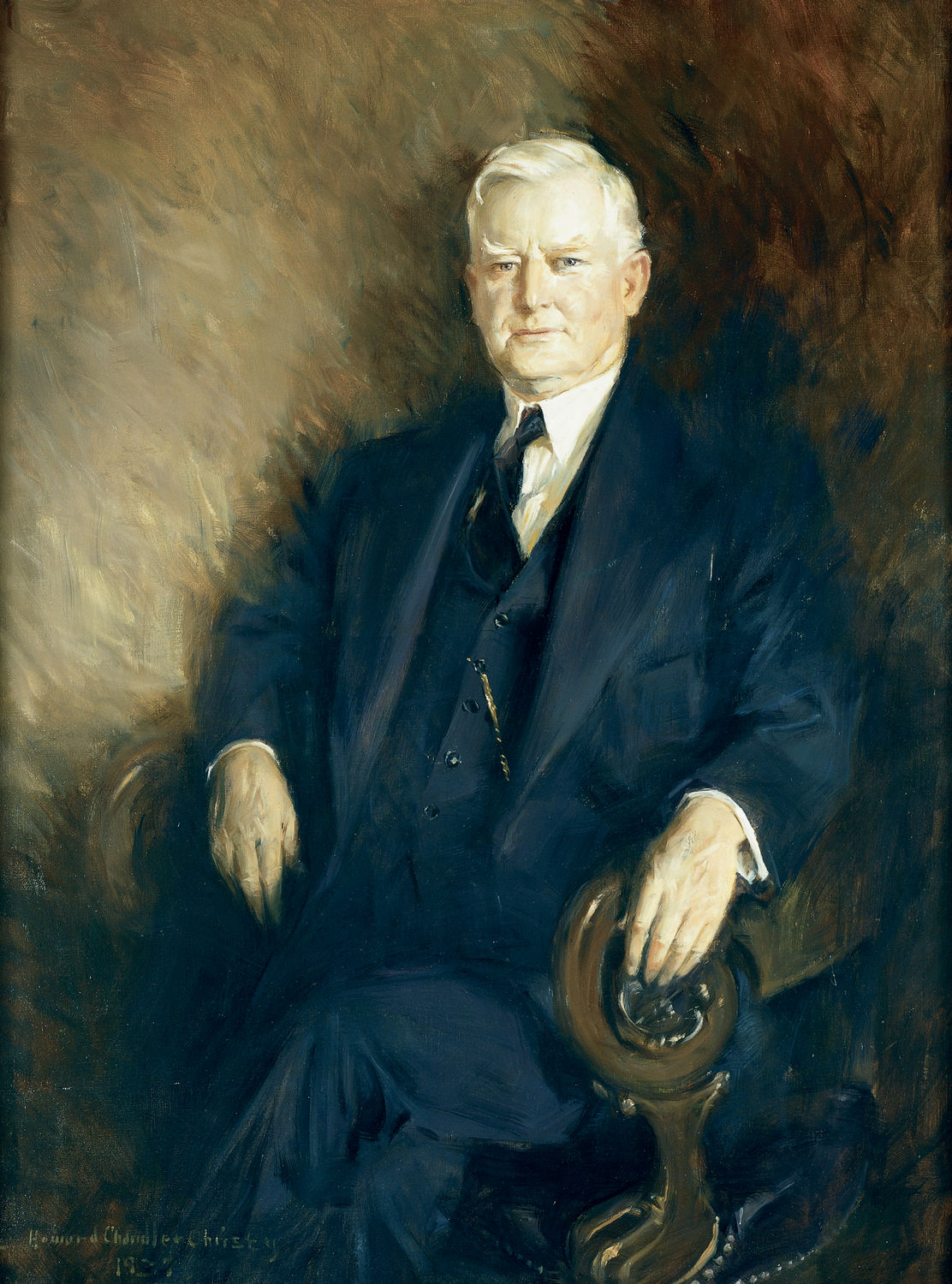
As vice president, Garner convinced a reluctant president to embrace the federal government’s guarantee of bank deposits. Although FDR took the credit, the birth of the FDIC came from a Texas lawyer.
He was a loyal VP who never forgot that he was a junior partner in the firm of Roosevelt-Garner. He attended cabinet meetings but gave few speeches and refused interviews with newspapers. FDR once reminded his deputy to stay in his lane. “You tend to your office, and I’ll tend to mind,” said the POTUS. However, when the king and queen of England came to visit, Garner welcomed King George VI with an old-fashioned Texas back slap.
By 1938, Garner and FDR began to butt heads. The dispute was over FDR’s court-packing plan, lack of a balanced budget and the president’s attempt to ‘purge’ elected Democrats who did not support the New Deal. Garner, a lawyer and legislator at heart, was livid over the president’s meddling with the legislative branch of government. The president and his VP also differed over federal legislation to end lynching. Remarkably, FDR, a New York liberal, opposed anti-lynching legislation. Garner, a Southerner, favored the measure. In the 1920s, Garner had denounced the Ku Klux Klan in Texas, a political risk that almost cost him his seat in Congress. As a thank you, the KKK burned a cross near his home.
In 1940, Garner was not happy with FDR’s plan to run for an unprecedented third term, breaking the long-held tradition set by George Washington. At the Democratic National Convention that summer, Garner was dumped from the ticket, joining other past VPs such as John C. Calhoun and Hannibal Hamlin. Garner predicted that Roosevelt would never leave the White House, but for defeat or death.
Garner was, at times, a Democrat of incongruity in a one-party state. He curried favor with Texas ranchmen, considered the princes of their principalities. He learned to speak Spanish so he could communicate with Latino constituents, but then he voted for the poll tax, denying many of them the ballot. He was the son of a Confederate cavalry officer but denounced the KKK as un-American. He drank whiskey and voted against prohibition.
“No vice president since Thomas Jefferson had been more influential than John Nance Garner,” wrote biographer Marquis James. Garner enhanced the office of VP from a historically insignificant post to a position with more relevance. He is the only vice president, other than Schuyler Colfax, to preside over both the House and the Senate.
John Nance Garner lived a long and fulfilling life. His 50 years as a lawyer and public servant warrant honorable mention. He made partner, was elected judge, served in Congress and then, for eight years, was a heartbeat away under President Roosevelt. While he never held the nation’s highest office, he did leave his mark on the American story.
Garner’s 95th birthday fell on Nov. 22, 1963. President John F. Kennedy, before leaving on the short flight from Fort Worth to Dallas, picked up the phone and called “Cactus Jack” to wish him a happy birthday. Within five hours, Kennedy was dead, and another famous Texan, Vice President Lyndon B. Johnson, was thrust into the presidency.
Garner lived another four years and died two weeks shy of turning 99. In the discipline of law, he was no Thurgood Marshall or Joe Jamail Jr. But he served the profession well, then used his legal moxie to become one of the greatest legislative influences in the United States Congress.
Not bad for a college dropout who started as a young country lawyer.
“Ability unsupported by character is a dangerous thing,” Garner once told a friend.
Today, you can visit the John Nance Garner House (a.k.a. Briscoe-Garner Museum) on North Park Street in Uvalde.
James Lumley is a historian, and author of an upcoming book on the American vice presidency. He resides in Annapolis, Maryland.