
In early November, I addressed a room full of lawyers at a CLE seminar, and said, “nothing is more powerful than a bar card put to good.” A day later, a trusted colleague who was there called me with a crazy idea: Would I consider representing Ukrainian citizens injured or killed by Russian drone and missile attacks? Research provided by the State Capture Accountability Project suggested that American chip suppliers had exported the guidance chips enabling Russian drones and missiles to hit their targets.
A month of subsequent research and diligence confirmed my worst fears. After the 1989 Tiananmen Square massacre, the United States restricted exports of its technology to China. A year later, it restricted such exports to Iraq, and in 1992, to Iran as well. For the last 33 years, U.S. law has prohibited the export of dual-use technologies sold for commercial applications also capable of military uses. Nonetheless, immoral middlemen have caused American chip supplies to be diverted into war zones, enabling rogue nations to use U.S. products to steer missiles and drones into residential targets, killing innocent civilians in war zones.
Since Russia invaded Ukraine Feb. 24, 2022, countless media stories have reported that approximately 37,000 Russian drones and missiles have hit Ukrainian civilian targets. Repeatedly, subsequent investigations have found American guidance chips inside the exploded Russian military ordnance decimating Ukrainian population centers.
Knowing that lawyers are always taught to go to “the scene of the crime,” it became evident to me that a trip to Ukraine was needed. However, the U.S. Department of State had issued a travel advisory as follows: “Ukraine – Level 4: Do Not Travel.” It advised that before you go, you should update your will. Moreover, the U.S. embassy in Ukraine advised “heightened caution,” reiterating that it “continues to advise U.S. citizens not to travel to Ukraine.” We investigated increasing our life insurance before traveling, only to learn that death in Ukraine would invalidate the coverage we already had purchased pursuant to a war zone exclusion in those policies. Knowing this, we made plans anyway to travel to Ukraine.
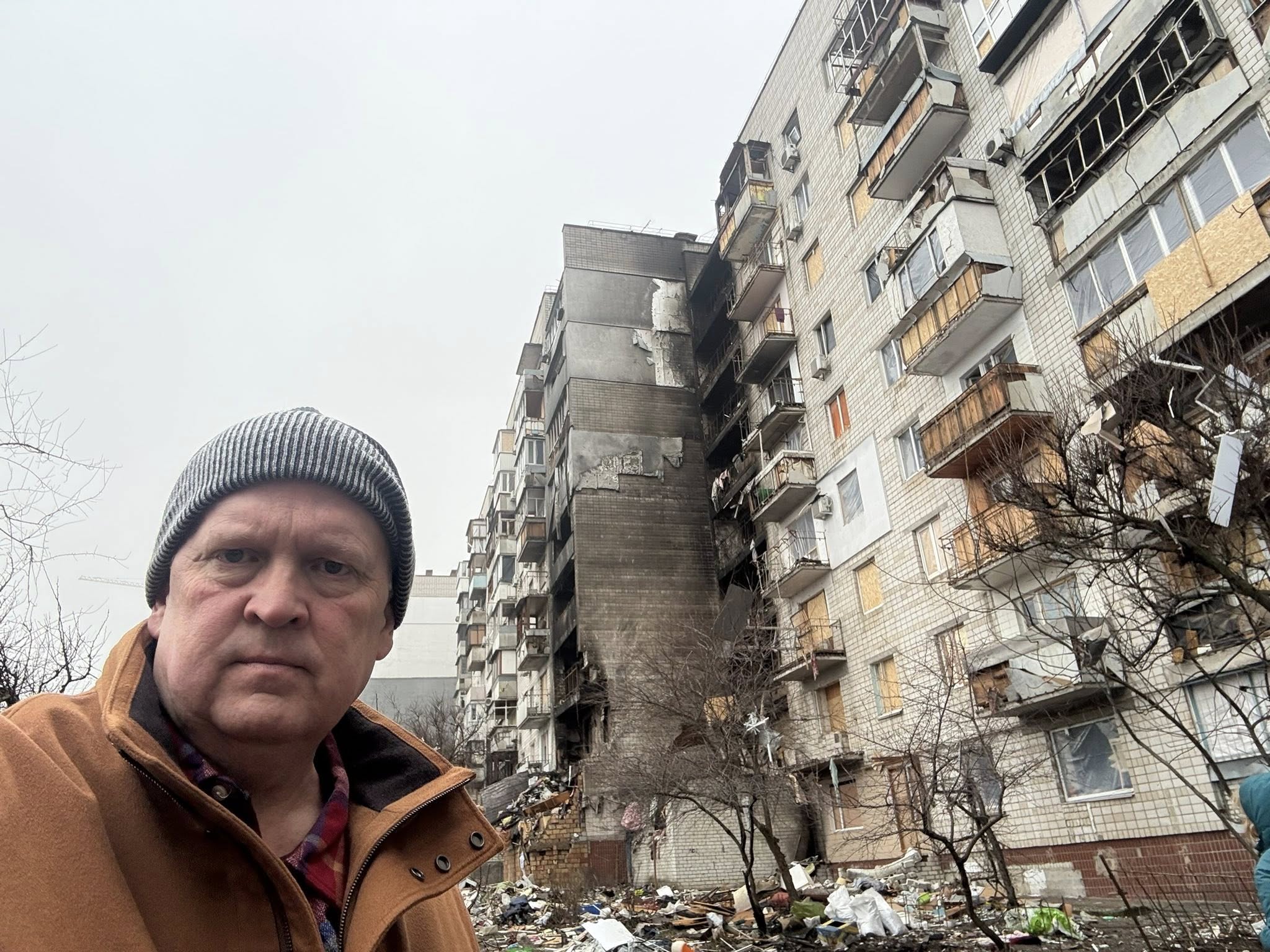
My friend and lawyer Jamie Shaw agreed to join me. Because the entirety of Ukraine is a no-fly zone, we arranged to drive there from a neighboring country. Because our intended border crossing at the Orlivka border checkpoint into Ukraine was bombed by Russia on Nov. 22, we changed our plans and decided to enter through a remote, rural area near Suceava, Romania, instead. A Nov. 30 Lufthansa flight from Austin to Frankfurt, Germany, led to an Austrian Airlines flight to Vienna, where we then missed our connecting twice-weekly flight to the IașiIasi International Airport in Romania. The next available flight was scheduled for three days later. To avoid these lost days, we instead chartered a private plane from Vienna to Suceava, Romania, where a non-English speaker then drove us for hours across the border to Chernivtsi in western Ukraine.
The next morning, we met our Ukrainian team leaders, Svitlana Valko and Emily Patterson, their driver Dymytro Afanasiev, and our two translators, Mariana Kira and Maryna Mukhina from a Ukrainian organization known as Protea. We were told we would investigate only five of the thousands of known Russian drone and missile blasts inside Ukraine.
During our nine-hour drive east from Chernivtsi to the capital city of Kyiv, we learned of a Russian missile attack on Okhmatdyt, the nation’s children’s hospital. Dr. Olha Babicheva, a Kyiv nephrologist, saw many of her colleagues leave Ukraine immediately after Russia’s 2022 invasion. But knowing that the country’s children on dialysis would die within days without treatment, she chose not to leave her post. Likewise, the hospital’s head of nurses, Viktoriia Didovets, chose to remain in Kyiv as well.
Together, on the morning of April 8, 2024, they administered dialysis for six children in two adjoining rooms. When the air raid sirens sounded, they followed protocol and began moving those children to the shelter on a lower level of the hospital. When the missile arrived, Dr. Babichova shielded children with her own body, as ceiling structure collapsed in on them. Likewise, nurse Didovets kept her children inside the dialysis machine to avoid death by blood poisoning. Babichova suffered massive head and arm injuries, with constant falling and dizziness since. Didovets sustained an open pelvic fracture and was forced to not move at all while fixation rods in her hips immobilized her for 90 days. Both remain catastrophically injured, but their heroic actions saved each of the children in their care.
Over two nights in Kyiv, drones and missile rained down on the city, causing us to spend hours in underground bomb shelters. Deafening noise prevented sustained sleep, as a phone app called “Air Alert” notified us of hundreds of incoming strikes.
We traveled to Rzhyshchiv, a town two hours southeast of Kyiv, where a Shahed 131 drone destroyed a school dormitory building, killing six. After we met with the grieving families of Nataliia Pipchecko, the 56-year-old chief of the dormitory, Roman Zvierieva, a 17-year-old student studying to be a chef, and Oleksander Gorgul, a 36-year-old resident at the building, and others injured in the blast, such as Svyatoslav Gorgul, Tetiana Romenko, Yana Meheda and Oksana Yevlakh, we then inspected the Shahed drone remnants and saw for ourselves chips with markings from American technology companies.
Next, we traveled to the town of Kryvyi Rih, a city of 800,000 in southern Ukraine located far too close to the front for comfort. There, we investigated a June 13, 2023, missile attack on a warehouse supplying food and water to displaced citizens, which killed 11 humanitarian workers. Ihor and Larysa Babich tearfully described the loss of their 21-year-old son Anton while at work there. Tetiana Ryhhel told us of the loss of her son Andrii, who was only 17 when he died in the bombing. Dimitri Khupatsaria described the loss of his father Khvitcha, a night worker at the warehouse, and Oksana Bystrova, spoke of the loss of her 20-year-old son Vladyslav.
We then traveled across Kyrvyi Rih and inspected the blast site of a Russian missile hitting a residential playground. A teenage high school couple, Alina Kutchenko and Danylo Nikitskyi, died holding hands as the missile struck. Grandmother Valentina Tsitov described the death of her 3-year-old grandson Tymofii Tsvitok, who died three feet from her when cluster munitions purposefully added to an X-101 missile pierced the lung of this young child.
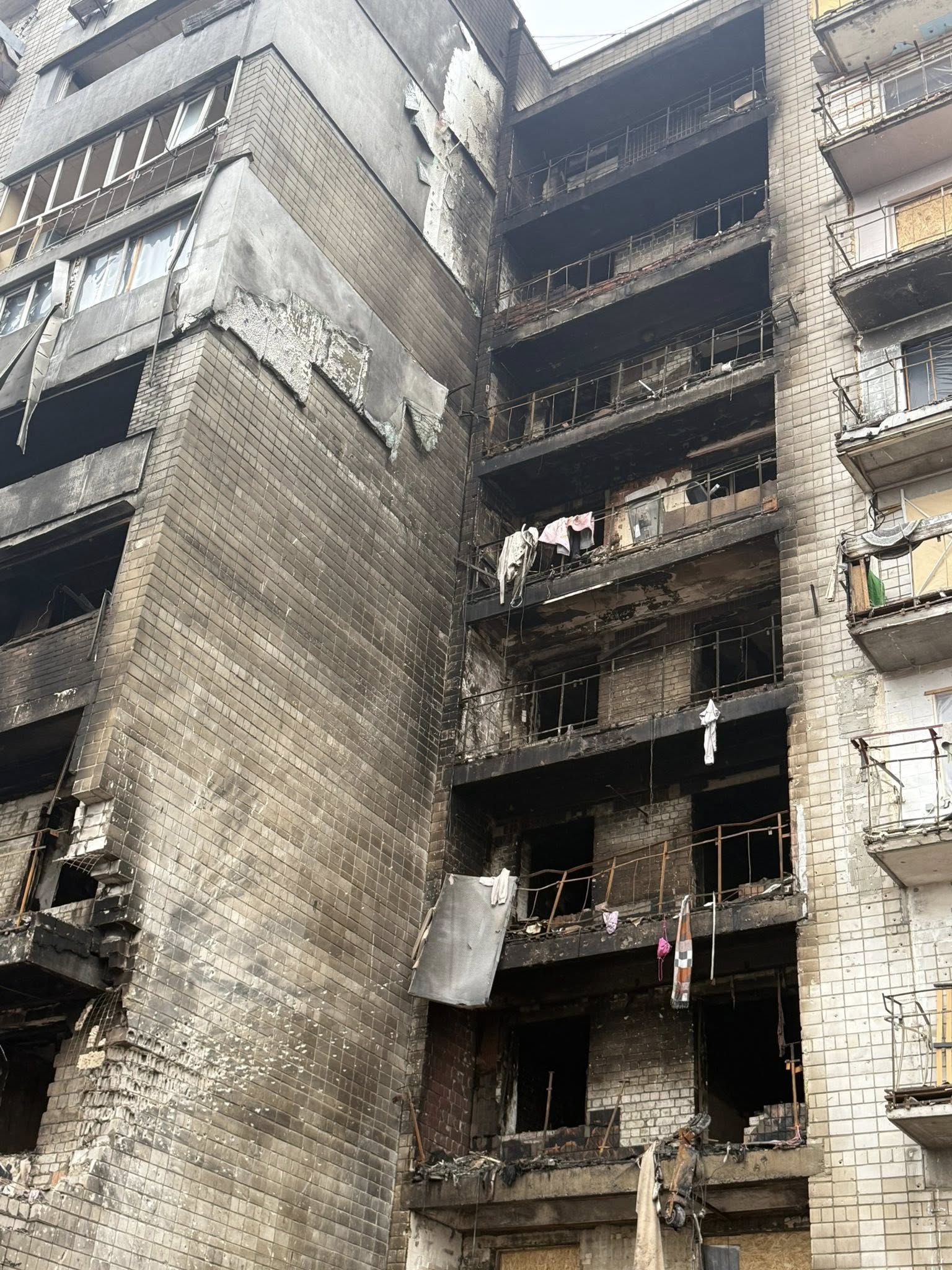
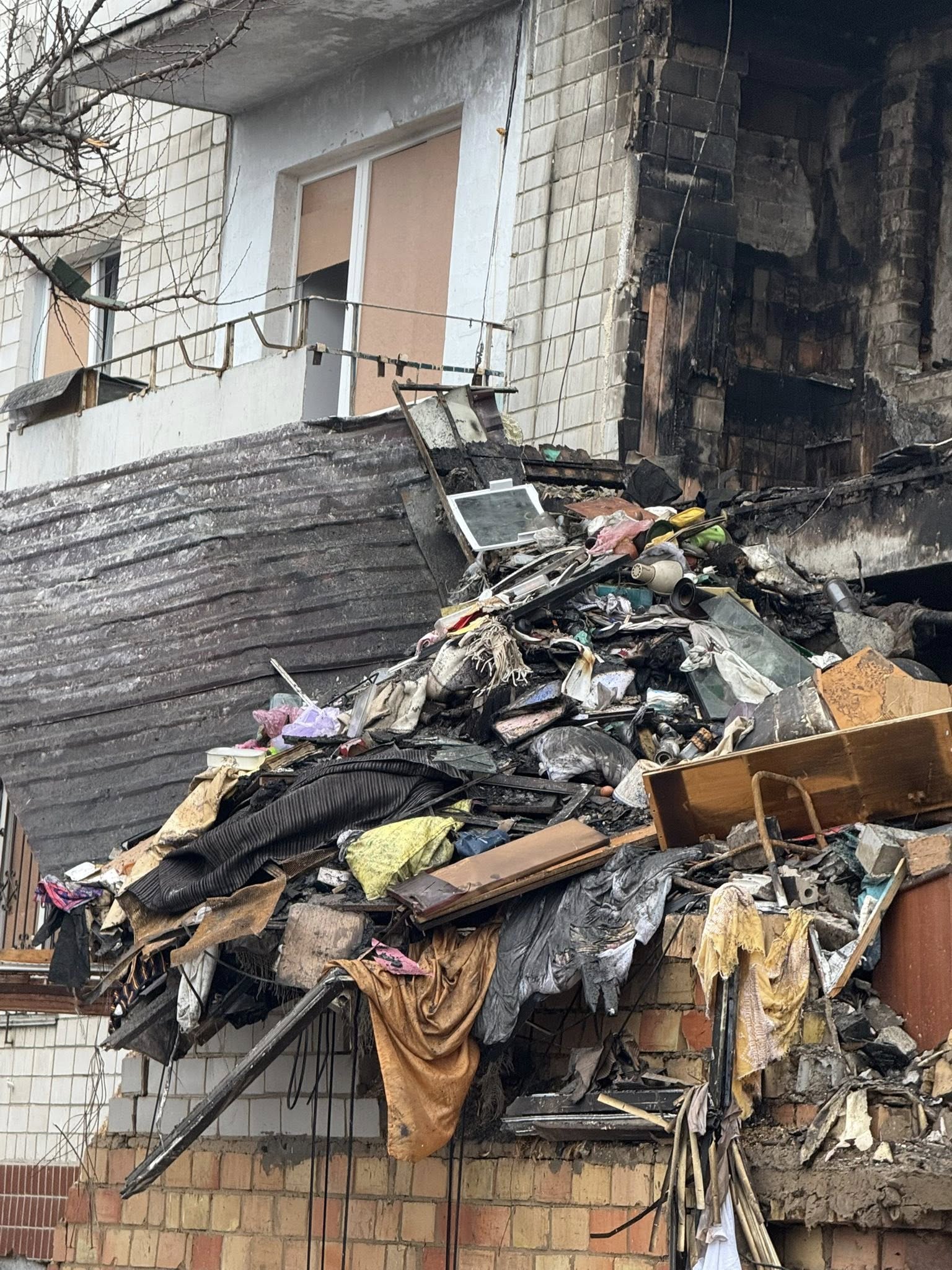
Chips manufactured by Texas Instruments, Intel, Advanced Micro Devices and Analog Devices appeared repeatedly in our inspections of drone and missile remnant evidence across Ukraine. Even worse, during the nine days we were in country, we endured hundreds of missile and drone attacks each night. In a single afternoon, we inspected five residential apartment buildings just hit by Russian drones and missiles. It is clear that Russia has no intention of attacking military installations but rather is engaged in a war of terror using U.S. guidance technology in an effort to demoralize the Ukrainian people.
We filed five lawsuits today against three American technology companies — Texas Instruments, Advanced Micro Devices and Intel Corporation — because these companies’ products are hi-tech gasoline fueling the engine of the Russian war effort. If these American tech companies would just properly control the export of their technology, the need for the United States to spend hundreds of billions of dollars to protect Ukraine would no longer be necessary. Stop the chips, stop the war.
Mikal Watts is a Texas trial lawyer who specializes in mass tort and personal injury litigation. He also currently represents Camp Mystic and its owners in defending lawsuits involving the tragic July 4 flooding — the only case in which he has represented a defendant.