Editor’s note: The Texas Lawbook is pleased to offer this new column in partnership with Texas-based Half Price Books sharing our readers’ favorite reads. “My Five Favorite Books” will publish every other Wednesday. Please email brooks.igo@texaslawbook.net for more information.
I have to start with a professional read for every attorney or negotiator: Never Split the Difference by Chris Voss. Voss was an FBI hostage negotiator and effectively translates his natural talent into real strategies you can employ. Forget about unlocking value through collaboration or sizing up the other side’s best alternative to a negotiated agreement: If you don’t change your negotiating style to adapt to the person sitting across from you, none of that matters. I have read many great negotiating books, but none of them capture the human dynamic in negotiations in such a pragmatic way. Don’t get this one at the library, as you’ll need to dog-ear the pages as you try out the different tricks to work them into your negotiating tool bag.
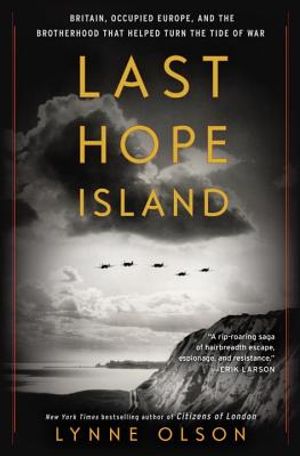
If you are into unique takes on history, like How the Irish Saved Civilization or Guns, Germs, and Steel, then you will like this gem I stumbled upon: Last Hope Island: Britain, Occupied Europe, and the Brotherhood That Helped Turn the Tide of War by Lynne Olson. We have all heard of the stories of Dunkirk, the Blitz and Normandy, but the lesser told story of how Britain was the protector of the flame for all the democratic and monarchical systems of government for Nazi-occupied Europe is equally fascinating. As the European countries were invaded, the majority of the heads of state and royal families avoided Nazi arrest and were smuggled off the continent to London. Those who stayed behind were arrested, executed or co-opted into Nazi atrocities. When possible, mainland European fighter pilots and soldiers wanting to continue the fight also fled to Britain. Prime Minister Winston Churchill was not shy about using these governments in absentia to support underground resistance movements through the power of “free” radio. Olson contends that military pilots in exile from Eastern Europe — flying under their home countries’ flags — were key to defeating the Nazi’s Blitz campaign, ultimately persuading Hitler to delay invading Britain. With all the heroics surrounding World War II, Britain’s acts of compassion and hospitality for refugees turned out to be among the most important actions taken to turn the tide and eventually rebuild Europe.
For more information or to purchase the book, click the cover below.
In the same vein, the best fiction book that I would recommend is one given to me when I was in ROTC at Notre Dame, Once an Eagle by Anton Myrer. This is the type of once-in-a-lifetime reads that you know will be in your favorite list long before the ending 1200-plus pages later. Myrer weaves together the arcs of characters inspired by real Americans in combat, creating an enthralling narrative from World War I to the Vietnam War — some of the most challenging and stressful events of the last century. I thought about this book a lot in my 10-year career as an Army officer — especially while seeing combat in Iraq. It inspired the kind of officer and leader I wanted to be, and it helped me forgive myself when I fell short in a world more complicated than I could have imagined. The Army taught me that I had to be purposeful and thoughtful on how I was going to be a good and ethical leader, values Myrer reflects thoughtfully in this “American Odyssey,” where young men test their values in a world that often rewards those who aren’t living by the same standards.
For more information or to purchase the book, click the cover below.

For something more contemporary, I recommend Nexus: A Brief History of Information Networks from the Stone Age to AI by Yuval Noah Harari. In Nexus, Harari builds on his bestseller Sapiens, which explored the idea that the human ability to organize and act collectively around a common story unlocked immense power. Harari contends in Nexus that the levers that control these stories control civilization. From the written word to bureaucracies to AI, he explores how these evolutions in story tellers are the fulcrums of political power. We must be aware of our human compulsion for stories and our effect on others when we use them. Lawyers inherently understand the power of weaving a compelling story, and we utilize our systems of laws and regulations to hold society together.
For more information or to purchase the book, click the cover below.

For my last recommendation, I encourage you to learn more about one of American history’s greatest military leaders by reading Ron Chernow’s Grant. Chernow is one of those amazing historians that digs up rare firsthand accounts and weaves them into a story that gives you great insight into his subject’s mind. The stories about Grant’s work running the family shops builds on his clerical duties in the Mexican American War. The idea that Grant was a great logician that broke the South when so many other Generals had failed makes sense when seen in this context. Far from the man popularly mischaracterized as a butcher, Grant makes the case that the Civil War general’s knack for simplifying large strategic initiatives won the war. The book follows Grant through reconstruction and his presidency, covering a man building to a moment in history that was so perfect for his skill set, only to then be torn down by simpler men in politics years later. This book will leave you with a better appreciation for President Ulysses S. Grant’s unique genius, powered by his astounding 20-cigar-a-day habit.
For more information or to purchase the book, click the cover below.

Dana Collins is litigation counsel at Raytheon and a board member of the Association of Corporate Counsel’s DFW Chapter.