
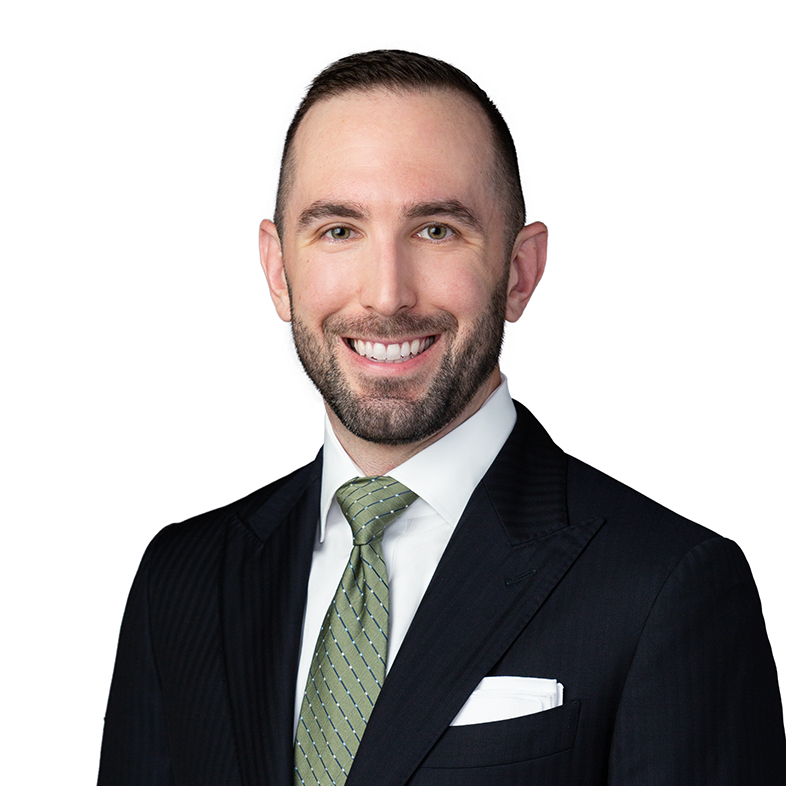
Luke Schamel became an officer in the U.S. Navy to serve his country. Now a Houston associate at Yetter Coleman, he is continuing his public service in a different uniform.
Schamel is representing the Veterans of Foreign Wars on a pro bono basis in a lawsuit against the U.S. Department of Veterans Affairs that challenges a rule that petitioners say denies veterans the full education benefits that they have earned.
“Service takes a lot of forms and pro bono is one way you can serve,” Schamel told The Texas Lawbook. “I think it’s important to help veterans get benefits that they were owed.”
At the center of the case is the VA’s “break-in-service” rule, which petitioners argue improperly requires veterans to have a gap in military service before they can access the full 48 months of education benefits available under the Montgomery GI Bill and the Post-9/11 GI Bill.
“This case centers on two simple questions: Do veterans who served longer get fewer benefits? And when the VA wrongfully denies benefits, should it leave veterans holding the bag? The answer to both is obvious to everyone but the VA — of course not,” Schamel wrote in the merits brief filed this month in the U.S. Court of Appeals for the Federal Circuit.
As of January 2025, the VA estimated that 1,039,010 veterans with service breaks may have been denied full benefits, according to Schamel’s brief.
Other petitioners include the Iraq and Afghanistan Veterans of America, the Commonwealth of Virginia, several individual veterans and their families and the Virginia Attorney General.
Schamel’s commitment to veterans is rooted in his upbringing. The son of a Marine, with an older brother who joined the Navy, he set his sights early on the U.S. Naval Academy.
“The ideals of our country are important,” Schamel explained. “And if I think they’re important and that they’re worth doing something to maintain, then I should be willing to do something about it.”
His first application to the academy in 2005 was denied. After graduating from high school in upstate New York, Schamel enrolled at Penn State University. But refusing to take no for an answer and determined on the Navy, Schamel applied to the academy again the following year. That time, he was accepted.
At the academy, he became close friends with William McIlvaine, an El Paso native who was killed in 2013 when the EA-6B Prowler aircraft he was aboard crashed during a training flight in Washington. To this day, Schamel wears a cuff bracelet bearing his friend’s name — a daily reminder not only of McIlvaine but also of the sacrifices servicemembers make and of his enduring appreciation for them.
Following graduation from the academy, Schamel was stationed to the Naval Nuclear Power Training Command on Joint Base Charleston. But a reduction in force soon after his commissioning prompted him to explore other career paths. He went into management consulting in Washington, D.C., before ultimately deciding to return to school.
Inspired by a constitutional law class in his undergraduate studies, Schamel decided to pursue law and enrolled in the University of Michigan Law School. He simultaneously pursued a master’s degree in philosophy at Columbia University, initially considering a career in academia.
“It was brain candy,” Schamel said, noting the experience was fun while challenging. But the experience ultimately convinced him that teaching was not his long-term path.
After finishing his studies, Schamel headed to Texas “to see about a girl.” His longtime partner was attending graduate school at the University of Texas and had taken a job in Austin.
In Texas, Schamel completed a series of clerkships, including with the Texas Supreme Court, the U.S. District Court for the Southern District of Texas in Brownsville and the U.S. Court of Appeals for the Fifth Circuit in New Orleans.
He joined Norton Rose Fulbright as an associate in Houston in 2020 and lateraled to Yetter Coleman in 2022, where his practice focuses on antitrust matters.
At Yetter Coleman, Schamel has worked on several high-stakes matters, including helping defeat an antitrust class action against private equity firm Welsh Carson and securing a $100 million settlement for the Venoco Liquidating Trust following an eight-week trial over a pipeline rupture dispute.
But his commitment to veterans has remained constant and he’s previously worked on pro bono amicus briefs on behalf of veterans.
That passion led a friend, Rex Manning, a partner at Kirkland & Ellis, to connect Schamel with the VFW. Manning had previously represented the organization in an amicus brief in Rudisill v. McDonough, in which the U.S. Supreme Court ruled 7-2 that veterans who accrue benefits under both GI bills are entitled to both. In that lawsuit, an individual veteran, James Rudisill, sued the Secretary of the VA, Denis R. McDonough.
When the VFW needed representation for another amicus brief last year, the turnaround was too tight for Manning, so he called on Schamel. Schamel met the deadline and ultimately carried that effort forward into the current lawsuit, Manning said.
“Very few lawyers can put together a top-notch brief on short notice, and even fewer have the initiative and foresight to flip an important but narrow chance to write an amicus brief into a broader effort like the lawsuit,” Manning said. “But Luke can do all that — and more.”
Manning also pointed to Schamel’s ability to slow down and think through small details with principled reasoning, a skill reflected in both the quality of his work and his results for clients.
“Stacking together good choices on minor details adds up, and it can make a world of difference to the overall strength of a written piece of advocacy,” Manning said.
Despite the Rudisill decision, Schamel’s client and co-petitioners say the VA continues to wrongfully impose a break-in-service requirement to deny full education benefits under both GI Bills.
The current lawsuit isn’t about a single denial but rather is aimed at fixing the rule itself, Schamel said.
Schamel is careful not to frame the lawsuit as an attack on the VA’s mission.
“The VA is for veterans … Most of the time, it is earnestly trying to do that,” Schamel said. “It’s not that we think the VA is intentionally out there trying to pull one over on vets. It’s just that it’s a big machine and it’s a lot for individual veterans to fight. So I think it’s important that organizations and lawyers who can spare the time stand up and say, ‘Hey, this isn’t right.’ We can fix things for a lot of people.”