
In this edition of P.S., we highlight the pro bono work of Haynes Boone attorneys who have spent years helping students secure patents for innovations that are aiding a Malawi refugee camp.
In Houston, the Association of Women Attorneys Foundation’s Thirteenth Annual Premier Women in Law Luncheon drew about 400 attendees this week and raised a record amount in live donations for scholarships. We have the list of the lawyers who were honored and the students who were awarded scholarships.
Law Rocks Houston also topped its previous fundraising dollars during the battle-of-the-bands-style concert.
And following a funding cut to Legal Services Corporation, a bipartisan group of Texas leaders traveled to Washington, D.C., to urge federal lawmakers to continue funding for the nonprofit that supports civil legal aid organizations nationwide.
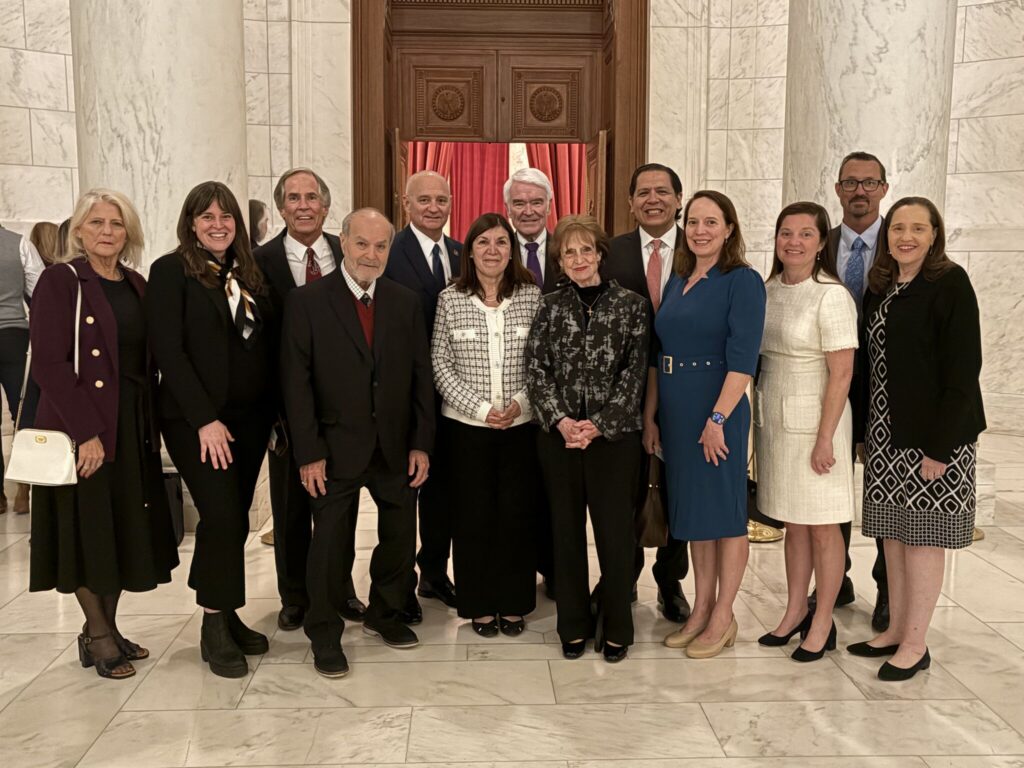
Bipartisan Texas Delegation Urges Lawmakers to Preserve or Boost Legal Aid Funding
A bipartisan delegation of Texas leaders traveled to Washington, D.C., last week to meet with federal lawmakers and advocate for funding for Legal Services Corporation, the nonprofit that supports civil legal aid organizations nationwide.
Texas receives about 8 percent of LSC’s budget, which helps fund the state’s three major legal aid providers: Lone Star Legal Aid, Legal Aid of NorthWest Texas and Texas RioGrande Legal Aid. LSC grants have accounted for about one-third of those organizations’ total funding.
For the federal 2026 fiscal year, the U.S. Senate approved a 3.6 percent cut to LSC, reducing its budget to $540 million.
The Texas delegation — which makes the trip annually — urged members of Congress to fund LSC at or above the current funding level, said Nina Hess Hsu, executive director of the Texas Access to Justice Commission.
“We’re hopeful to at some point get back to the $560 million that it was in fiscal year 2025,” Hess Hsu told The Texas Lawbook.
The group met with about 30 lawmakers, including Texas Senators Ted Cruz and John Cornyn, Hess Hsu said. The reception was positive, with lawmakers posing questions about how the funding is spent, Hess Hsu said.
LSC-funded organizations help Texans with civil legal matters ranging from disaster recovery, benefits for military veterans, domestic violence protective orders and housing disputes. Statutory restrictions dictate how LSC and its grantees can use funds, while also limiting the types of cases where LSC-funded programs can assist.
“Our representatives and senators were happy to hear from people they know and trust about why legal aid is important,” she said.
The delegation was comprised of:
- Hess Hsu,
- Texas Access to Justice Chair Harriet Miers,
- Texas Supreme Court Justice Brett Busby,
- Judge Lora Livingston,
- Texas Access to Justice Foundation Executive Director Betty Balli Torres,
- Texas Access to Justice Commission Deputy Executive Director Sarah Mae Jennings,
- TACJ Co-Chair of the Legislative Committee Thomas Leatherbury,
- TAJF Board Member Denise Scofield,
- Texas Legal Services Center Executive Director Karen Miller,
- Executive Director of the State Bar of Texas Trey Apffel,
- State Bar of Texas President Santos Vargas,
- State Bar President-Elect G. David Smith,
- State Bar Chief Legal Counsel Chris Ritter,
- State Bar Past President Eduardo Rodriguez and
- Former Chief Justice of the Texas Supreme Court Nathan Hecht.

Law Rocks Houston Sets $180K Fundraising Record
Law Rocks Houston hit a high note last week, with lawyers taking the stage to raise a record $180K for local charities during the battle-of-the-bands-style concert at White Oak Music Hall.
Material Breach, led by Latham & Watkins attorneys, took home the overall winner prize while raising funds for Belong Kitchen.
The Judge’s Choice Award went to Little Victories, made up of Andrews Myers lawyers that supported Lone Star Legal Aid.
The Hustle & Heart Award was awarded to The Overcommitments, jointly made up of attorneys from Chamberlain Hrdlicka and Beck Redden. They raised funds for Children at Risk.
The Law Rocks organization also awarded its Music Matters Grant to American Festival for the Arts.
Other performers were Joint Custody, featuring Mo Lovett Law and benefitting Houston Area Women’s Center, Twenty 24 Souls, with lawyers from Brown Rudnick and Baker & O’Brien raising money for Home Base Texas, and Blackacre, composed of McDowell Hetherington lawyers for Boys and Girls Club of Greater Houston.
Event sponsors included Mo Lovett Law, Latham & Watkins, McDowell Hetherington, Secretariat, Chamberlain Hrdlicka, Baker O’Brien, Beck Redden and Brown Rudnick.
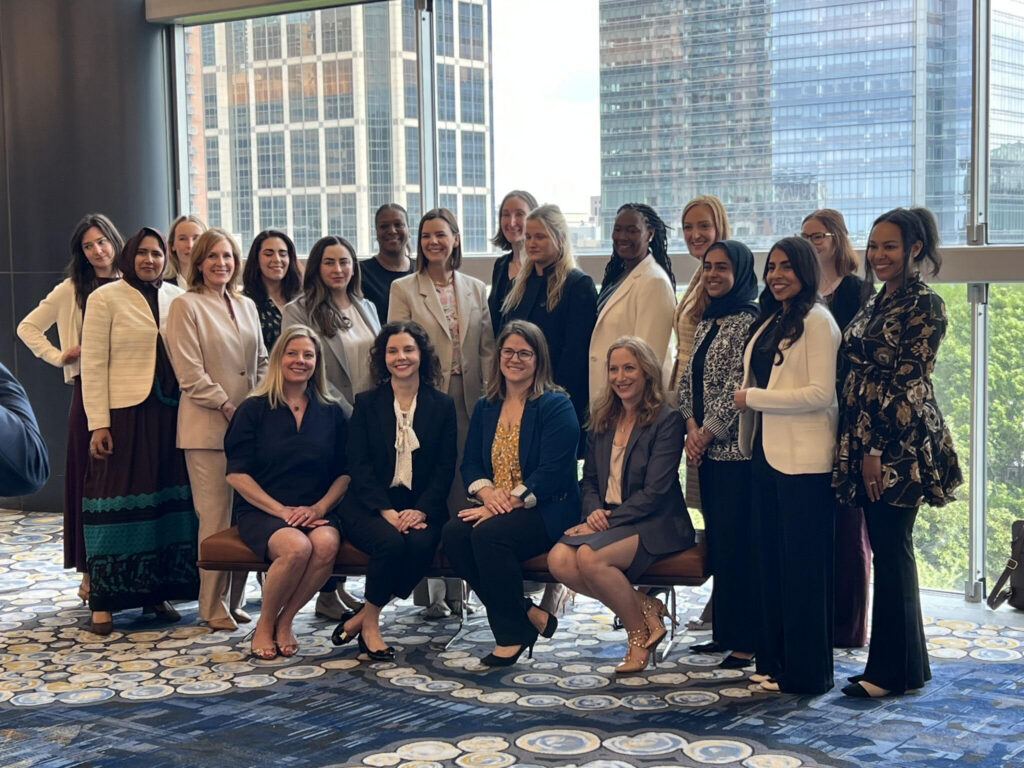
AWAF Luncheon Raises Record Funds, Honors Premier Women in Law
In Houston, the Association of Women Attorneys Foundation’s Thirteenth Annual Premier Women in Law Luncheon drew about 400 attendees this week and raised a record amount in live donations for scholarships.
Six law students were already slated to receive $3,000 scholarships, and an additional $10,795 was raised during a live appeal to be split among them, AWAF Vice Chair Emily Howard said. Proceeds from the luncheon support scholarships and pro bono fellowships.
Brittny Mandarino, senior policy advisor for the Office of Commissioner Lesley Briones, and Laura McGonagil, a senior associate in the Houston office of Baker Botts, were recognized as AWAF Rising Stars.
The Foundation also honored the following attorneys as Premier Women in the Law:
- Erin Epley, Erin Epley Law Firm
- Amy Hefley, Baker Botts
- Daria Russell, Mattress Firm
- Vanessa Allen Sutherland, Phillips 66
- Monica Uddin, Ahmad, Zavitsanos & Mensing
The scholarship recipients are:
- Kelly Miau, a 3L at South Texas College of Law Houston
- Trennan Lucking, a 2L at South Texas College of Law Houston
- Mycah Singletary, a 3L at Thurgood Marshall School of Law
- Mikayla Senegal, a 2L at Thurgood Marshall School of Law
- Amy Abbott, a 3L at University of Houston Law Center
- Graciela Rodriguez-Lee, a 2L at University of Houston Law Center
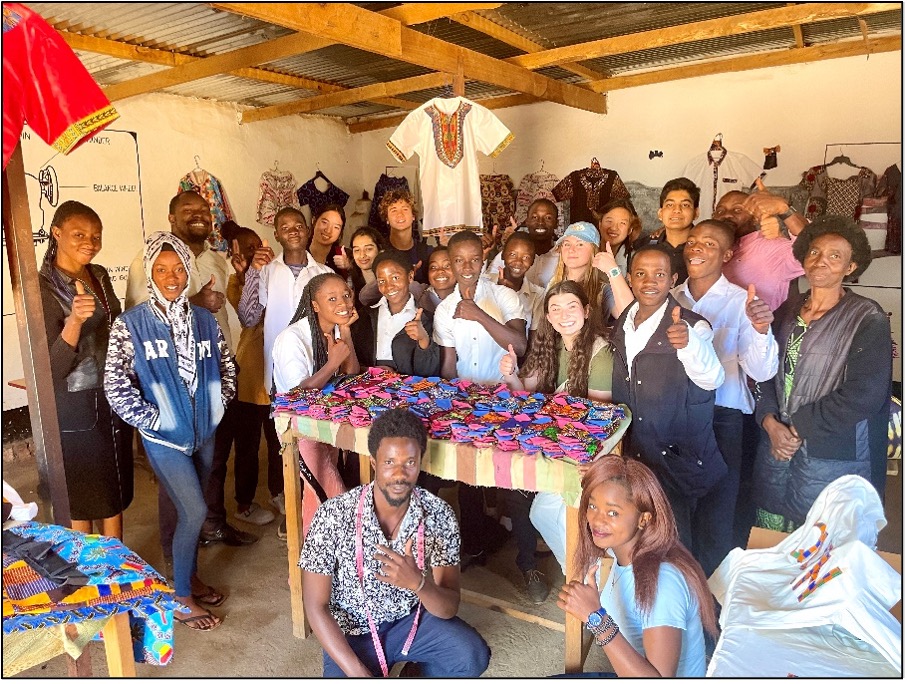
Haynes Boone Attorneys Help Students Secure Patents for Malawi Aid Products
When Sharon Crane, a counsel in Haynes Boone’s Washington D.C. office, needed help guiding students at The Pennington School through the U.S. design patent process for their charitable work in Malawi, she turned to Dallas partner Vera Suarez.
For years, Crane and Suarez have worked pro bono with students in the school’s Applied Science program, supporting projects designed to address challenges in the Dzaleka Refugee Camp.
This year, the team secured a U.S. design patent for a water filtration system, known as the “Better Kitchen Sink,” building on last year’s patent for a reusable menstrual pad developed by students in the school’s Women in STEM Solving Problems club.
“Any time I can work with female inventors, I’m excited because there’s such an under-representation of female inventors,” Suarez told The Texas Lawbook.
Crane became involved after a connection reached out for help with patent applications. During visits to Dzaleka, students observed that classrooms were largely filled with boys. They learned many girls stayed home due to the unavailability of menstrual products.
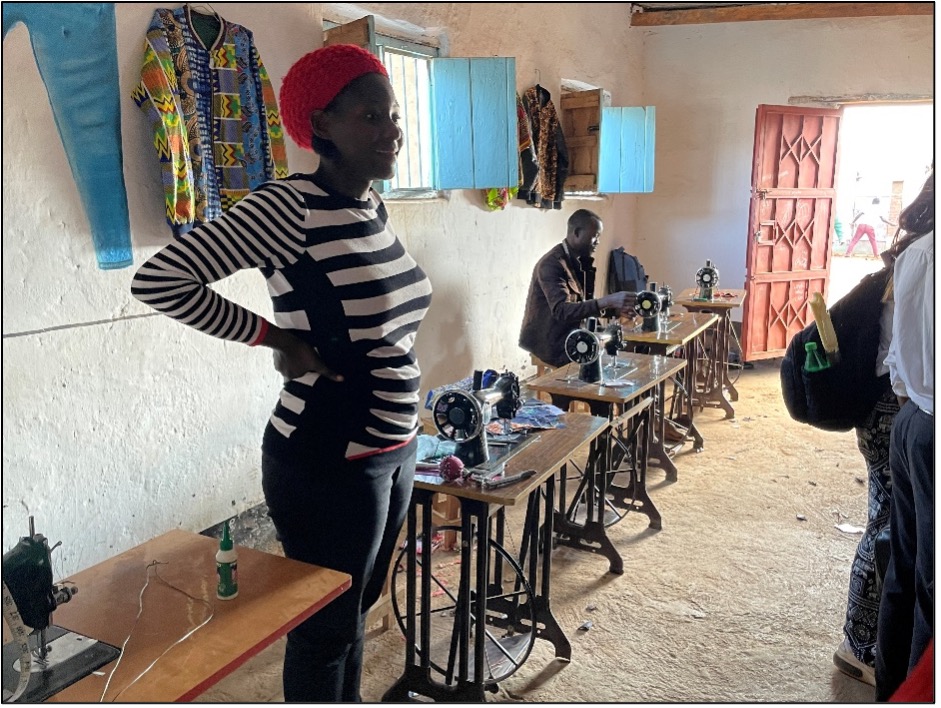
In collaboration with students in Dzaleka, they developed reusable menstrual pads made from low-cost, locally available materials. More than 16,000 have been distributed across Malawi.
The project has also created economic opportunities, supporting more than 1,600 tailors, seamstresses and vendors, while more than 175 girls have completed a “Learn to Sew” program to produce the pads.
The “Better Kitchen Sink” targets water scarcity in and around Dzaleka, where residents must walk long distances for clean water. The patented design features a funnel-like structure that attaches to plastic bottles that are commonly available, Crane said.
The team is now working with the Malawi government to expand the product’s reach, she said.
“This project reflects the very best of what student innovation can achieve when paired
with real-world purpose,” Crane said. “These students identified a critical need, worked collaboratively across borders and developed a practical solution that can make a measurable difference in people’s daily lives. We are proud to support their efforts.”
The students are currently developing a soap-making process using locally available materials, with plans to pilot a program at Dzaleka and a local hospital. In addition, they are creating two menstrual health booklets — tailored for girls ages 10-12 and 13-18 — in collaboration with U.S. doctors, Malawian healthcare professionals and local leaders.