
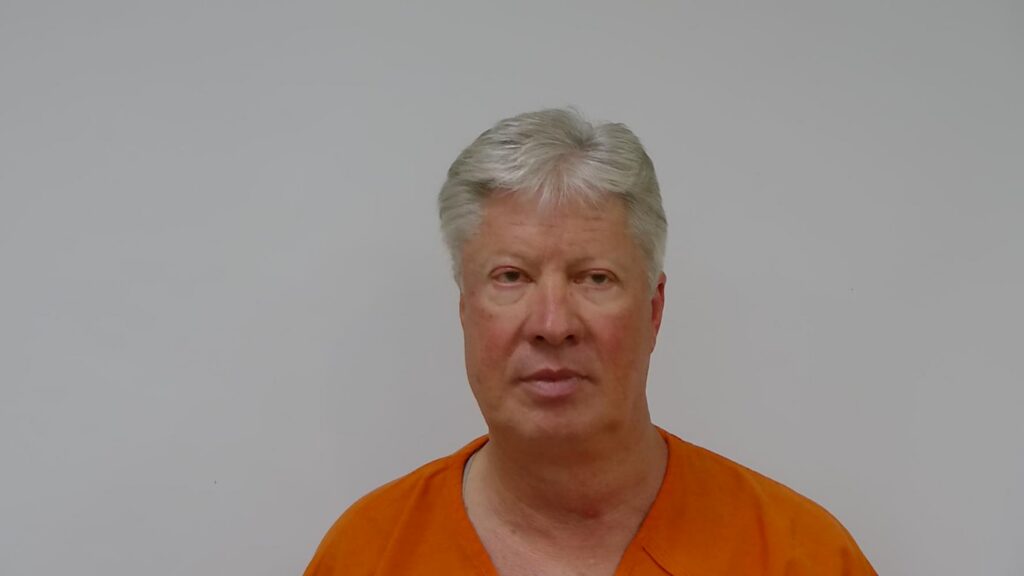
While Robert Morris, the convicted child sex offender and former pastor of Gateway Church, is sitting in a jail cell in Osage County, Oklahoma, the wake of his crime continues to ripple as the high-stakes litigation involving the megachurch and its elders is spreading and unfolding in courts across North Texas.
Morris, the church, its elders and congregants and Gateway’s insurance company are mired in lawsuits playing out in state and federal courts. Claims range from defamation to dishonesty about the allocation of tithe money to a dispute over retirement payments to Morris.
The origin of the legal troubles for Gateway and its leaders is a June 2024 blog post making public allegations that Morris began sexually assaulting Cindy Clemishire in 1982, when she was 12 years old and he was a 22-year-old traveling pastor, long before Morris founded Gateway in 2000. The abuse, which she alleges included rape, continued until 1987 and occurred in Texas and Oklahoma.
For the next couple of weeks, Morris will be behind bars, where he’s been since October, after pleading guilty to five counts related to sexually abusing Clemishire.
After his release, he’ll register as a sex offender and will serve the remainder of his 10-year suspended sentence in Texas. Morris’ lead lawyer, Bill Mateja of Sheppard, told The Texas Lawbook his client had handled the criminal prosecution with “extreme grace and humility.”
“And his apology and request for forgiveness at sentencing was and is real and remorseful. He could have challenged the prosecution and the tolling provision, in particular, which inexplicably creates an indefinite statute of limitations for non-Oklahoma residents and runs afoul of Oklahoma’s current statute for lewd conduct which mandates that the prosecution be brought by the victim’s 45th birthday,” he said. “But he didn’t challenge the case because he truly wanted to accept responsibility in the eyes of the law and bring finality for both him and Ms. Clemishire.”
Clemishire’s allegations set in motion a domino effect of sorts. Morris resigned from his role with the church days later, and the subsequent public comments issued by Morris, the church and its elders led to a flurry of civil litigation.
Clemishire alleges those statements, characterizing what happened to her at Morris’ hands as an “inappropriate relationship with a young lady,” constituted defamation. The various defendants in that lawsuit, who failed to convince Dallas County District Judge Emily Tobolowsky to dismiss the claims against them, have lodged five appeals so far.
One of Clemishire’s lawyers, Drew York of Gray Reed, told The Lawbook her legal team is “honored” to represent her and looks forward “to the opportunity to present her compelling story to a jury.”
Two months after Clemishire’s allegations became public, a former member of the Gateway Church youth group came forward, accusing the church of failing to protect her from repeated sexual assault on church grounds by another youth group member. That case was settled in January.
Meanwhile, the church’s insurance company, Church Mutual Insurance Company, has asked a federal judge to declare it has no duty to pay the defense costs in the defamation case.
And a fight between Morris and the church over whether an employment agreement entitles him and his wife to between $600,000 and $800,000 annually is playing out in state court in Tarrant County as well as in Christian arbitration before the Ambassadors of Reconciliation.
Then there is the proposed class action brought in federal court in October 2024 by Gateway members who allege that the church was dishonest about the way it was allocating tithe funds.
There are at least 47 lawyers and 19 law firms involved in the various lawsuits.
But one legal argument could bring most of the tangle of litigation to a screeching halt: the ecclesiastical abstention doctrine.
In essence, the legal principle bars civil courts from deciding cases that call into question a church’s doctrine, internal decisions and governance.
“That prohibition on judicial entanglement with church teachings, decisions and communications has long been clear in American law,” lead lawyer for Gateway, Ronald W. Breaux of Haynes Boone, told The Lawbook. “And recent decisions from the Texas Supreme Court and the Dallas Court of Appeals and the United States Court of Appeals for the Fifth Circuit have confirmed that the claims against Gateway and its current elders cannot go forward.”
So far, Judge Tobolowsky has denied motions to dismiss, raising the doctrine as a defense in the defamation case. In February, lawyers for two elders argued that the defamation case against them must be dismissed. The judge heard about an hour of argument before issuing an oral ruling from the bench that was in line with three other orders she’s issued on motions to dismiss in the case.
“I’m going to deny the motion. Have fun on the second floor,” Judge Tobolowsky said seconds after counsel closed. The Fifth Court of Appeals is on the second floor of the George Allen Court Building in Dallas.
And Chief U.S. District Judge Amos L. Mazzant, who is presiding over the tithing lawsuit, has also so far rejected the idea that the ecclesiastical abstention doctrine means the claims don’t belong in his court.
“At this point, plaintiffs’ claims seemingly address defendants’ non-religious conduct: acts of concealment; discrepancies in the reconciliation of donated funds balances; unaccounted for donations; financial irregularities; and lack of transparency or substantiations for Gateway’s use of plaintiffs’ donations,” Judge Mazzant wrote in a September order denying the motion to dismiss. “Merely because defendants identify plaintiffs’ tithing as an inherently religious act does not prevent the court from exercising its jurisdiction over plaintiffs’ claims.”
“The Court acknowledges the act of tithing is a religious act, but plaintiffs do not dispute their tithing; rather, plaintiffs allege their tithes were fraudulently allocated and defendants misrepresented critical facts to plaintiffs before tithing.”
Clemishire’s lawyer, York, said he believes the courts have correctly interpreted and applied the ecclesiastical abstention doctrine so far.
“We believe the trial court correctly denied the motions to dismiss based on the ecclesiastical abstention doctrine, and we feel confident that ruling will be upheld by the appellate courts,” he said. “As our briefing indicates, the defendants are asking the courts to extend that doctrine further than any courts have gone before.”
It’s not just the lawyers for the defendants who have raised the ecclesiastical abstention doctrine as a reason to end the Gateway-related litigation.
In the tithing lawsuit, the Plano-based conservative Christian legal organization nonprofit First Liberty Institute filed a friend-of-the-court brief in December 2024, arguing the legal principle guards against courts “unwittingly wield[ing] religious authority in the resolution of civil disputes, as the plaintiffs in this matter now ask this court to do.”
First Liberty argued that the case must be dismissed under the doctrine because adjudicating the claims would require the court “to answer several religious questions, including “(1) interpreting the meaning of a pastor’s sermon; (2) defining the meaning of ‘tithe’; and (3) conducting fact-finding into the religious purposes of every donation Gateway received or made during the relevant time period. All of these inquiries are constitutionally impermissible.”
“Ultimately, allowing the plaintiffs’ claims to proceed would create a dangerous precedent that invites theological disputes to become court disputes and threatens to chill religious speech and exercise,” the brief argues. “Allowing disgruntled congregants (which few churches lack) to haul the church into court because they disagree with its use of their tithes opens a Pandora’s Box of litigation into every aspect of a church’s internal decision making. To preserve the freedom of all to practice their religion, the Constitution properly withholds jurisdiction from such matters.”
But even if the courts determined the ecclesiastical abstention doctrine does not deprive them of jurisdiction to decide the claims against Gateway and others, the church’s lawyer, Breaux, said he is “confident that those claims also fail legally.”
“Gateway and its current elders simply did not defame the Clemishires,” he said. “To the contrary, while Gateway disputes the legal merit of this lawsuit, Gateway and its elders have consistently expressed sympathy for and validated Ms. Clemishire, and they continue to be grieved with her over the tragic abuse she endured.”
In mid-March, another hearing will take place before Judge Tobolowsky, where Morris’ lawyers will seek clarity on whether the judge denied his motion to dismiss based on the ecclesiastical abstention doctrine. If that clarity is given, it would result in a total pause on the Dallas County case while the Fifth Court of Appeals considers whether the trial judge made the right call. Currently, the case is paused regarding Gateway and its current elders.
Mateja has also advanced other arguments in defense of the defamation claims against Morris.
“[W]hile Ms. Clemishire has every right to feel wronged because of Pastor Morris’s sexual abuse some 40 years ago — for which he is currently serving a six-month jail sentence to right that wrong — her lawsuit is one desperately seeking a wrong to right,” he said. “Pastor Morris and Gateway’s statements acknowledging wrongdoing and apologizing for it are hardly defamatory as she claims.”
Alexa Shrake contributed to this report.