
Ted Koehler has his dream job. And maybe yours.
He’s a near-scratch golfer (a 0.90 handicap at the moment), a game he learned from his father. He makes his living advising the Professional Golfers’ Association of America, the premier organization for more than 30,000 PGA professionals nationwide.
He gets to attend events like the PGA Championship and Ryder Cup. And because he’s involved in their planning, it could be regarded as a job requirement. He gets to play some of the best golf courses in the world.
If dream jobs were golf balls, Koehler’s has the feel of a 375-yard tee shot airmailed from a titanium driver, fairway-flush on the Par Five of Life.
“Golf has been responsible for some of the best memories of my life — rounds with my dad and my friends, trips taken, beautiful places seen and remembered,” says Koehler.
“It’s a total cliché, but if you can make a career out of your personal interests, your life gets much easier and more enjoyable. I’ve played and watched sports for my whole life. What could be better than making a career out of that lifelong interest?”
It’s a choice that has brought not only perks, but recognition. As deputy general counsel in the PGA’s three-attorney legal department, Koehler has been nominated by The Texas Lawbook and the DFW Chapter of the Association of Corporate Counsel as 2025 Senior Counsel of the Year for a Small Practice.
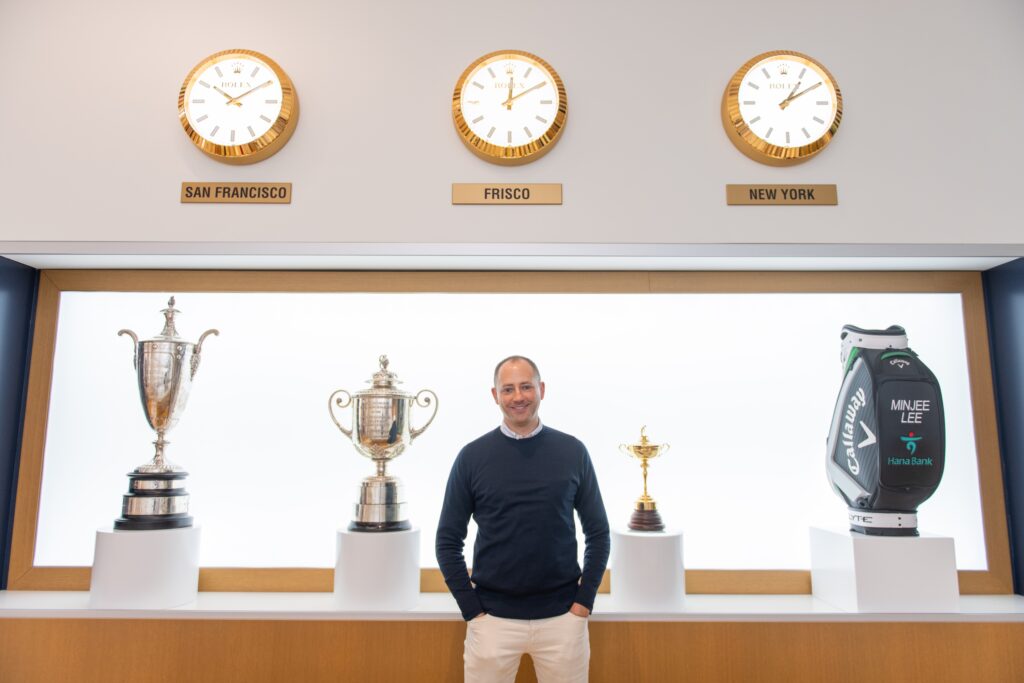
In nominating Koehler, Adam Sloustcher, a partner at Fisher Phillips, cited Koehler’s consummate execution of his multitude of responsibilities for “one of the largest and most influential sports organizations in the world.”
“Ted provides wide-ranging counsel regarding the PGA’s championships, partnerships, properties, governance, technology, tax, and other matters,” wrote Sloustcher. “His counsel directly supports the PGA’s ability to stage world-class events and uphold its reputation for professionalism, integrity, and global reach.”
Moreover, said Sloustcher, he executes that counsel with the same easy follow-through required of a 30-foot putt.
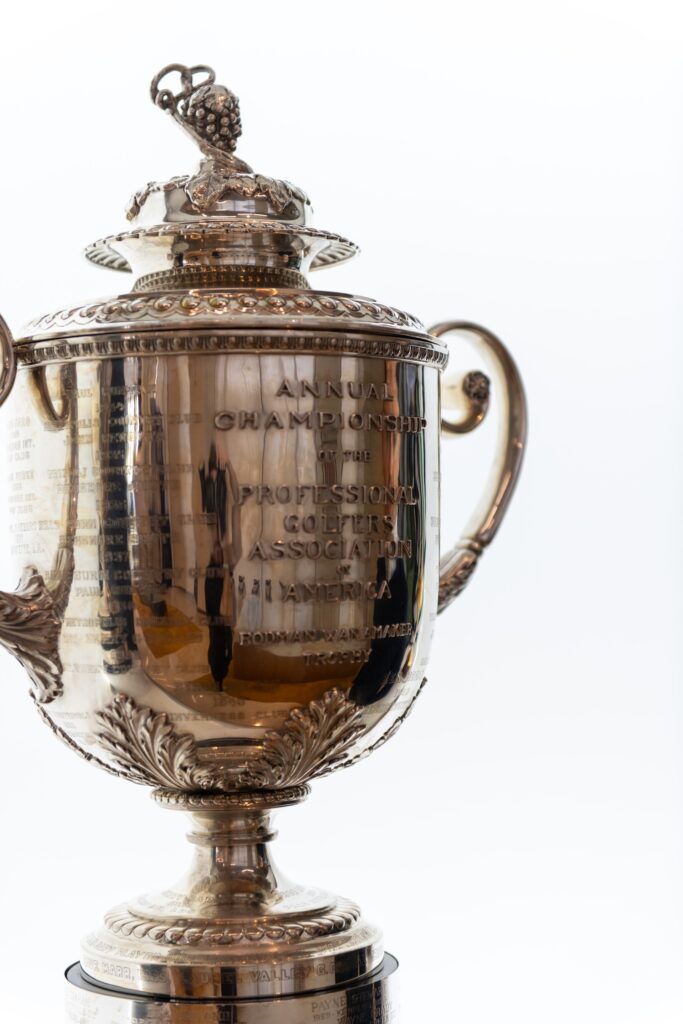
“Across each of these matters, Ted is recognized for his calm, business-minded approach and his ability to find balanced, practical solutions under pressure. He brings the rare ability to combine elite legal skills with operational understanding, helping the PGA thrive as both a member association and a global sports enterprise.”
Koehler was born and reared in a suburb of Milwaukee. His dad was a self-employed executive recruiter, primarily for midwestern manufacturing concerns. His mom was a homemaker. He describes his upbringing as “Norman Rockwell-esque.”
“I rode my bike everywhere and played baseball with my friends in a vacant lot owned by the city. Home plate was a sewer, first base was a tree,” Koehler recalls. And of course there was golf.
“I also played in a municipal golf program during the summers. That program — and my dad’s love of golf — led me to the game at an early age. I’ve worked a lot of different jobs and lived in a lot of different places, but my passion for golf has remained a constant throughout my life.”
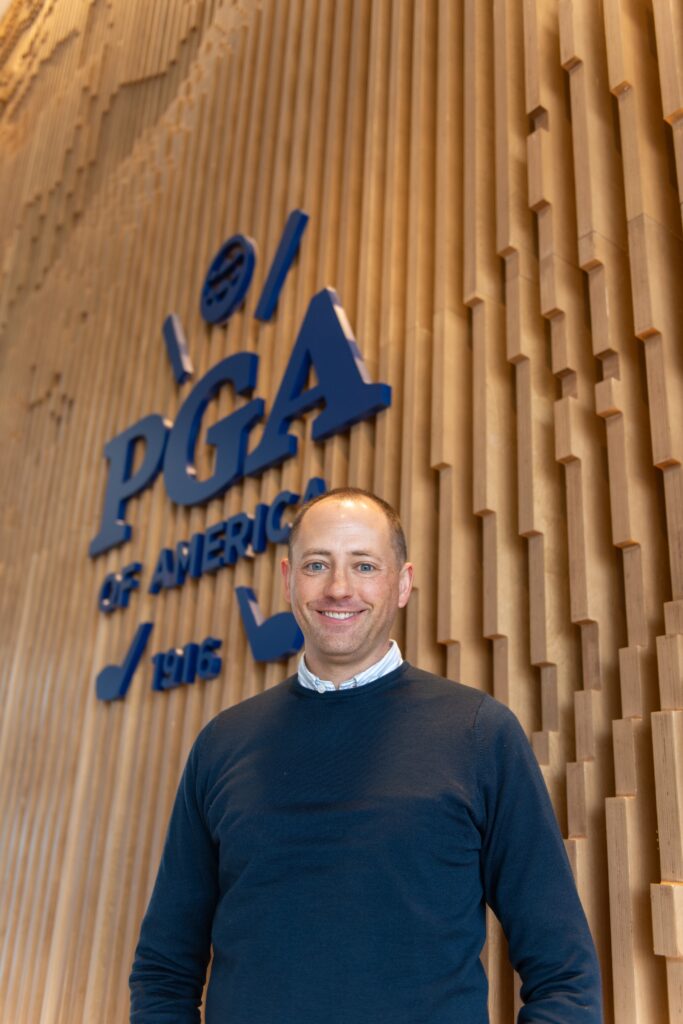
He attended college at the University of Wisconsin. He majored in political science, which led him to Washington, D.C., and the offices of U.S. Sen. Russ Feingold, the legendary Democrat, where he worked as a legislative clerk for a year and change. He also played golf in D.C. — at both the historic Langston Golf Course named for abolitionist John Mercer Langston and at far-less-historic Oxon Hill links in nearby Maryland.
After his D.C. experience came a couple of years of disparate employment: at an alternative energy startup in Milwaukee and at Sharp Cellers winery in Sonoma, California.
“I left the winery to go to law school at the University of Michigan Law School. No regrets whatsoever, but looking back on it, I had a pretty good thing going out there in Sonoma,” says Koehler.
It was in Washington that he realized he was more interested in the operational side of the laws than the politics of making them.
“I’ve always enjoyed analyzing difficult problems and finding practical solutions. And I’ve always loved the challenge of persuasion — whether spoken or written,” Koehler said. “My early educational and professional decisions reinforced these traits. I felt I had an instinct for the material in my college political science classes that I did not have in other areas.”
With his career on the grassy edge of the green, he chose the wedge.
“Law school was still a bit of a leap of faith for me, but I suspected I would be happy with my decision to become a lawyer, and I have been.”
Premium Subscriber Q&A: Ted Koehler discusses the traits she seeks in outside counsel, what outside counsel need to know when working with her and more.
A bump-and-run of clerkships comprised Koehler’s first two years after law school — the first year in Fargo, North Dakota, with U.S. Eighth Circuit Judge Kermit Bye; the second in Boston with U.S. District Judge Rya Zobel.
The second clerkship was followed by two years as a Goodwin associate in Boston and a move west to Denver and another two years as an associate at Faegre Baker Daniels.
It was in Colorado that his law career turned toward sports. In 2017, he was hired as legal affairs and trial counsel manager at the U.S. Anti-Doping Agency, the organization charged with the enforcement of Olympic-level strictures and programs against performance-enhancing drugs, headquartered in Colorado Springs.
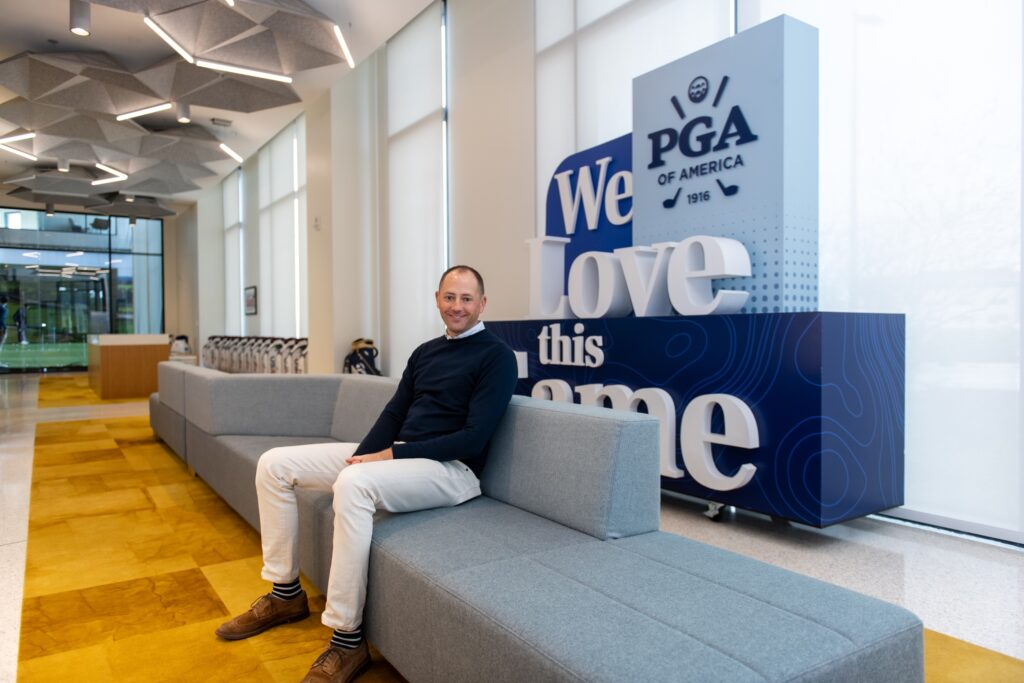
“My role at USADA was primarily as a prosecutor of athletes who were alleged to have violated the anti-doping rules,” said Koehler.
“I’ve always been drawn to people and organizations that have truth and commitment at their core,” said Koehler. “USADA is one of those organizations. You can draw a straight line between USADA’s mission and the ‘first principles’ that organize our lives: honesty, fairness and competition on a level playing field.”
It was there that he seems to have honed the tools of negotiation and mediation cited by Sloustcher, as well as a profound professional respect for fairness and process that Koehler now finds important in his work as in-house counsel.
“I think my biggest success was finding and maintaining the right balance between commitment to zealous prosecution and fairness to the athlete respondents,” said Koehler.
“So much of what in-house lawyers do is not ‘right answers,’ but judgment calls — business benefit versus legal risk; staying firm versus compromising; the desire to be transparent versus the need to respect confidentiality. Having good judgment and being thoughtful about finding the right balance between competing objectives are two things that distinguish strong in-house lawyers from average ones,” said Koehler.
“I think I found that balance at USADA,” Koehler said.
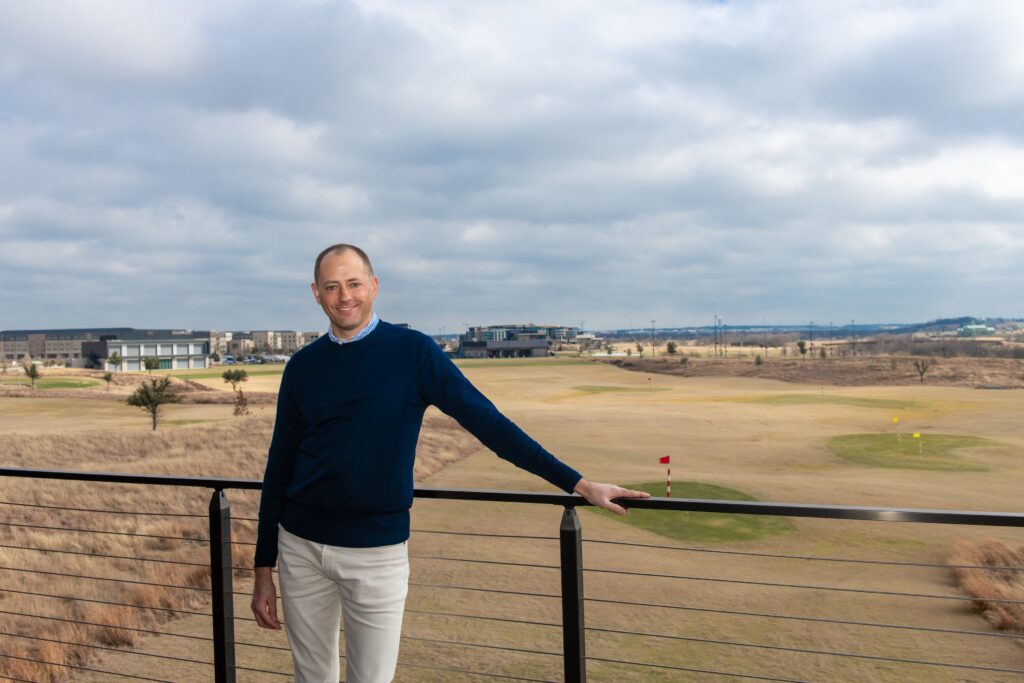
Since joining the PGA as senior counsel in 2017, Koehler has risen to deputy general counsel. The work, he said, has been complicated and voluminous. While the PGA’s forward-face is faceted by the more than 20 tournaments it runs each year, the organization is, at its heart, educational, and in that way differs from its eponymous cousin, the PGA Tour.
Founded in 1916, the PGA was the foundational organization for golfing professionals. Whether they made their living playing for tournament prizes or taught and managed local golf clubs, the PGA was the governing organization of both. In 1968, the most active tournament golfers formed their own organization, the PGA Tour, which operates and promotes most of the weekly scheduled tournaments.
As noted, the PGA still owns and operates some of the high-profile tournaments, but its main goals are charitable and educational, for the teaching support of golfers and golfing professionals regardless of their age or level of play.
“What we primarily do is teach,” said Koehler. “We teach people how to become golf professionals, and they go to courses or clubs and teach lessons to your average person and run tournaments and so on.”
And that’s where the complexity comes in. The PGA runs high-profile tournaments. The PGA Tour runs high-profile tournaments. And the newer Saudi-funded LIV Tour also runs high-profile tournaments and competes directly with the PGA Tour, but not directly with the PGA. When three of the four majors — the U.S. Open, the Masters and the British Open — elected to allow golfers from both tours, the PGA decided to allow them to do so in its own tournament, the PGA Championship.
The result has been a relative truce, a truce that helped the most recent PGA signature tournament, the Ryder Cup, become the most successful in its 110-year history.
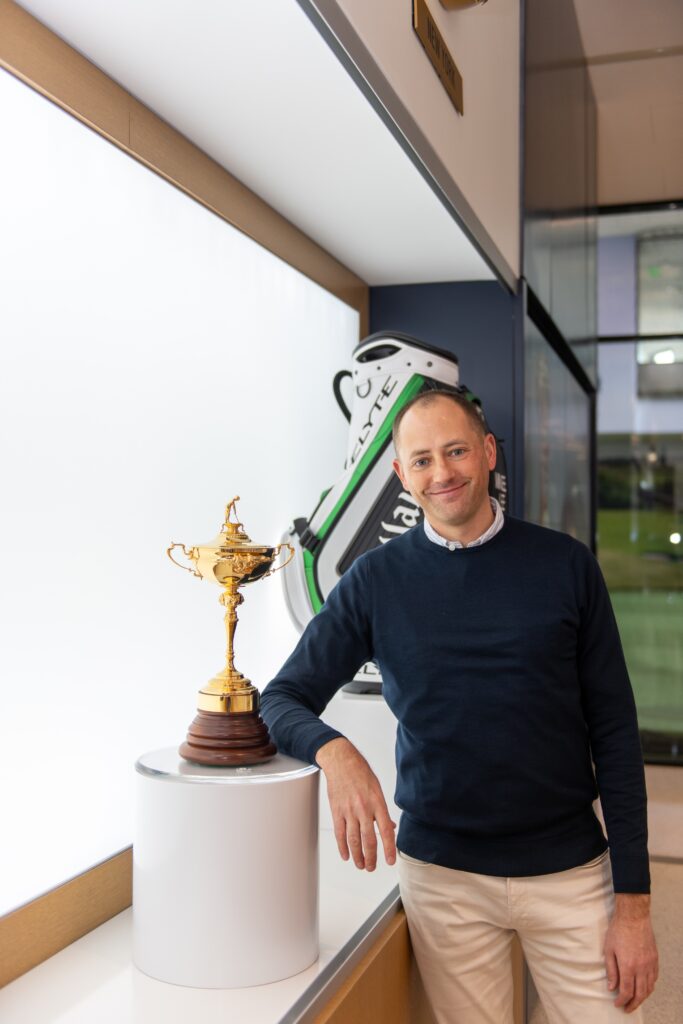
Koehler says the preparations for that tournament, as well as the organization’s collaboration with Omni to create a PGA-endorsed resort have ranked highest for him in terms of personal satisfaction as an in-house lawyer.
“[The PGA] runs over twenty tournaments per year, has a very active partnerships group that generates a lot of commercial activity, builds large-scale technology projects in-house, features a charitable foundation with diverse programming, and takes on some exceptionally complex projects requiring close collaboration with other organizations — including our ongoing collaboration on the Ryder Cup with Ryder Cup Europe and our ongoing collaboration on PGA Frisco with Omni Hotels & Resorts and the city of Frisco. And yet we have just over 300 employees, including just two lawyers,” in addition to himself.
“The volume is very high, and the pace is very fast. The biggest general challenge is being able to quickly get to the heart of the issue and make thoughtful, well-informed decisions,” Koehler said.
Koehler is gay. Although sports in general and perhaps golf, in particular, seem unreceptive to LGBTQ representation, Koehler says he’s found a sense of balance that is both personal and professional from being an “outsider” in those worlds.
“It’s always difficult to be an ‘outsider,’ but I believe in being truthful — including truthful to oneself — and having a bit of an outsider’s perspective in the world of sports and golf has ultimately led me to trust myself more and be a more confident lawyer and person.”
And then there’s golf.
Outside the office he appreciates both the game itself and the venues themselves. His favorite course is the National Golf Links of America, a club course in New York built on Long Island that opened for play in 1909. It was designed by Charles B. Macdonald who styled it after the links courses he played while in college at St. Andrews.
“It gets the combination of challenge and playability down better than any other course that I’ve played. It has some absolutely beautiful holes, and it’s just a joy to play,” Koehler said.
He still plays golf with his dad.
“You know, it’s something that we continue to talk about and continue to enjoy together. I just gave him a dozen ProV1s for Christmas, and he’ll probably lose all those golf balls in short order in the spring,” said Koehler.
“And then I’ll give him more. And there you go.”
Fun Facts: Ted Koehler
- Favorite book: Stoner by John Williams. It’s a novel about what it means for an ordinary person to live a meaningful life. It’s also a reminder that, with all the noise and pressures in the world, few things are more meaningful than trusting your instincts and following your passions. Everyone can connect to that.
- Favorite music group: I mostly listen to jazz. In terms of current groups, although he’s not a jazz artist, my favorite is probably Frank Ocean.
- Favorite movie: Tokyo Story (Japan, 1953). On the surface, it’s a simple story about an elderly couple who travel from rural Japan to Tokyo to visit their children, who are busy and distracted with the “grind” of work and family commitments. Below the surface, it’s a fundamental story about mortality, the passage of time, the acceptance of life as an adventure and the value of honest connection along the way.
- Favorite restaurant: Cheesecake from Simma’s Bakery in Milwaukee. There’s simply nothing better. Simma, the proprietor, was a Russian immigrant who started the bakery in 1982, and it remains a Milwaukee icon to this day. It’s an incredible success story and a testament to the value of hard work and talent. Here in Dallas, there’s a hole-in-the-wall Mexican restaurant called Taqueria La Veracruzana that I love. It’s in the Elmwood neighborhood in South Dallas. Awesome place.
- Favorite beverage: Red wine. In that sense, I guess I’ve never really left Sonoma. I’m a coffee guy, too. And I drink way too much sparkling water.
- Favorite vacation: New Zealand. If you like the outdoors, as I do, few places measure up.
- Hero in life: My dad — for his humility and decency, and for introducing me to golf.