
David Sillers was pursuing a bachelor’s degree in political science and government at Princeton University when his interest in a legal career was piqued.
In a class on civil liberties and the First Amendment, he learned about the Korematsu decision in which the U.S Supreme Court ruled the forced exclusion and detention of Japanese Americans during World War II was constitutional in 1944. It was overruled in 2018.
“My mom came to the United States right after the Chinese Exclusion Act ended. I’m cognizant that the law kind of underpins all of our freedoms,” Sillers said.
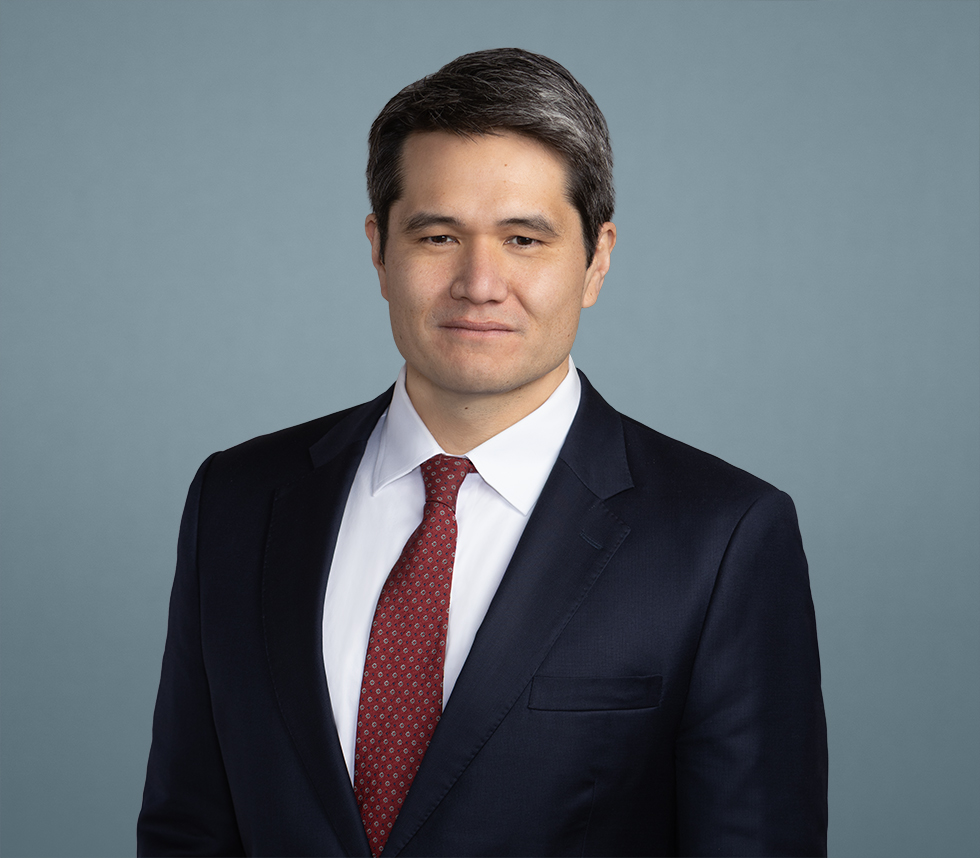
After a year working at the Manhattan district attorney’s office, he enrolled at the University of Michigan Law School.
“It’s been off to the races since then,” Sillers said.
Growing up in the suburbs of the nation’s capital, Sillers had fond memories and “warm feelings” about his time spent in Dallas visiting his grandparents.
He clerked with U.S. District Judge Barbara M.G. Lynn in Dallas, and he met his wife Kristen, a trusts and estates attorney, there, too.
Early in his career, during stints at Cravath, Weil and Sidley, he focused on commercial litigation but made the switch to First Amendment law nearly three years ago during his time at Clare Locke. In January, he joined Hilgers as a partner and plans to help grow the firm’s First Amendment practice.
“Grant (Schmidt) is like the Fernando Mendoza of law firm partners,” Sillers said, referencing the star quarterback at Indiana University. “He’s unrelentingly positive.”
Sillers was sitting next to Schmidt and his wife, Cynthia, who is also a partner at the firm, on a plane to a clerkship reunion when they got to talking about his joining Hilgers.
“When it came to finding a firm where I could build a practice and have my own clients, Grant was one of the first people I called,” Sillers said.
The following conversation with The Texas Lawbook has been edited for length and clarity.
Texas Lawbook: What trends are you seeing in your practice area?
Sillers: AI-generated anonymous defamation is a big one. It’s becoming easier and easier to hide the identity of an author, because a lot of times the tools that you have to identify who is speaking are based on things like the IP address and what the sentence structure is, comparing it to prior writings of the people. Now, if you stick a defamatory thing into ChatGPT and say, change this up enough that no one will be able to understand who wrote it originally, it spits out something anonymous. And then there are these websites that now allow you to buy, basically, space on the web anonymously, and email sites like Protonmail, they’re uncrackable. If you’re thoughtful about what you do, you can layer the protections against someone finding out who you are. That’s the difficulty.
Texas Lawbook: Do you have any cases that currently have to do with AI?
Sillers: We’ve had an ongoing issue for a client whose competitors or ill-wishers create anonymous YouTube videos where they type something defamatory, and then they have AI speak it, and then they put it on YouTube. That’s really hard to untangle, too, because it’s like the speaker is nobody, right? It’s a computer. And so how do you figure out who’s doing that? I think this has been reported on a lot, the Communications Decency Act really divests the content providers of any responsibility for nonsense on their platforms. It’s their decision about what they can post and not, and as that trend has gone toward “anything goes,” it becomes easier and easier to put up nonsense, and it’s harder and harder to get it taken down. So, unfortunately, defamation is a growth industry.
Texas Lawbook: What is it about defamation that interests you the most?
Sillers: I didn’t really know this area of the law existed until I kept seeing one of my friends in the New York Times for the Dominion case. And I called her and I said, “This looks like a super fun area of the law” — and it is. I think what most people don’t know, and what I’d like to kind of tell everybody, is that most of what I do and most of what I think my peers do is a lot of times behind the scenes.
It’s before a story gets published when we are contacted by clients that have grave concerns that there are parts of the story that are false. And to the extent that they can show it and that the reporters aren’t listening to the evidence, it’s basically a way to get legal oversight over a process that may have gone off the rails.
The objective is to ensure truthful reporting by basically showing your work and sending either the reporter or the legal department or both evidence that what they’re about to publish is false, so that is really the most interesting part of the job. It’s very fast-moving, and you’re basically drinking from a fire hose trying to learn about fact-checking for a business that you’ve never heard of before. … It’s all coming very quickly, and you’ve got to contextualize it, and then pick out the legal portions of it, and then get back to the legal department of the media company in a way that is compelling to them. Yeah, it’s very fun.
Defamation law is fun because it has the most gossip density, the highest density of gossip and salacious stuff, of any part of the law, because someone is necessarily allegedly lying about somebody else, right? That’s the core of a defamation claim. Something’s false and that you’re saying it publicly.
Texas Lawbook: What is your most memorable case or moment in your career?
Sillers: I have been fortunate to be part of a lot of different crazy things that have happened in the law. I think the most memorable experience was learning that my colleagues at Clare Locke had won the Dominion case or had settled it, because that was just such a huge deal; everybody was going crazy. That was incredible.
I think having the New York Post publish my letter about Claudine Gay’s plagiarism was truly surreal, because I’m now in the news. They got really mad because they were scooped after we sent them a letter basically telling them that what they were about to publish was false. So they didn’t publish it for like, four months. The reporter was so angry that she didn’t get the scoop that she published parts of the letter that we had written, but they were all like, whacked up and taken out of context, and so then we demanded that she publish the whole letter, which she did, to her credit. That’s not something you necessarily go for. But it was a memorable moment.
Texas Lawbook: What was one of your biggest takeaways from clerking for Judge Lynn?
Sillers: It changed the entire course of my life. Literally.
I think a lot of people can say the same thing. The first court hearing I observed with her was two parents who came in who had sued the Dallas Independent School District, trying to stop their bond issuance because there was, if I recall, raw sewage in the hallways, and just like they weren’t getting the right services. And I as this very naive, green recent graduate, thought, “Oh well, they don’t have standing. This is a motion to dismiss.” And then the judge listened to them for like two hours and obviously couldn’t give them any relief, because it just wasn’t a legal remedy. But I asked her afterwards, “Why did you do that?” And she said, “Well, sometimes the justice system is a way for people to connect to the government, and you have to just give the time to let them engage in that democratic process, because they’re marginalized. They have nobody to talk to about their issues. So if it helps them, that I can sit there and listen and explain and sympathize, then I’m going to do it.” I was like, “That is amazing.” I never even thought of the law as having that function. It was all robotic and kind of, “Oh, they don’t have standing,” you think about the technical issues. But she was really thinking about the human issues.
Different judges have different approaches toward their clerks. She has these clerkship reunions every other year or every third year, where every single one of her clerks who can make it goes to her home, and she hosts everybody. And we toast her, and we tell silly stories about our clerkships. And it’s a family. I mean, it’s honestly a community. And given that we’re all searching for community now, that’s one of the things that are so rare. I’m really close to a lot of the clerks that I’ve met there. I mean, Grant Schmidt’s wife Cynthia, was a clerk, and that’s how I met Grant, and that’s why I’m here. It’s still having an effect on my life, like even right now.
Texas Lawbook: You serve on the board of the Human Rights Initiative of North Texas. What interested you in being involved?
Sillers: I got involved because one of my friends who worked at AT&T was involved. I went to a presentation at AT&T, and I took on an asylum case, an affirmative asylum case. The woman had been persecuted in Uganda for being a lesbian and had been beaten and other things, and she had fled to the United States. And in my view — and I don’t become political — but the proper invocation of the asylum statute is one of the most special things about America, because people who have been persecuted and are fearing for their life can come here and stay. But if you actually fall within the statute, and you’re able to put together a convincing package, then you’re technically inside and entitled to asylum here. You’re able to live in safety forever.
We had to get affidavits from Uganda. We got pictures from her property, where this band of anti-homosexual thugs had come looking for her, and testimony from her neighbor saying, “Don’t come back, they’re looking for you.” The village elder had asked where she was to find her. It’s just horrible, right? She’s here with nobody and with her daughter. And I went down to Houston, and I appeared with the asylum officer and got her asylum, which was probably the most rewarding thing I’ve ever done in my entire life.
I did another one for a Burundian citizen who was a radio host. She brought the opposition leader on, which was really not a great idea, because the opposition leader started really bad-talking the government. That got her on the blacklist, and they came after her and destroyed her house. And so then she ran, got her asylum with one of my good friends.
An amazing organization like HRI provided so much support and knowledge and soup-to-nuts support for getting these people asylum. It really was amazing. I asked to be on the board, and it’s been a great experience. Actually, it’s been a really eye-opening experience because you hear about great things and horrible things happening in the program, and just the scope of what the organization has to deal with. It’s a lot, but it’s a great organization.
Texas Lawbook: Are you working on any asylum cases right now?
Sillers: Right now, the asylum backlog is something like 12 years. So right now, I don’t have any asylum cases, but I always have my ears open. Sometimes they need people to go and argue a defensive case. It’s like a full trial — it’s like a two-day trial. So it’s very difficult and a lot of work, but I’d love to do that.
If you or someone you know would like to be profiled in a future edition of Asked & Answered, please let us know at tlblitigation@texaslawbook.net. Check out our other Asked & Answered interviews below:
Mo Lovett Law’s founder discussed opening a new office in the Dallas-Fort Worth area and growing her law firm a year into opening. She also talked about mentorship and the state of the profession.
Trial lawyer Chrysta Castañeda reflected on her career and offers advice for young lawyers. While she has closed her firm, retiring for good is not in her plans.
A&O Shearman partner Billy Marsh discussed trends he’s seeing in shareholder, securities and mass tort litigation. He also talked about what it was like as a first-year associate to defend the NFL against fraud claims brought by a group of fans.
Reid Collins & Tsai senior founding partner William Reid discussed his new book, Fighting Bullies: A Case for a Career in Plaintiffs’ Law. In late November, Reid led a team in South Carolina that secured a $112.3 million jury verdict for their client.
Haynes Boone counsel Catherine Robb talked about media defamation cases and what drew her to a First Amendment practice. Robb also discussed her family’s legacy and what she hopes hers will be.