
Every November, the country pauses to say “thank you” to veterans who have served our nation, and every November, myself and many other veterans I imagine, find those words a little hard to hold. “Thank you” is a good thing to say—and no veteran takes it for granted—but it does feel strange. From the inside, service was something quieter and heavier: the weight of the people beside you, the promise that you would not leave them, and the understanding that someone had to stand in that place, and that it would be you.
I spent six years in the United States Army as an infantryman during the Global War on Terror, and I deployed to Iraq twice in support of OIF 7, 8, 9, and 10. When people learn this, they usually ask one of two questions. The first is what it was like. They want to know if it was hard or something I regret. The second, rarer and more thoughtful, is why I did it. I have come to believe the second question is the one that matters, because its answer is the same reason I now spend my days in courtrooms and conference rooms on behalf of injured people.
Service is the decision to place yourself between someone else and harm. It is not defined by the uniform, the rank, or the battlefield. The uniform is how a nation organizes that decision at scale. The decision itself is older, quieter, and available to anyone willing to make it.
This Veterans Day, I want to say what the infantry taught me about that decision, what it took to carry it home, and why I believe the practice of law, done right, is one of the places that not only a veteran’s service can continue, but everyone can serve their country in a way that’s desperately needed.
The infantry is the oldest and simplest job in any army. You close with the problem, on foot, alongside the people next to you. There is no abstraction in it. Whatever you are asked to do, you do it with men whose names you know and whose lives are, in a literal sense, partly in your hands. That is the first lesson: service is relational before it is ideological. Whatever brings a soldier into the Army, what keeps him moving on the worst day is the person to his left and right.
Two combat deployments to Iraq reinforced that lesson and added others. I learned that discipline is a form of love. Checklists, rehearsals, maintenance, and attention to tedious detail feel like bureaucracy until you understand that they are how you take care of people when the stakes are real. I learned that fear and duty can occupy the same body at the same moment, and that courage is not the absence of the first but the habit of obeying the second. I learned patience, which is mostly the ability to remain useful while nothing is happening. And I learned that service is also about humility: the mission is larger than the individual, you will often not see how your small piece fits, and you are still responsible for doing that piece well.
War is also an education in how fragile ordinary life is, and how much of what people rely on: safety, order, a roof, a working system, depends on someone choosing to hold the line. It left me with a lasting respect for the dignity of people on the worst day of their lives, and a lasting impatience with anyone who treats that dignity as negotiable.
None of this felt like philosophy at the time. It felt like work. The philosophy came later, in the quiet, when I began to ask what a person does with what he was taught.
Coming home is its own mission, and it arrives without a briefing. The tempo that organized every day is gone. The people who understand your shorthand are scattered. The civilian world is generous, curious, and mostly unaware of how much changed in you and how little changed in it. Veterans of my generation know this well. Most of us found our way, some with help, and some of us are still finding it.
What I eventually understood is that the values I had been given did not expire when the uniform came off. They needed a new assignment. Discipline, preparation, loyalty to the team, the refusal to quit when a task is hard, and the instinct to move toward a problem instead of away from it do not belong to the Army alone. They belong to whoever carries them. The question after service is not whether you will serve again, but where and how.
There is a temptation, after the military, to believe the most meaningful chapter is behind you. I resisted that belief. A nation does not stop needing the service of people of character when the shooting ends. It needs them more, in the places where no one is issuing orders and no one is watching. The courtroom, it turns out, is one of those places.
I practice law on behalf of people who have been seriously hurt and families who have lost someone. My cases involve commercial trucking crashes, workplace injuries and deaths, defective vehicles, and the failure of powerful institutions to protect the people they promised to protect. It would be easy to describe this as a business. Parts of it are. But on the days that matter, it feels much more like what I was trained to do.
Consider what a client brings to their lawyer’s office. A family arrives in the worst week of their lives, frightened, often grieving, and nearly always outmatched. Across the table will be a corporation with an insurer, a team of lawyers, unlimited time, and what may as well be unlimited money. That imbalance is real, and it is exactly the kind of imbalance service exists to address. I was taught to place myself between people and danger. In my work now, the danger is financial ruin, mounting medical debt, institutional indifference, and the quiet pressure to accept less than justice. The ground has changed. The posture has not.
The habits transfer directly. Preparation: the case that is won in the courtroom is almost always the case that was built, quietly and exhaustively, months earlier, in discovery, depositions, and the unglamorous work no jury ever sees. Loyalty: the drive to never abandon a client when a case becomes difficult, expensive, or slow. Composure: a trial is not combat, and no one who has known combat confuses the two, but staying level when the room is hostile is a learned skill, and I learned it early. Accountability: in the infantry, when something goes wrong, someone owns it. I carry that expectation into a profession in which institutions too often hide behind process, and I insist, on my clients’ behalf, that the responsible parties answer for what they did.
Lawyers take an oath, too. The rules of professional conduct set the floor for what a lawyer must do. Service raises the ceiling: the willingness to do more than is required, for someone who may never be able to repay you.
On Veterans Day we honor those who served, and we should. But I would ask something more of us, veteran and civilian alike. Gratitude is a feeling. Service is an action, and the best honor we can pay a veteran is to keep the work going.
For my fellow lawyers, that can be concrete. Veterans return home to legal problems that quietly decide whether they stay housed, employed, and whole: benefits disputes, landlord conflicts, family law, consumer debt. Many cannot afford counsel. A few hours at a veterans’ legal aid clinic, a pro bono matter taken on, or simply learning which questions to ask can change the direction of a life. Our profession has the skills. What it requires is the decision.
For everyone else, ask a veteran in your life what they did, and listen to the whole answer. Hire them. Learn what they are carrying and what they are capable of.
I served in the infantry, and I have been serving in some form ever since. I do not think that is unusual. I think it is what I was taught: that strength exists for the benefit of others, that the vulnerable are owed our best, and that the work is not finished simply because the uniform is hung up. Before you thank the next veteran for their service, make sure you’re someone worth thanking for being an American worth serving for. To every veteran reading this, thank you. To every reader who has not worn the uniform, the invitation stands. The mission is open, and there is room beside us.
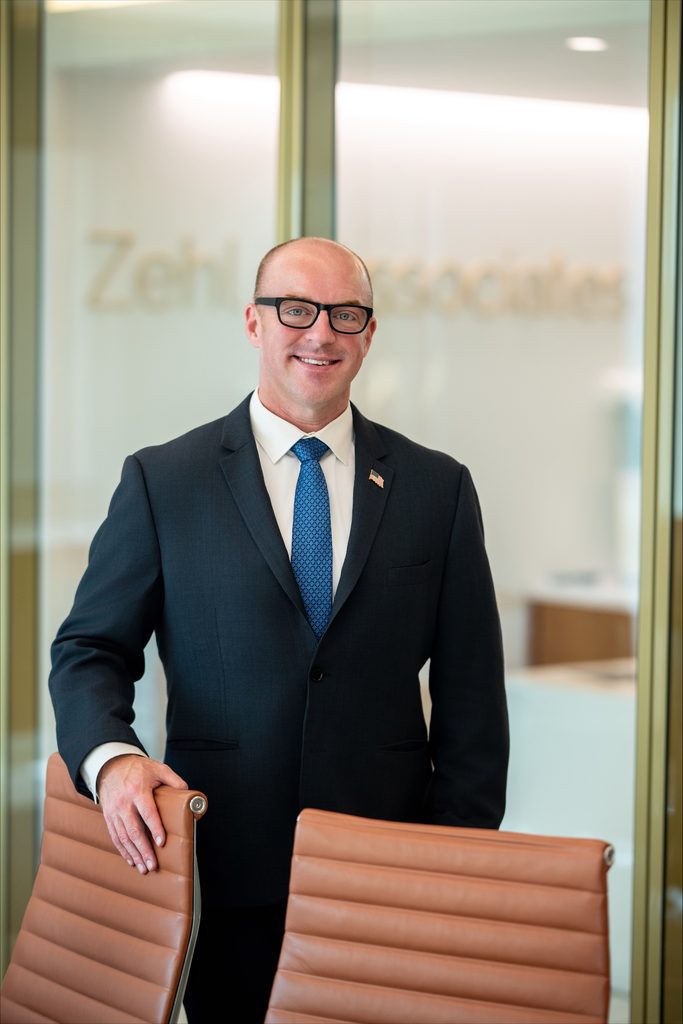
Chris Adkins is a trial lawyer at Zehl & Associates in Houston.