
Even during the year of multibillion-dollar deals for power plants, data centers and power plants for data centers, the $10.9 billion merger of Dallas-based Comerica Bank and Cincinnati’s Fifth Third Bank was a really, really big deal.
The complex mega-transaction announced by the two financial institutions on Oct. 6 put extraordinary pressure on the Comerica legal department, which was already being pushed to the limit on other matters, including defending the bank in consumer and investor litigation and regulatory battles over one of its signature financial services called Direct Express, fighting the Consumer Financial Protection Bureau in federal court and dealing with a Florida hedge fund turned activist investor pressuring the bank to do an M&A deal only to sue to stop the transaction from being completed.
Adding to the intensity, according to Wall Street analysts and activist investors, was a push by Fifth Third executives to get the deal approved by regulators and shareholders in a near-record pace to make sure that a bigger fish didn’t come along and make a better offer for Comerica.
The Comerica legal team responded to every challenge. The CFPB lawsuit was dismissed in early 2025. On Jan. 6, Comerica shareholders overwhelmingly approved the sale. One week later, the Federal Reserve and the Office of the Comptroller of the Currency announced their approval of the deal. On Jan. 23, the Delaware Chancery Court rejected the activist investor’s petition seeking a temporary restraining order.
And today, Feb. 1, at 12:02 a.m., one of the largest bank mergers in Texas history officially closed a mere four months after the deal was announced.
The 40 in-house counsel at Comerica pulled off this exceptional feat despite facing future financial uncertainty, as almost none of them have been guaranteed positions by Fifth Third Bank now that the deal is done.
Citing these extraordinary accomplishments, the Association of Corporate Counsel’s DFW Chapter and The Texas Lawbook this past Thursday night honored the Comerica legal department and its outside counsel at Wachtell Lipton with the 2025 DFW M&A Transaction of the Year.
“The magnitude of the transaction, the hurdles we had to achieve and the time constraints we were trying to operate under simply could not have been achieved without the individuals behind me as well as the sacrifices that their families made to bring this to fruition,” Comerica Chief Legal Officer Von Hays said in accepting the award for the Comerica team. “So, it was all hands on deck.
“Every lawyer at Comerica rolled up their sleeves and got this work done despite the uncertainty of what it meant for them come this next week,” Hays, who has been a lawyer at Comerica for 18 years, told The Lawbook. “This transaction was a round-the-clock exercise.”
Fifth Third’s $10.9 billion acquisition of Comerica was the largest banking merger of 2025, eclipsing Pinnacle’s $8.6 billion acquisition of Synovus, Huntington’s $7.4 billion deal for Cadence Bank and PNC’s $4.1 billion acquisition of FirstBank. With the transaction completed, Fifth Third became the ninth-largest bank in the nation, with $288 billion in assets, cementing its position as a major player in Texas, Arizona and California, where its footprint was nearly nonexistent.
Premium Subscriber Q&As
The Texas Lawbook talked to five lawyers from Comerica’s in-house team to discuss the traits they seek in outside counsel, what outside counsel needs to know when working with them and more:
— Chief Legal Officer Von Hays
— Deputy General Counsel Ashley Fincher
— Division General Counsel Steve Franklin
— Deputy General Counsel Nicole Gersch
— Deputy General Counsel Hope Schall
“This deal required not only technical legal excellence but also extraordinary coordination, foresight and leadership across every division of the legal team,” Amanda Brown, a partner at Fisher & Phillips, wrote in nominating Hays and Comerica’s legal department. “Under the direction of Von Hays, the group collaborated seamlessly to manage the legal complexities of a large, multijurisdictional banking transaction.”
“The transaction marked a transformative moment for Comerica and positioned its legal department at the center of a complex, multijurisdictional process,” Brown said. “Throughout the deal, the team demonstrated exceptional composure, clarity and strategic judgment, reinforcing its reputation as a trusted partner to Comerica’s executive leadership and a model of legal excellence within the Texas business community.”
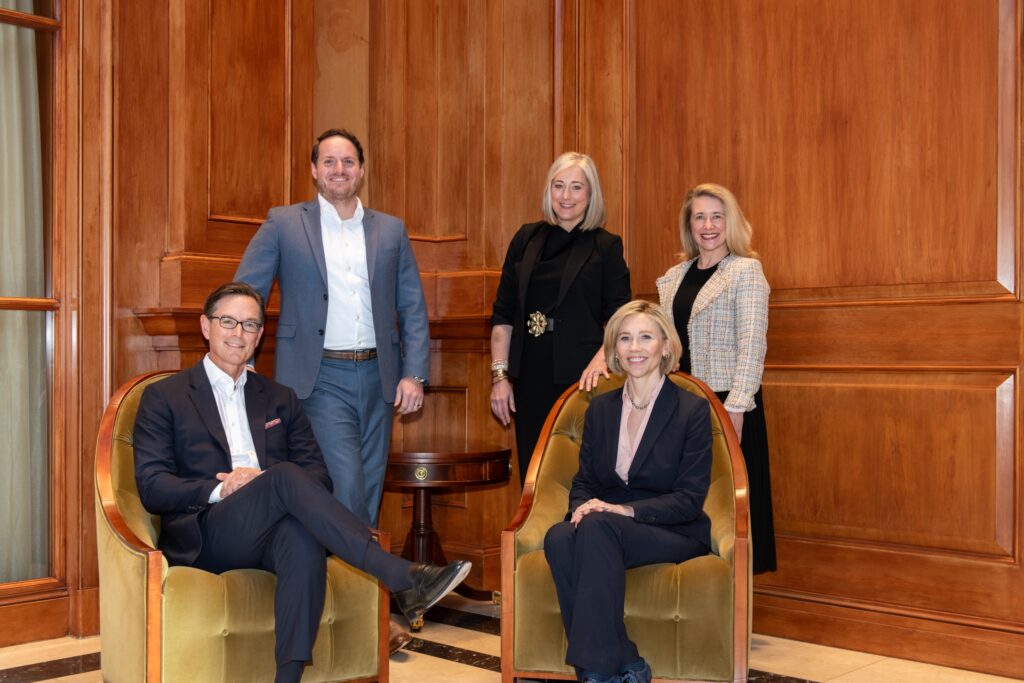
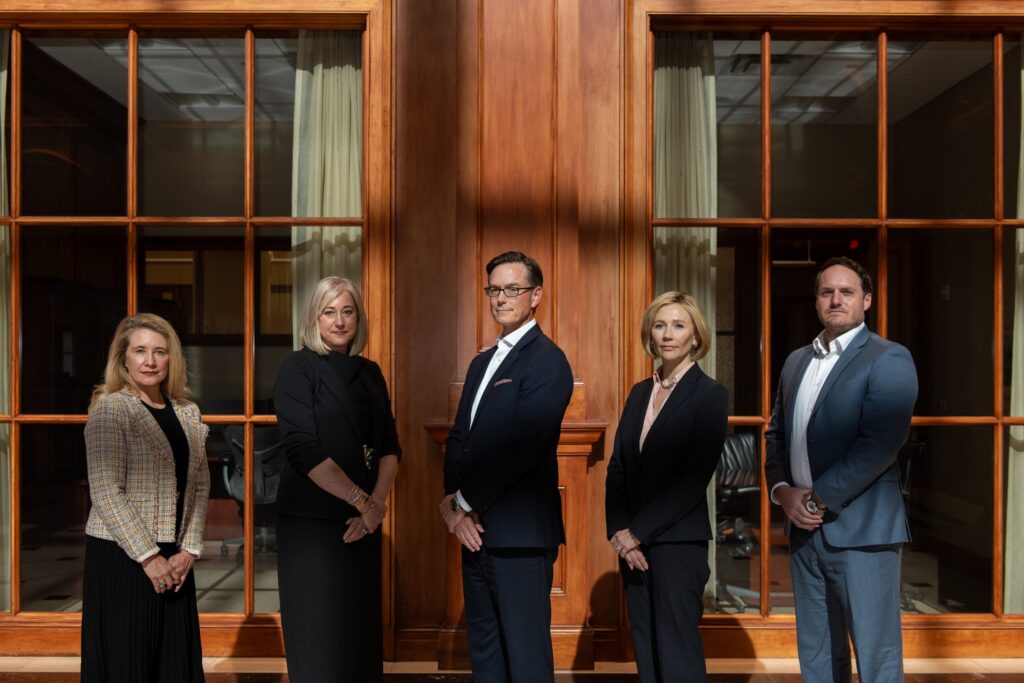
In presenting the DFW Corporate Counsel Award, ACC-DFW and The Lawbook specifically cited Hays and five of his deputies for their leadership roles in getting the transaction across the finish line. They include:
- Deputy GC Nicki Gersch, who also served as Comerica’s corporate secretary, was involved in the Fifth Third deal from Day One and was “heavily involved in the merger agreement, due diligence and integration planning”;
- Deputy GC Hope Schall, who was the bank’s top in-house regulatory lawyer, oversaw all the documents submitted to the federal agencies and made sure that no confidential information was shared;
- Deputy GC Shannon Barrow oversaw Comerica’s banking products, payment and management services, and helped with due diligence and assessing contingencies and conditions of the merger;
- Divisional GC Steven Franklin worked on negotiation of the merger agreement, preparation of applicable Securities and Exchange Commission filings, the merger proxy statement and the execution of the special shareholder meeting to approve the merger; and
- Deputy GC Ashley Fincher, who leads the bank’s litigation and dispute resolution team, handled due diligence that involved disclosure of materials related to pending litigation, employment disputes, corporate operations and procurement.
“The biggest challenge was time,” Franklin told The Lawbook. “We had a three-week period to complete diligence and execute the merger agreement. People across the organization were working around the clock to meet this timeline. The ability of our people to come together to accomplish a common goal under challenging circumstances is what makes Comerica such a special place to work.”
Barrow agreed.
“Working under a compressed timeline, one of the biggest challenges was to quickly provide our counterparts with a summary of the critical vendors and service providers that enable Comerica to offer its more complex payments products,” he said. “After working through the weekend in our more casual clothes, the deal team happened to be on an early Monday morning call together. We joked that we barely recognized each other all dressed up.”
Jones Day partner Albert Rota said the legal team at Comerica has enjoyed many successes over the years, but said that two stand out.
“First, Von and his team advised Comerica’s executives through a series of issues during the 2023 regional bank dislocation,” Rota said. “Von’s guidance during this tumultuous time helped position Comerica to emerge from the crisis and align it for a positive transaction with Fifth Third. Second, Von and his team’s recommendation to affirmatively file suit against the CFPB in December 2024, rather than wait for an enforcement action. It is always a serious and difficult decision for a financial institution to sue a regulator, and Von’s recommendation positioned Comerica to frame the potential issues in its favor and ultimately led to a highly favorable outcome.”
“Von is able to develop and determine high-level legal strategy and explain each of the steps and their nuances to deliver on that strategy,” Rota said. “This ability to communicate the strategy, but also the gritty detail of delivering on the strategy, creates tremendous confidence in both Von’s clients and his teams.”
Comerica traces its founding to 1849 in Detroit, where it was established as Detroit Savings Fund Institute, a savings bank catering to the working class. In 1871, it reincorporated as The Detroit Savings Bank and was one of the few banking institutions in the region to survive intact during the Great Depression. After World War II, The Detroit Bank, as it became known, began to expand through a series of mergers. As the Detroit Bank & Trust, it gained a reputation for its early introduction of such consumer-directed innovations as credit cards and ATMs. It also expanded outside the Midwest into the burgeoning markets of Texas and California.
In 1982, the bank adopted its new and broader identity as Comerica, and in 2007, moved its corporate headquarters from Detroit to Dallas.
By 2024, Comerica reported offices in 14 of the nation’s 15 largest metropolitan areas with 379 banking centers and $70 billion in assets, and it was the nation’s top-ranked bank holding company lender based on commercial and industrial loans.
Like Comerica, Von Hays had his roots in the Midwest. He was raised in Marshalltown, Iowa, a town of about 25,000 located roughly between Des Moines and Cedar Rapids.
“My parents had a vending machine business and later owned a small-town used car lot along with a few rental properties,” Hays recounts. “In short, they were small business owners in a small town.”
There were no lawyers in his family, but “lots of farmers.” He says he began to consider law school while spending his junior year in college studying in Europe.
“I enjoyed seeing the world from a new perspective and had no set plans following graduation,” said Hays. “So, I thought law school made sense with my degree in communications and my interest in different perspectives.”
After graduating magna cum laude from Central College in Pella, Iowa, Hays attended Drake University Law School in Des Moines, earning his J.D. in 1996. He was already a corporate partner at K&L Gates in Dallas when his life took its turn towards Comerica.
“I was part of a team of lawyers pitching Comerica for labor and employment work when it was relocating its corporate headquarters from Detroit to Dallas in 2007,” said Hays.
“I was a young partner at K&L Gates with young children. So, when they explained the person overseeing employment issues was not moving to Dallas, I became interested in the idea of being in-house where I had more control over my calendar and the ability to engage more in problem avoidance than problem resolution,” Hays said.

When Comerica moved to Dallas, Hays moved in-house at Comerica, first as HR counsel for two years, then deeper into the swim of corporate operations. In August 2022, the bank named him chief legal officer.
“I’ve been in this role now for four years, and it has been one major event or issue after another,” Hays said.
The failure of five regional U.S. banks in 2023 placed scrutiny on all similarly sized financial institutions and their leaders.
Then came troubles centered around Comerica’s involvement in Direct Express, a program created by the U.S. Treasury’s Fiscal Service to provide prepaid debit cards for recipients of federal services who may not have bank accounts. Comerica was named as banking agent for the program when it was launched in 2008.
In May 2023, The American Banker reported complaints that Comerica and its U.S.-based contract vendors had outsourced consumer complaints about its Direct Express cards to a vendor in Lahore, Pakistan, even though Comerica’s contract, which specified that “all services shall be performed in the United States or its territories.” According to Comerica’s reports to the SEC, the Direct Express program brought billions in non-interest-bearing deposits each year — $3.1 billion in 2023 and $3.4 billion in 2024 — along with a total of $258 million in card-related fees for those two years alone.
In 2024, the CFPB filed a lawsuit against Comerica, which countered with a lawsuit of its own. The CFPB suit was dropped with a change in administrations, but in February 2025, Comerica was informed that its contract with Fiscal Services would not be renewed and would be awarded instead to BNY. Comerica’s legal fees between 2022 and 2024 related to the Direct Express litigation hit $64 million, according to company filings with the SEC.
Comerica’s legal team, however, did convince the Treasury Department to extend its Direct Express agreement for three additional years as part of the transition to BNY.
Then last July, HoldCo Asset Management, a Florida-based hedge fund holding shares of Comerica, demanded that the bank pursue a buyer, citing, among other complaints, management’s handling of the Direct Express affair.
“The activist investor would like to think that they were the ones that pushed us to sell,” Hays said. “As a member of the executive team, we constantly examined potential partnerships — both possible acquisitions and mergers.”
In November, a month after the merger was announced, HoldoCo sued Comerica on behalf of investors because they didn’t like the deal. The Delaware judge hearing the case rejected HoldCo’s request for a TRO to stop the merger.
“We were pleased that the shareholder vote to approve the merger was nearly unanimous other than the activist,” Hays said.
Comerica Vice President of Regulatory Affairs Elizabeth Davidson notes that the surviving relationship with Financial Services is only one of the deal points that makes the transaction “unique.”
“This is not a small acquisition. Its big scale means more regulatory scrutiny, which is provided in abundance these days,” said Davidson, who also nominated the bank’s legal team for ACC-DFW’s M&A Transaction of the Year. She also provided an exhaustive list of the duties performed by the bank’s lawyers.
“The Comerica legal department is, as expected, playing a variety of roles, including and not limited to assisting in due diligence, supporting negotiations, facilitating shareholder approvals, assisting with change of control and human resources legal questions, preparing the bank merger application for the Office of the Comptroller of the Currency, and assisting in integration including carving out new roles for the team, assisting in vendor discontinuations, highlighting CSI for documents to move over to Fifth Third, accelerate regulatory remediation efforts, review public statements and maintain appropriate privacy and cybersecurity standards for information sharing,” she wrote.
Fifth Third has already told investors that $850 million in cost savings will be realized by the deal through reductions in headcount, the closing of facilities and other operational expenses. And it would be only human for legal teams on the sell-side to consider the possibility that the jobs involved in these kinds of negotiations might well be their own.
Winston & Strawn partner Tom Walsh said Hays is the “dream” client.
“He is unflappable. When the pressure is at its highest, Von is at his steadiest,” Walsh said. “I have had the privilege of representing Comerica and working with Von on some of the biggest and most important litigation matters that Comerica Bank has had over the past nine years. During those matters — when Von was head of litigation for Comerica — I always knew that when things got the most hectic or the most stressful, Von would provide a strong and steady hand to help guide us to a successful resolution.”
“Von’s temperament and steadfastness are unlike anyone I have ever met. He is calm. He is confident. He is precise. He is analytical. He is curious. He clearly has the respect of his entire team,” said Grant Schmidt, managing partner of the Dallas office of Hilgers. “I have had the privilege to work through several important decisions with Von. There is no doubt in my mind that he knew where we would likely land — rather, he knew the right spot to land. But he still asked me questions and wanted to hear my reasoning. I’ve seen him do that with other members of his team as well. He has a way of respectfully signaling to you that, while he likely knows the right answer, he would feel much better knowing your insights and utilizing those insights to kick the tires on a current hypothesis. Your opinion matters to him.
“Von has the ultimate moral compass. He wants to do what is right and is able to make decisions that are morally sound while also being in the best interest of his team and the bank,” Schmidt said.
Hays said that he and the bank selected Wachtell Lipton as its lead counsel for the Fifth Third deal because Comerica has had a long relationship with the Wall Street law firm’s lawyers.
“When you look at most major bank mergers, you see Wachtell on one side and Sullivan & Cromwell on the other,” he said. “They are the experts at this.”
Hays says that managing the team through times of such uncertainty ranks among his proudest moments. He cites one of his best moments at Comerica as reading the results of an in-house survey examining the perception of each department. To his surprise, the legal department was cited as a positive outlier for its ability to simplify issues for its customers in-house.
His personal attitude towards uncertainty, he says, is tempered by personal experience.
“In August 2019, on my wife’s birthday, I was diagnosed with cancer,” Hays says. “It had a significant impact on my worldview, my career and on who and what I prioritized. Recognizing nothing is guaranteed in life, you had to take advantage of the time and opportunities you were afforded and be sure to support those who supported you.”