
Publisher’s note: The Texas Lawbook is pleased to offer this column in partnership with Texas-based Half Price Books sharing our readers’ favorite reads. “My Five Favorite Books” publishes every other week. Please email brooks.igo@texaslawbook.net if you’d like to share your favorite reads.
When I was asked to contribute to this ongoing column, I was immediately excited — and then, admittedly, a little nervous. Books have always held a special place in my life. As a child, I was a voracious reader, and my mom would often find me tucked away in a closet with a flashlight, determined to finish whatever story had captured my imagination. As an adult, I have not always devoted as much time to reading as I did when I was younger, but books have remained an important way for me to connect — with friends, with family, and now with my own children. I chose these five books because each one has meant something to me at a particular stage of life, and each is one I have shared with someone else.
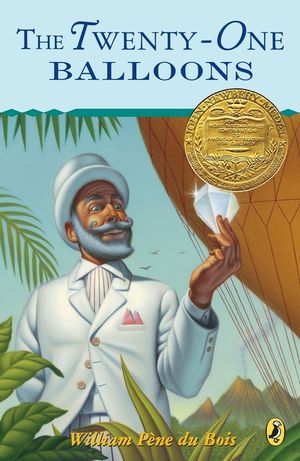
One of my favorite childhood books is The Twenty-One Balloons by William Pène du Bois. It tells the story of a retired teacher who sets out to circle the globe—alone—in a hot air balloon. Instead, he crash-lands on an island inhabited by a scientifically minded community of families, survives a volcanic eruption, and eventually lands back in the United States—still alone—with twenty balloons and diamond cufflinks. I loved this book for its magical inventions, architectural wonders, and the illustrations that made every idea come to life. My favorite house had elevator beds that children could raise to the roof so they could sleep directly beneath the stars. This book sparked my imagination and gave me an early sense of wonder about travel, invention, and the world beyond my own backyard. Years later, after my husband and I had our two daughters, I could not wait to share this same fantastic story with them.
On a work trip, I picked up The Alchemist by Paulo Coelho in an airport bookstore simply because the title caught my attention. At the time, I was reading Harry Potter and the Sorcerer’s Stone with my older daughter, and the word “alchemist” had recently entered my vocabulary. I was not exactly sure what an alchemist was—and, as it turned out, this book did not really answer that question. Instead, the alchemist is the doorway into the main story of a shepherd boy who follows his dream in search of buried treasure. After traveling through far-off lands, he discovers that what he was looking for had been in his backyard all along. At that point in my life, I had done a lot of traveling, and the message made me pause. Rather than always looking for interesting places and people somewhere else, I began to focus more intentionally on what was around me. I have always been good at planning for the future, but this book reminded me that I also needed to work on being present.
As our family grew, the present became increasingly hectic filled with dance recitals, piano lessons, soccer matches, school events, and all the ordinary commitments that make family life both joyful and overwhelming. That is when I picked up The Three Big Questions for a Frantic Family by Patrick Lencioni in a bookstore. At the time, I did not realize Lencioni was known for his leadership books; I was simply looking for a practical way to manage the competing priorities our family faced every day. After reading this leadership fable, my family and I had a meaningful conversation about what made us unique and what we wanted to prioritize. We organized our lives around three pillars: education, family, and faith. With that framework in place, decisions about how to spend our time, money, and energy became much clearer. It also became easier to say no—without guilt—to things that did not align with our priorities. Over the years, we have revisited those priorities from time to time, and the lessons from this book have continued to serve us well.
One of those periods of reassessment came as we emerged from COVID. After a decade at JCPenney, including helping steer the company through its successful emergence from bankruptcy, I decided to take a break from corporate life. I wanted to pause, reconnect with friends and family, and think carefully about what I wanted to do next. During that time, I also returned to my childhood love of reading and began actively seeking recommendations from friends and family. One of my mom friends recommended Why We Sleep: Unlocking the Power of Sleep and Dreams by Matthew Walker, PhD, so I added it to my reading list. Sleep has never been a priority for me. I regularly pulled all-nighters in school and at work, and I was convinced that I did my best work after the sun went down. This book was eye-opening, and I wish someone had handed it to me years earlier. It changed the way I thought about rest. I stopped treating sleep deprivation like a superpower and began to understand sleep as essential to mental health, clarity, and strategic thinking. Instead of pushing through every time I felt tired, I started giving myself permission to sleep on it—and more often than not, the answer became clearer by morning.
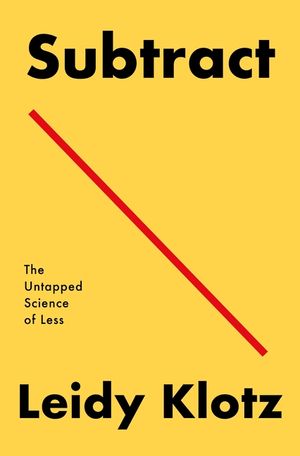
When I started reading again, I read almost everything in our house, including the book reviews in my University of Virginia alumni magazine. That is where I found the last book I want to recommend: Subtract: The Untapped Science of Less by Leidy Klotz. After nearly twenty years of practicing law in high-pressure situations, I was ready to decompress, but I was not entirely sure how to begin doing less. Klotz, a professor at UVA who studies problem solving, explores how often people overlook subtraction as a strategy. It is human nature to add, build, expand, and do more—but sometimes the best solution does not become visible until we take something away. This book helped me see that doing less is not the same as caring less or accomplishing less. Sometimes, doing less creates the space needed to focus on what matters most.
As I reflected on these five books, I realized that each one resonated with me because it found me at the right moment. One sparked imagination, one reminded me to be present, one helped our family define its priorities, one changed the way I think about rest, and one taught me the value of doing less in order to focus on doing better. Each book left an impression strong enough that I wanted to share it with someone else. And that, to me, is one of the best things a book can do: meet us where we are, help us see something differently, and then give us a reason to pass it along.
Brandy Treadway joined Academy Sports and Outdoors as its Executive Vice President, Chief Legal Officer, and Corporate Secretary last August. She is a past winner of the Association of Corporate Counsel – DFW Chapter and Texas Lawbook’s Corporate Counsel Awards.

Here are five more My Five Favorite Books columns from our readers you might have missed:
Nick Nelson says not everything we read as attorneys inspires anticipation and wonder, but offers five books that might.
Andrew Gratz shares five books that have shaped how he thinks about leadership and how he approaches his work with executives, boards, and legal teams.
Natalie LeVeck reveals her long-standing (and deeply ingrained) obsession with true crime.
Though he reads far more about paid sick leave requirements, disability accommodations, and overtime exemptions these days, John Farrell shares five books he just loves.
Allison Cook shares five books she’s loved since getting back into reading.