A few weeks ago marked one year since my last drink.
I’d love to tell you it was a decision. It wasn’t. I woke up one morning feeling sick, and when evening came and my wife asked if I wanted a glass of whiskey, I said no — not out of resolve, but because I still felt lousy. The next night, I didn’t pour one either. On the third night, the thought occurred to me, and it was followed by a stranger one.
I only wanted the drink because I was bored. Not bored from a lack of things to do, bored from having too many.
Lawyers are trained never to make admissions against interest, so consider what follows a break from my training.
For most of my career, drinking wasn’t a problem I had. It was a skill I was known for. I did my law school homework in the back booth of a pub. I’ve recruited lawyers over long dinners, courted reporters over scotch and raised the seed money for a nonprofit around my backyard fire pit while a bottle of whiskey made the rounds. A friend once described me, fondly: “Mark may be the drunkest guy in the room by blood alcohol content, but he’ll appear as sober as a judge.” In our profession, that’s practically a letter of recommendation. Nobody worries about the lawyer who never slurs, never misses a deadline and outworks the room.
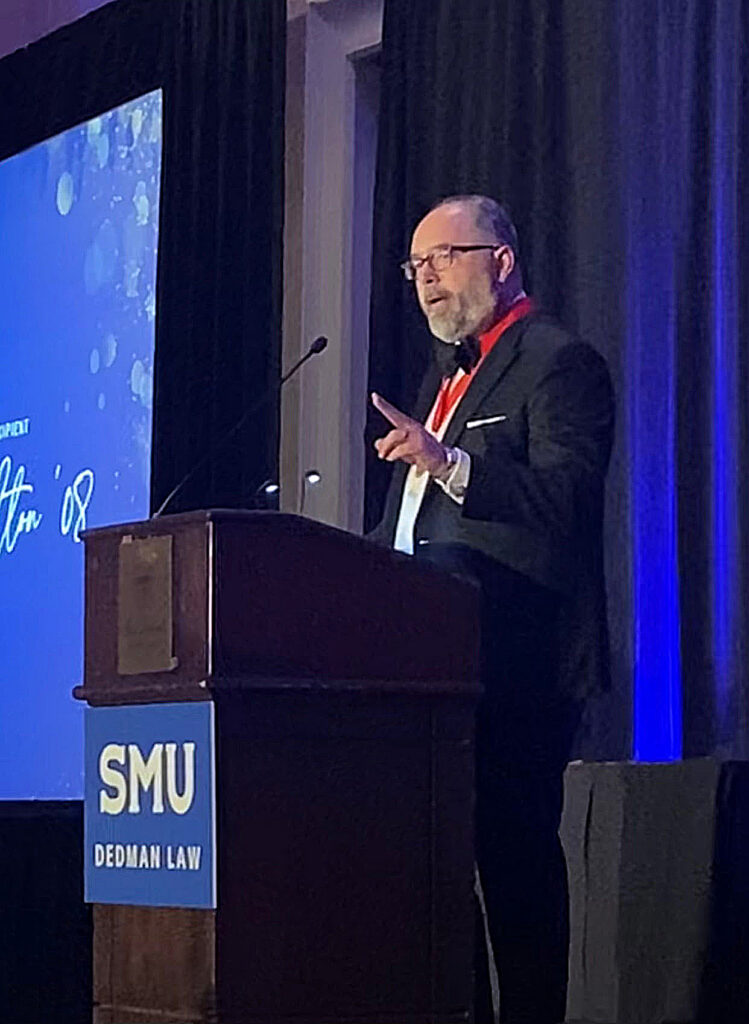
That is the trap, and it is our profession’s trap, specifically. The research has told us for years that lawyers struggle with alcohol at roughly double the rate of other educated professionals. But our version of the problem doesn’t look like a problem. It looks like competence. High-functioning isn’t the opposite of trouble. It’s the disguise trouble wears to work.
Here is what the whiskey was actually for, in my case.
In March 2020, I posted an offer on Facebook to help anyone in Dallas facing eviction. That post became a phone line, then a website, then a nonprofit law firm — the Dallas Eviction Advocacy Center — that has since represented tens of thousands of Texas tenants. It is the most meaningful work of my life. It also meant that for five years I ran at full speed through emotionally dense territory. Every day brought another person about to lose everything, one after another, without reprieve. I sat in their living rooms. I took their midnight calls. Their fear became my fear, and their desperation became mine too — vicarious trauma, absorbed daily, the occupational hazard nobody mentions in professional responsibility CLEs. I also had the stress of my Big Law day job to contend with, which is no walk in the park, even by itself.
One morning, minutes before I was set to speak to a class of young lawyers over Zoom, someone sent me a news clip: a young couple being evicted, a newborn in a stroller, their belongings piling up in a parking lot behind them as they walked away to nowhere in particular because they had nowhere to go. I sobbed at my desk until I couldn’t speak. I joined the call with my camera off and texted the other facilitators that I’d have to sit that one out. “Out of character,” they said. They were right. But, in reality, the private breakdowns were becoming my character. It was just something no one else could see.
The weight of it all depleted whatever emotional capacity I had. And then one day, without my noticing, that capacity was simply gone. I was still in constant motion — courtrooms, board meetings, the Legislature. But I wasn’t feeling anything. I had become an observer of my own life, with an emotional range collapsed to a flatline.
Work didn’t pass the time. Whiskey did. That’s what I was finding at the bottom of the bottle. And in the accidental clarity of those first few sober days, that struck me as a terrible reason to pour a drink. So on the third night, once again, I didn’t.
The results were almost insultingly simple. Weeks later, I was sleeping better. I wasn’t hungover. I was — and this is the embarrassing part — roughly twice as productive. And for the first time in years, I could feel myself being in a moment. Actually in it. Not a lot at first. But it was something. These days, an 80-pound rescue dog interrupts my workday by laying his head in my lap, and I notice. For a while there, I wouldn’t have.
When I show up at bar events now and order soda water, friends are startled. Drinking — and doing it well — was part of my identity. “Is this a permanent thing,” they ask, “or will we have you back soon?”
I still don’t have an answer to that question, and this is the part I most want my colleagues to hear. I’m not going to tell you to quit drinking. I’m in no position to preach, and the whiskey was never really my problem anyway. It was my treatment plan — self-prescribed, for a caseload of other people’s worst days that I was unable to examine. If your treatment plan looks like mine did, the question isn’t whether you can still function. Of course you can. We’re lawyers; functioning is the one skill we never let fail. The question is what you’ve stopped feeling in order to keep functioning.
Early in the pandemic, my wife reminded me of something most lawyers forget: It’s OK to ask for help. The Texas Lawyers’ Assistance Program exists for exactly this — confidential, free and staffed by people who understand our profession’s particular ways of hiding. You don’t have to be in crisis to call. I’d argue the best time to call is while you can still pass for fine.
So no, I haven’t quit. That framing feels undeservedly triumphant — like claiming credit for a goal I never actually set.
I just haven’t started again yet.
Mark Melton is a Dallas tax lawyer and the founder of the Dallas Eviction Advocacy Center. He is also the author of Injustice of the Peace, a new book about his experience defending tenants in eviction trials, set to publish on March 2, 2027. www.injusticeofthepeace.com.