
Scott Kelly said his introduction to law started early.
“My dad was in trial shortly before I was born. Pagers [and] cell phones didn’t exist at that time,” he said. “My mom went to court and sat through my dad’s trial while pregnant with me in case she went into labor during the trial. So, I suppose it began in utero.”
Nearly five decades later, Kelly is senior counsel for litigation at ConocoPhillips, where he achieved one of the most successful years in his 24-year legal career.
In 2025, Kelly and his team of outside counsel scored three trial victories, defeating $250 million in claims against ConocoPhillips and recovering $12 million in damages. And he settled a fourth case that involved multiple fatalities.
“It was the most interesting, challenging and rewarding year ever,” said Kelly, who joined the ConocoPhillips legal department in December 2024 as part of its $22.5 billion acquisition of Marathon Oil. “Completing three significant trials while leaving my Marathon colleagues, becoming part of a new legal team and joining a much larger company was a lot to handle. I felt confident in my judgment and our positions for each trial, but I was well aware of risks involved with taking three cases to trial so soon after joining the company.”
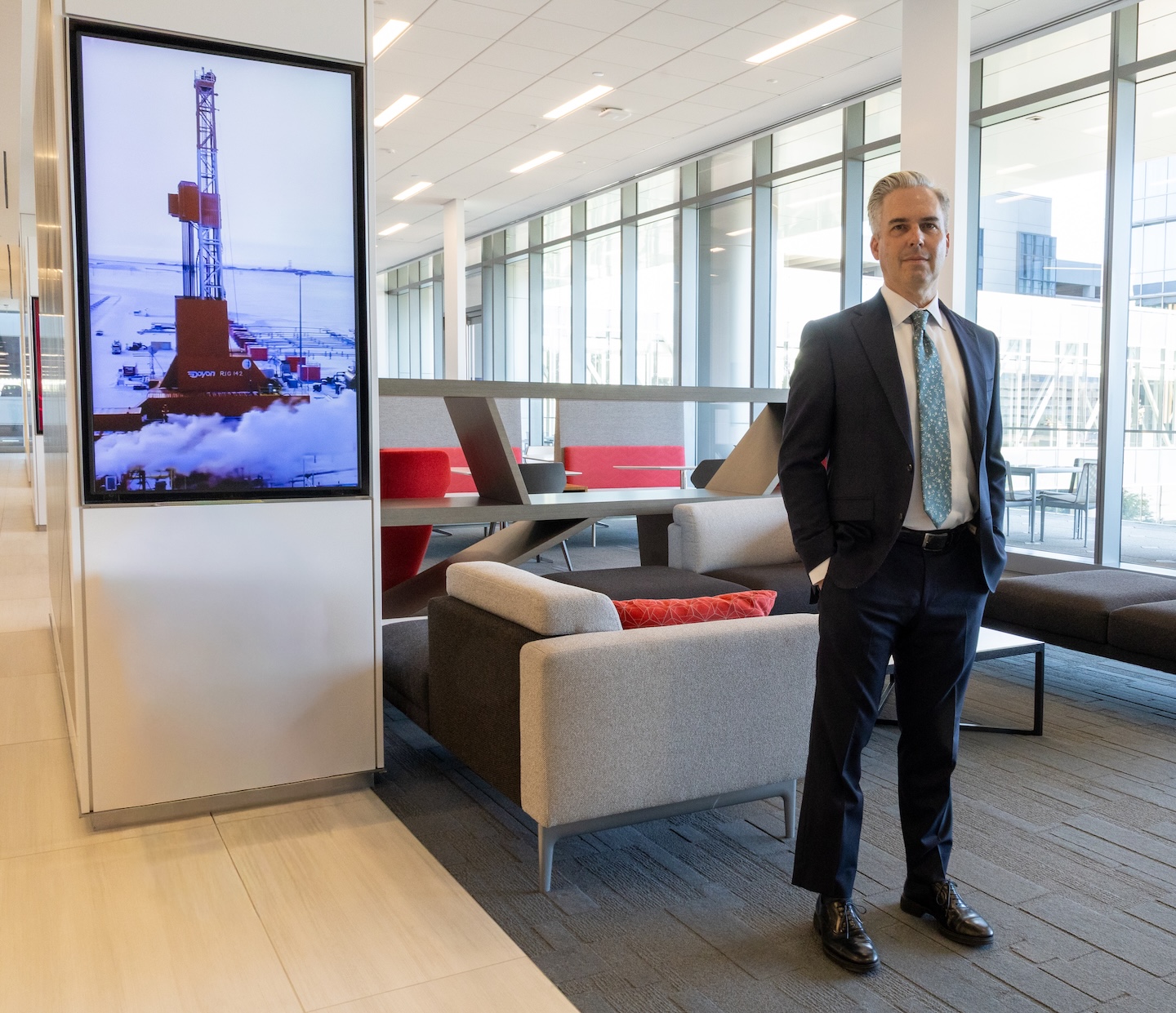
Citing these huge courtroom victories, the Association of Corporate Counsel’s Houston Chapter and The Texas Lawbook are awarding the 2026 Houston Corporate Counsel Award for Senior Counsel of the Year Award for a Large Legal Department (21 or more attorneys) to Kelly. The awards ceremony is May 28.
“Scott accomplished more in his first year at ConocoPhillips than many in-house counsel accomplish in decades of service,” said Tim Shelby, a partner at Ahmad Zavitsanos & Mensing, who co-nominated Kelly for the honor. “This was not easy. Being new to ConocoPhillips, Scott had to quickly gain the confidence of his superiors and the buy-in from executives to take three cases inherited from Marathon to trial instead of settling them. He also had to convince several former Marathon employees to testify in trial even though they had recently retired or moved to other companies after the acquisition by ConocoPhillips.”
George Shipley, a principal at Shipley Snell Montgomery, said Kelly demonstrated “exceptional judgment, strategic clarity and confidence” during a period of professional uncertainty.
“Scott made these bold decisions while Marathon was in the process of being acquired by ConocoPhillips and while he was transitioning to his new role there,” said Shipley, who also nominated Kelly for the award. “The trial occurred in the middle of this transition. In fact, Scott met his new boss for the first time on the flight to Los Angeles to attend the trial. And his new position at ConocoPhillips was not confirmed until the middle of trial.”
“Under such circumstances, many in-house lawyers would have taken the safest, most conservative path available: agree to the continuance or settle,” Shipley said. “Scott instead demonstrated the judgment, courage and confidence to try the case. Scott Kelly embodies the qualities that this award seeks to recognize: strategic judgment, courage, business alignment and unwavering commitment to his company’s long-term interests. I cannot recommend him more highly for this award.”
Kelly was born in Kansas City, but his family moved several times because of his dad’s job as a lawyer for more than three decades with AT&T. His mother was a daycare teacher and a stay-at-home mom.
A memorable moment for a young Scott Kelly came when he was still in elementary school.
“I’ve always been a big music fan, and when in high school I played music in a local band performing at clubs in Houston,” Kelly told The Lawbook. “Michael Jackson was my first favorite musician, and I was a big fan. When I was 7 years old, we won a ticket lottery to see Michael Jackson perform. I was more excited than I had ever been in my life. I wore an airbrushed hat that said ‘Thriller’ and an airbrushed t-shirt with Michael Jackson’s face on the front. Those were prized possessions. The show I attended was at Arrowhead Stadium in Kansas.”
“We were at nearly the last row in the upper deck, but I didn’t care,” he said.
Premium Subscriber Q&A: Scott Kelly discusses the traits he seeks in outside counsel, what outside counsel need to know when working with him and more.
Kelly said that his dad, John Kelly, didn’t pressure him to attend law school.
“But my dad’s love of practicing law influenced my decision to pursue a legal career,” he said. “My dad grew up in rural Kansas, literally attending a one-room school for a while. He worked hard to attend and afford higher education, working some tough jobs to pay tuition. His pride in being lawyer was evident to me even as a young kid. My dad brought my sister and me into his office all the time. As a young kid, I knew the team in his law department well. During college I spent time interning at AT&T. Although I worked in a business unit, I spent free time hanging around the law department. My dad shared with me how his job could change every day, and that was exciting.”
After graduating with a bachelor’s degree from the University of Texas in Austin, Kelly earned his law degree from the University of Houston Law Center in 2002.
Kelly started his legal career in the litigation practice at Baker Botts in Houston and then spent another six years at Porter Hedges and nearly seven years at Shipley Snell.
The time Kelly spent at Baker Botts, he said, had a large impact on his career path.
“I was surrounded by many talented people performing high-level legal work. I learned so much during those years,” he said. “Many of my former colleagues are in interesting leadership positions across our industry. In fact, the ConocoPhillips General Counsel [Kelly Rose] is a former Baker Botts colleague.”

Kelly’s wife, Lisa, was also a lawyer at Baker Botts, though they met and started dating during high school.
In April 2022, Marathon Oil offered Kelly a position to join its corporate legal department.
“With my dad’s background, I always considered going in-house as a good career path,” he said. “Before going in-house, I worked a large docket of litigation for CenterPoint Energy. My firm’s arrangement with CenterPoint allowed me to work with CenterPoint in a way that felt similar to working as an in-house lawyer. I loved it and wanted more.”
“I felt I reached a point in my career in which counseling my client and sharing my knowledge with nonlawyers was the most fulfilling part of my work,” he said. “During the Covid-era, I also spent time reflecting on how I wanted to spend the remaining part of my law career. That led to in-house, and I felt that if I didn’t pursue an in-house career soon it might never happen.”
Kelly said he knew lawyers in Marathon’s legal department and was attracted to Marathon’s “role in the oil and gas industry as a sophisticated, reasonably sized company, with its headquarters in Houston.”
After the 2024 merger, Kelly decided to join the ConocoPhillips legal team because it offered continuity and because he was impressed with the ConocoPhillips team.
“My position hasn’t changed all that much, other than working in a considerably larger law department compared with Marathon,” he said. “ConocoPhillips has a larger scope of operations domestically and internationally compared to Marathon. That has expanded the type of disputes and issues on my docket and also was a positive factor with staying on with ConocoPhillips.”
Three Courtroom Wins
Two of the three trials — Marathon Oil v. Koch Energy and Marathon Oil v. Mercuria — involved Marathon’s force majeure declarations for being unable to deliver gas during Winter Storm Uri in February 2021.
“These lawsuits had many complexities, but at their core we felt that if Winter Storm Uri was not a force majeure event, what could be?” he said. “Rejecting the force majeure declarations during Uri would have had serious consequences throughout the industry.”
The Koch Energy case was tried in the Southern District of Texas before Judge Sim Lake. The two parties sued and countersued. Koch had withheld $10 million in payments or so-called “cover damages” and also claimed $123 million in damages based on spot price theory.
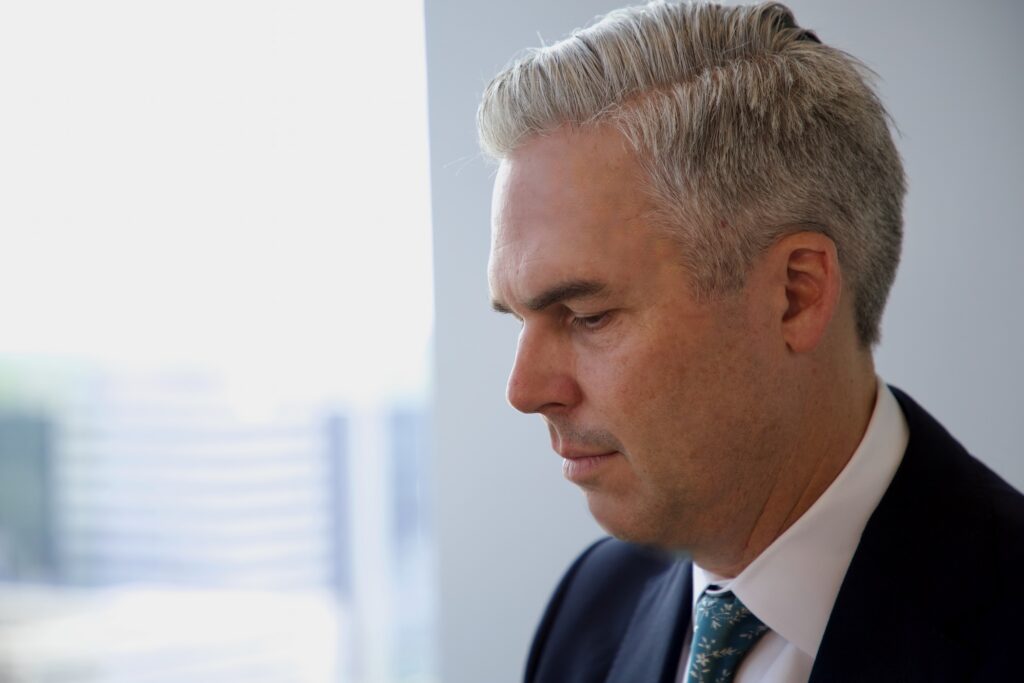
“Scott exhibited leadership and fortitude throughout the trial, but especially when the judge called counsel and client representatives back to chambers and strongly encouraged the parties to settle the case after the first day of trial,” said AZA’s Shelby, who served as lead outside counsel on the litigation. “Scott was emphatic that Marathon had done everything right and the case needed to be tried.”
The trial lasted six days, and the jury returned with a verdict in Marathon’s favor on May 5, awarding $12 million, which included interest, and defeating Koch’s $130 million counterclaim.
“Our opposition challenged and second guessed nearly every action of Marathon workers, including those in the field made during Uri,” Kelly said. “It was important to me and my company that the court and jury agree with and acknowledge the hard work our workers performed during difficult circumstances. I got to know some of these amazing workers well while working on the case. Hearing their testimony at trial made me proud to have them as my coworkers.”
The Koch case was also the first of the Winter Storm Uri force majeure disputes to go to trial in Texas.
“That Koch was a jury trial added to the challenge,” he said. “It was a complicated case, but we also knew jurors would come into court with some background of living through Uri. It turned out our jury was smart, engaged and generally awesome. Presenting the case to them was an incredible experience.”
The Koch trial was also Kelly’s first verdict after joining ConocoPhillips only five months earlier.
“I knew I had the company’s full support and would have had their support if we lost,” he said. “That said, it was stressful and a relief hearing Judge Lake read the verdict. That moment was emotional for many of us in court.”
The Mercuria trial also made history as the first trial in the Texas Business Courts. Marathon had originally filed in the Harris County District Court seeking a declaration of force majeure. Mercuria countersued seeking more than $25 million in damages.
Kelly then led the effort to move the case to Business Court by negotiating a complicated agreement that involved nonsuits in district court, tolling statutes of limitations, refiling in Business Court, preserving Marathon’s status as the plaintiff and setting limits for additional discovery to be conducted.
Once in the Texas Business Court, the case moved rapidly. Judge Melissa Andrews required extensive briefing on legal issues, held multiple lengthy hearings and issued three written opinions before conducting a five-day trial in November 2025.
Shelby said Kelly made some critical game-time decisions during the trial that helped streamline the case.
Scott decided not to call some witnesses and shortened the areas of questioning with other witnesses,” Shelby said. “Relying on his almost 20 years of courtroom experience prior to moving in-house, Scott also understood the importance of letting his trial lawyers be trial lawyers, offering overall suggestions without micromanaging the AZA trial lawyers.”

On Nov. 11, Judge Andrews handed ConocoPhillips a complete victory.
“I believe the Business Court was designed in many ways to meet the needs of companies like ours,” Kelly said. “It was hugely important to experience firsthand what the Business Court has to offer. The experience was fantastic and all I had hoped for. It was important for our company to know that the Business Court is a new venue for us.”
The third case was MDR Hotels v. Marathon, in which the plaintiff, a hotel developer, sued the energy company in California seeking $65 million in damages related to increased construction costs and lost profits allegedly due to problems caused by an oil well that Marathon’s predecessor drilled in Marina Del Ray in 1931.
Kelly hired his former law firm, Shipley Snell, to represent Marathon.
“Given the venue, subject matter and optics of defending an oil company accused of causing a blowout in the middle of Los Angeles, many in-house counsel might have recommended settlement,” Shipley said. “Scott, however, saw that the case was defensible and that its broader implications warranted a principled defense.”
As the case headed toward trial, the lawyers knew very little about U.S. District Judge Fernando Aenlle-Rocha, who had been appointed to the bench in 2020.
“All motions had been decided on the papers, and no attorney in our case had even seen the judge who would try the case,” Shipley said. “Recognizing the importance of understanding the decisionmaker, Scott suggested that I attend a pretrial conference in an unrelated case to assess the judge’s approach. That decision proved to be pivotal. We learned that we were before a disciplined, fair, and hard-working judge who expected preparedness and would run a tightly controlled trial — insight that materially shaped our trial strategy.”
Another critical decision in the MDR Hotels case came a few months before trial when the plaintiff and a co-defendant jointly moved for a five-month continuance to conduct additional discovery, including deposing key witnesses.
“Many, if not most, in-house counsel would have welcomed a five-month continuance to avoid the risk of going to trial without deposing the plaintiff’s main fact and expert witnesses,” Shipley said. “Scott recognized the strategic advantage of going to trial as scheduled. He concluded that opposing the continuance would increase the likelihood that the belated expert report would not be admitted into evidence, and the first cross-examination of the undeposed fact witness would probably be the best cross.”
The judge agreed with Marathon. And in September, Judge Aenlle-Rocha rendered a complete take-nothing decision for Marathon.
Chris Hogan, a partner at Hogan Thompson Schuelke, said Kelly has been able to “navigate some of the complex relationships of in-house life.”
“Scott is the perfect combination of being hands-on in terms of knowing his cases but trusting of his outside counsel,” Hogan said. “It is a rare combination, but one that allows him to serve his clients in an efficient manner while also giving outside counsel the latitude they need to run a case. He also spent so much time in his career as outside counsel that he is able to understand the dynamics of litigation despite his in-house presence.”
Fun Facts: Scott Kelly
- Favorite book: The Amazing Adventures of Kavalier & Clay by Michael Chabon. It’s the best book by one of my favorite writers.
- Favorite movie: My Cousin Vinny when I want a comedy. Michael Clayton when I want a drama.
- Favorite restaurant: Uchi. Before we had kids, sitting at the Uchi sushi counter was our go-to spot for a special dinner. Now, our kids love it, too, and it’s become our go-to spot for a fun, special dinner as a family.
- Favorite all-time vacation: My wife and I visited Japan on our honeymoon many years ago. We traveled to Tokyo, Kyoto and Mount Koya. We loved the mix of old and new. In Mount Koya we stayed at a Buddhist Temple. It took effort to get there, but was totally worth it for a once-in-a-lifetime experience.
- Hero in life: My mom. She has unconditional kindness and is always fun to be around. My mom is amazing with kids, who love her. She has unselfishly helped with our kids on numerous occasions — I don’t know what we would have done without her.