
When Kirkland & Ellis is on the hunt for Texas-based partners to poach, not even other elite corporate law firms are off limits. Just ask Gibson, Dunn & Crutcher, which just saw its second partner this month switch firms.
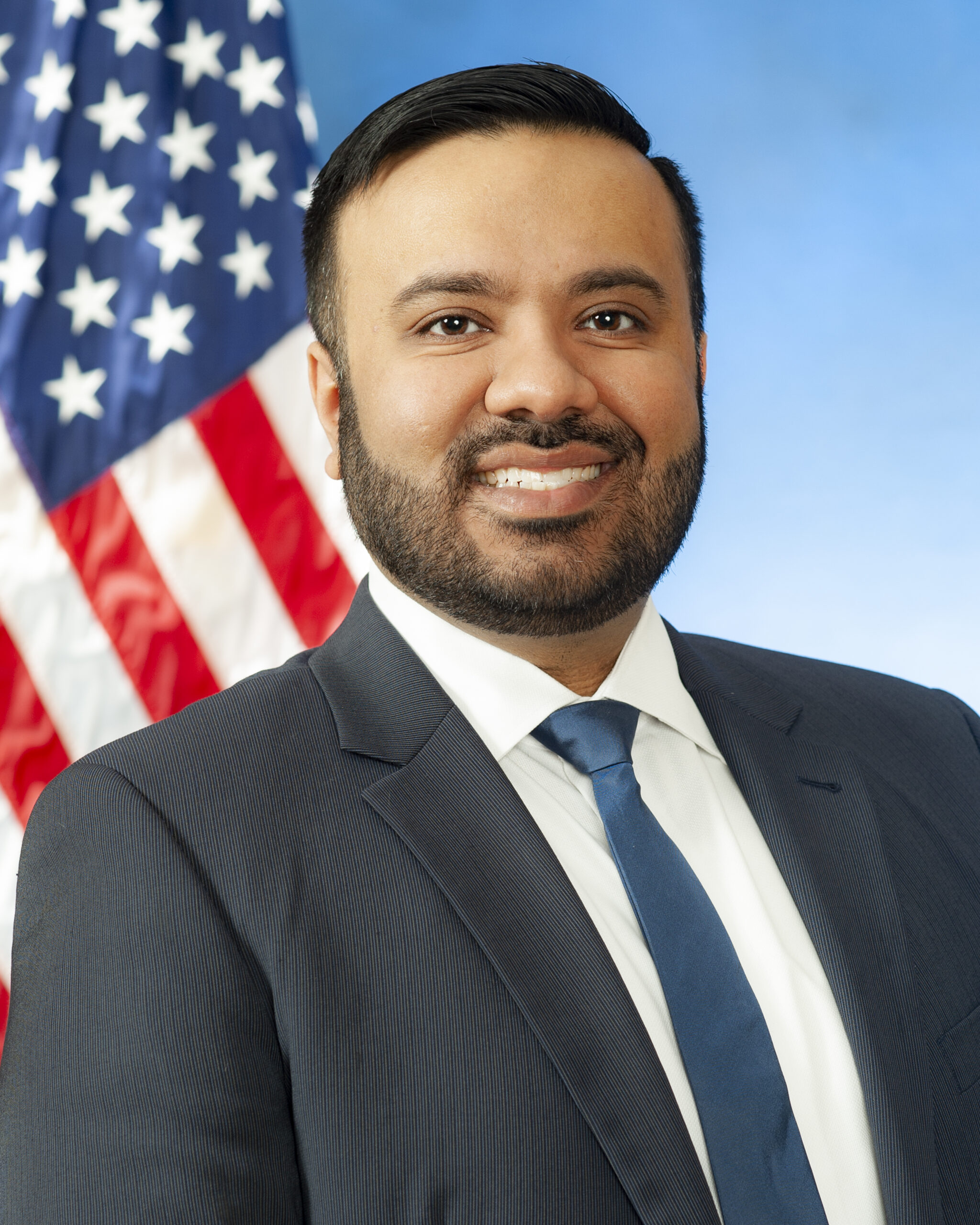
Kirkland announced this morning that Prerak “Pre” Shah, a former U.S. attorney for the Northern District of Texas and longtime Gibson Dunn partner, has joined Kirkland’s Houston office as a partner to focus on state attorneys general litigation.
Shah, who co-chaired Gibson Dunn’s state AGs practice, is the second Gibson Dunn litigation partner who jumped to Kirkland this month. Three weeks ago, Andrew LeGrand moved his Dallas practice to Kirkland.
Shah, who worked a year in the Texas attorney general’s office in 2016 and then served as chief counsel to Texas Senator Ted Cruz for two years, said he lateraled to Kirkland because it “has an unmatched litigation platform, an exceptional client base and a real appetite for investing in areas where clients are facing growing risk.”
“State attorneys general have become increasingly important to companies across industries, and I saw an opportunity at Kirkland to help build something distinctive around that practice — combining my experience with state AGs with Kirkland’s existing strengths in litigation, investigations and regulatory enforcement,” Shah told The Texas Lawbook. “That combination made the move uniquely compelling.”
Shah and other legal experts say that state attorneys general have increasingly replaced the U.S. Securities and Exchange Commission, the Federal Trade Commission and even the U.S. Department of Justice as a top corporate regulator and law enforcer.
“State AG offices have become larger and more sophisticated, they have no hesitation operating in areas once associated primarily with federal regulators, and they can act more quickly and nimbly than federal enforcement agencies,” Shah said. “And because companies operate nationally, an investigation that begins in one state can very quickly become a national problem.”
“That has fundamentally changed the risk calculus for corporate America,” he said.
Kirkland litigation partner Andrew Kassof said Shah’s “background is exceptionally well suited to the matters our clients face today, where state-level investigations and enforcement actions are frequently part of significant litigation.”
“Pre’s experience leading responses to state AG investigations for various large corporations and institutions will be a perfect addition to our team and platform,” Kassof, a member of Kirkland’s executive committee, said in a written statement.
Shah said the opportunity to continue to work with LeGrand helped him make the decision.
“Andrew and I came up together as junior associates at Gibson Dunn almost 15 years ago, and we’ve been close friends ever since — through growing families, career moves and just about everything in between,” Shah said. “I’ve seen him in action and have enormous respect for him as a trial lawyer, so the chance to work together again was obviously a meaningful part of the decision.”
In an interview with The Lawbook, Shah discusses trends he sees in the white-collar criminal practice and identifies key issues he expects state AGs to tackle over the next year.
Texas Lawbook: The white-collar law practice in Texas seems to have evolved in recent years from federal financial fraud prosecutions to focusing more on actions by state AGs. Do you agree and why do you think this has happened?
Prerak Shah: I don’t think traditional federal white-collar enforcement has diminished in absolute terms. It’s that state attorneys general have become dramatically more important over the last decade, making them a much more significant source of government-enforcement risk for companies.
Twenty years ago, a general counsel thinking about a major government investigation was probably focused first on DOJ, SEC, FTC or another federal regulator. Today, the first civil investigative demand or lawsuit is just as likely to come from Austin, Sacramento or Albany — or a coalition of 20 state AGs.
There are several reasons for that: State AG offices have become larger and more sophisticated, they have no hesitation operating in areas once associated primarily with federal regulators, and they can act more quickly and nimbly than federal enforcement agencies. And because companies operate nationally, an investigation that begins in one state can very quickly become a national problem.
That has fundamentally changed the risk calculus for corporate America.
Lawbook: How has the white-collar law practice changed over the past year or two? In Texas, it seems mostly focused the past few years on healthcare fraud.
Shah: Healthcare fraud remains a major area of enforcement in Texas, particularly because of the size of the state’s Medicaid program and the enforcement tools available to the attorney general. But I think the broader story is diversification.
Companies today are facing government scrutiny on many more fronts at once. Antitrust, data privacy, consumer protection, artificial intelligence, healthcare, financial services and issues involving children and technology are increasingly overlapping. Most of those investigations are civil rather than criminal but nevertheless carry enormous financial, reputational and operational consequences.
Another change is that the traditional lines between enforcement authorities are becoming less important. A matter can involve a state AG, a federal agency, private plaintiffs and congressional scrutiny simultaneously. So, the job requires understanding not just one legal issue in isolation, but how all of those pieces interact to craft a strategy to get out of trouble.
Lawbook: Active state AGs rose to prominence in 1994 to 1998 with the tobacco litigation. How have you seen state AG actions against corporate America evolve?
Shah: The tobacco litigation demonstrated that state AGs acting collectively could take on an issue of national significance and achieve an enormous result. But it was almost a one-of-a-kind example for a long time. In the last 10 years, however, that model has become institutionalized and expanded across virtually every major industry.
AG offices have developed sophisticated enforcement teams, multistate coordination has become routine, and the range of subjects they address has expanded dramatically. It is no longer limited to classic consumer fraud. AGs are major players in antitrust, healthcare, pharmaceuticals, privacy, technology, financial services and many other areas.
There has also been a shift in speed and scale. An issue can emerge in the news or become a political priority and within days produce investigative demands from multiple states. Companies therefore have to think about state AG risk much earlier than they once did — not simply after litigation has been filed. And the financial, operational, and reputational exposure from even a single AG lawsuit can be enormously consequential for a company.
Lawbook: Most state AG prosecutions/litigation seems to break down along political lines. Is that healthy for the legal system and do you think it will change?
Shah: There is unquestionably more partisan divergence among state AGs than there was 20 or 30 years ago, particularly on major national policy questions. Republican and Democratic AGs often have very different views about the proper role of government and frequently pursue different enforcement priorities.
But I would distinguish political priorities from the legitimacy of the legal process. Attorneys general are elected officials, so it is neither surprising nor inherently problematic that elections have consequences for enforcement priorities. The critical question is whether an investigation or lawsuit is ultimately grounded in the law and the facts.
It’s also important not to overstate the partisan divide based solely on headline cases. There is still a tremendous amount of bipartisan state AG activity, particularly around fraud, consumer protection, privacy, opioids, child safety and certain competition issues.
I don’t expect the political differences to disappear. If anything, as Washington has become more polarized, state AGs of both parties have increasingly viewed themselves as an important check on federal policy and as independent national enforcement actors. I think that is now a permanent feature of the enforcement landscape, and companies need to account for it.
Lawbook: Finally, what are two or three trends in state AG actions that you foresee in the next year or two?
Shah: Three stand out to me.
First is artificial intelligence and data. AGs do not need to wait for comprehensive new AI legislation to act. They already have broad consumer-protection, privacy and other statutes that can be applied to AI products. I expect investigations involving AI safety, representations about AI capabilities, use of consumer data, child safety and algorithmic decision-making to increase significantly.
Second is greater state AG activity in areas traditionally dominated by federal regulators. When federal enforcement priorities change, state AGs do not necessarily change with them. We are increasingly seeing states develop their own expertise and pursue antitrust, privacy, healthcare and other matters independently. For companies, that means a change in administration in Washington no longer necessarily brings a corresponding change in enforcement exposure.
Third is larger and more consequential multistate matters. AG offices have gotten very good at coordinating with one another. An investigation that starts with one or two states can rapidly become a coalition, and the resulting cases can present enormous financial and business risk. That means companies need to treat state AG investigations as potential enterprise-level matters much earlier in the process than they might have a decade ago.