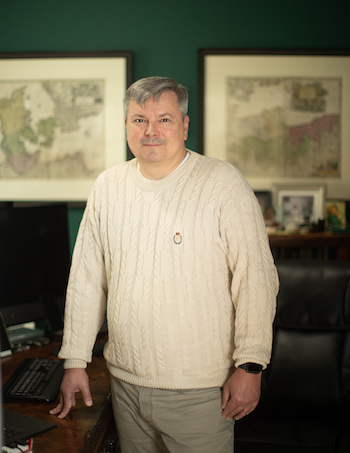
Michael Piazza, Advisor for the Oaks, Jumps to Gibson Dunn
For the second time in less than a week, a top corporate partner in Willkie Farr’s Houston office is joining a competitor.
Free Speech, Due Process and Trial by Jury
For the second time in less than a week, a top corporate partner in Willkie Farr’s Houston office is joining a competitor.
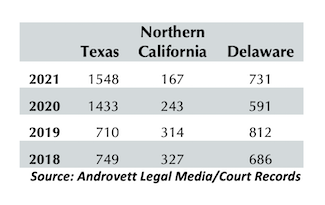
Despite efforts by a handful of federal appellate judges to limit jurisdiction and criticism from tech companies, the Western and Eastern districts of Texas remain two of the hottest courts in the U.S. for patent litigation. New data shows that federal courts in Waco and Marshall have more patent infringement disputes than 40 other states combined. Lawyers for plaintiffs and defendants tell The Texas Lawbook there are explanations behind the numbers.
For the first time in Texas history, the SEC charged a Houston area public school district and two of its senior officials with fraudulently misleading investors in the school system’s $20 million bond issuance in 2018.
Three more corporate law firms in Texas – Akin Gump, Bracewell and Latham & Watkins – have announced they are ending their operations in Russia and will not represent Kremlin-controlled businesses. Several other law firms with large operations in Texas, including Baker Botts, Norton Rose Fulbright and Sidley, made similar announcements earlier this week.
San Francisco-founded Morrison & Foerster announced Monday that it is opening its first Texas office in Austin. Known in legal circles as MoFo, the corporate law firm announced that it has hired two intellectual property litigation partners – one from Pillsbury and one from DLA Piper – and a corporate M&A partner from Pillsbury, and that “further additions to the Austin office are anticipated in the weeks and months ahead.”
Norton Rose Fulbright announced Monday that the global law firm is “winding down” its operations in Russia “as quickly as we can.” Formerly known as Houston-based Fulbright & Jaworski, Norton Rose Fulbright said it is closing its Moscow office “in compliance with its professional obligations” and that the “wellbeing of our staff in the region is a priority.”
ERCOT is having a very bad two weeks in court. And things just got worse for power providers in Texas, too. Nine London-based insurance companies joined a massive lawsuit this week brought by scores of the world’s largest property insurance companies seeking to force the ERCOT and three dozen Texas electric providers to reimburse them for billions of dollars in damages related to Winter Storm Uri in February 2021.
Exxon Mobil senior counsel Tom Sikora has argued cases in scores of courts and tribunals in countries around the world. Sikora has led more than 50 international arbitrations with more than $80 billion at stake. He has tried cases against countries and national oil companies in more than 20 countries, including Argentina, Chile, Trinidad, Nigeria, Angola, Libya, Brazil, Canada, France, Russia, Kazakhstan, India, Qatar, United Arab Emirates and Iraq.
“There are few people in the world with the experience and skillset of Tom Sikora,” said Norton Rose Fulbright partner Kevin O’Gorman. Sikora's first international law case was in 1980. He was just 15. His family's freedom was at stake.For Premium Subscribers: Exxon Mobil senior counsel Tom Sikora is considered one of the top international arbitration lawyers in the world. Sikora has led more than 50 international arbitrations with more than $80 billion at stake.Texas Lawbook founder Mark Curriden had the opportunity chat with Sikora about his remarkable career path and his outlook as a senior in house counsel at one of the largest corporations in the world.
As sanctions against Russian companies and those that do business with Russian entities expand daily, the role of lawyers is increasingly in the spotlight. Some law firms are being pressured to fire their Russian clients. Fourteen corporate law firms operating in Texas have Moscow offices, including Akin Gump, Baker Botts and Norton Rose Fulbright. Some law firms, such as Baker Botts, are reevaluating their operations in Russia. A few firms secretly encouraged their attorneys to leave Moscow as quickly and quietly as possible, as they fear retribution from the Kremlin. The Texas Lawbook has the details.
© Copyright 2026 The Texas Lawbook
The content on this website is protected under federal Copyright laws. Any use without the consent of The Texas Lawbook is prohibited.