
Dan Hoverman built his career by understanding the law and succeeding in high finance, but the Texas Capital executive insists it was never the product of a master plan so much as a habit of following the right mentors at the right moments.
Now, as president of Texas Capital Securities and head of corporate & investment banking at Texas Capital, he is helping build the full‑service financial firm he always thought the world’s eighth-largest economy deserved.
Hoverman’s path began at Kirkland & Ellis in New York, where, as an associate, he worked almost exclusively with two heavyweight dealmakers: public M&A specialist Steve Fraidin and capital markets veteran John Pedersen. Immersed early in IPOs, bond offerings and complex transactions, Hoverman learned to treat words as instruments of risk allocation and to think like a lawyer whose first job is to anticipate pitfalls before they could potentially derail a deal. When Pedersen left for Credit Suisse in Hong Kong, taking with him roughly half of Hoverman’s workload, it forced a question: stay on the legal track or step fully onto the financial side?
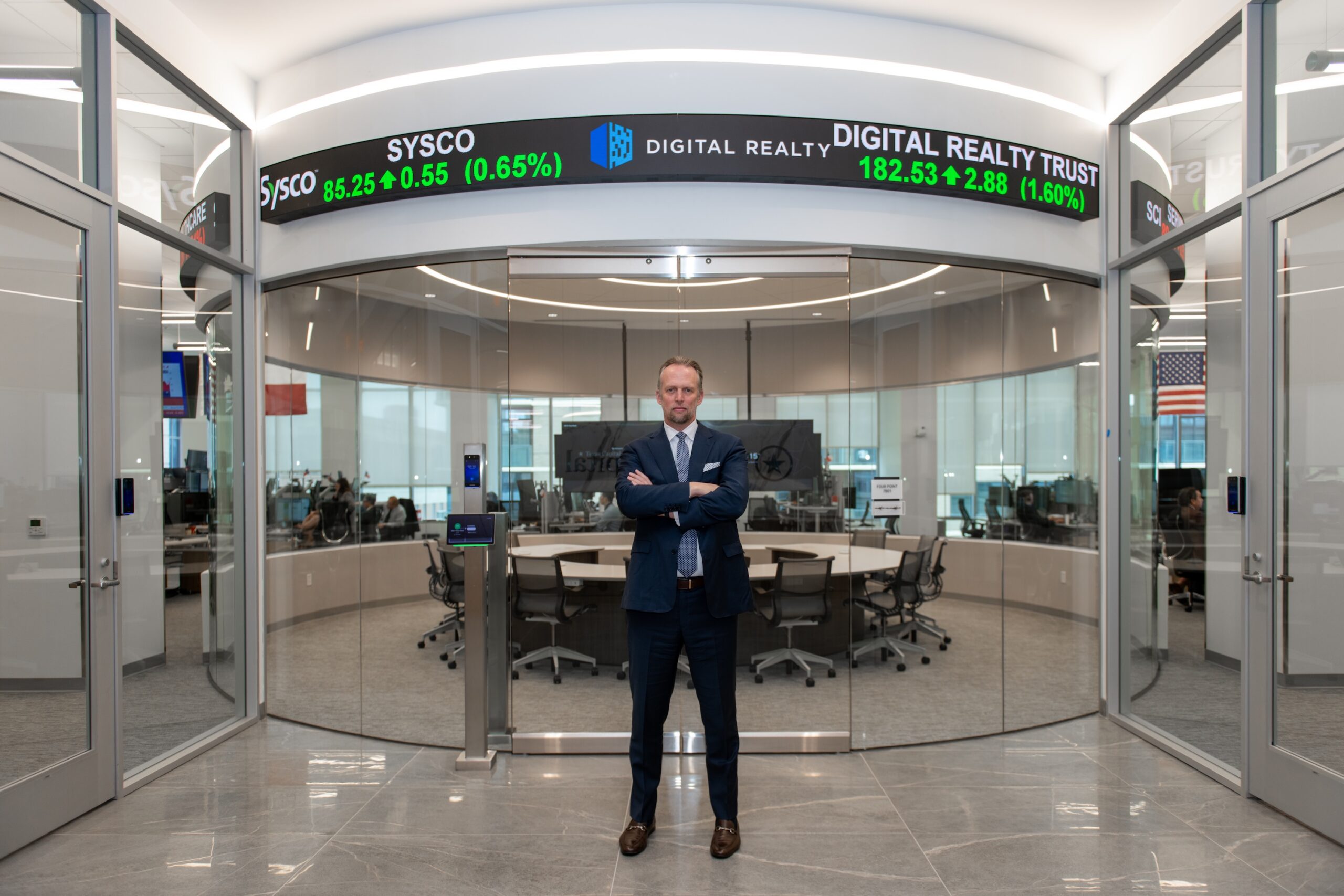
The timing, in 2006, coincided with an investment‑banking hiring boom and opened the door to UBS, where he shifted from “dotting i’s and crossing t’s” as outside counsel to managing transactions himself, eventually under the pressures of the financial crisis that came a couple of years later. That period, Hoverman recalls, demanded creativity within strict legal and regulatory boundaries, such as raising capital for fragile financial firms, engineering structures that rating agencies and investors could live with, and getting unconventional deals across the finish line quickly.
The experience shaped his belief that the most valuable bankers marry a lawyer’s precision with a dealmaker’s bias toward preferred outcomes, a philosophy he has carried into Texas Capital’s ambition to become the locally dominant, globally connected platform that has been the vision of CEO Rob Holmes since he took the reins in early 2021.
Hoverman recently sat down with The Texas Lawbook to discuss his unique career path, his sports career, the dealmaking environment in Texas and more:
You started your career with both legal and financial roles, including time at Kirkland & Ellis and several investment banks. How did you decide to move from practicing law to full‑time finance and advisory work?
Like a lot of people, my career has been following mentors, for lack of any better strategy. I was very lucky when I started at Kirkland. I completed a summer internship at the London office for two summers. Eventually, I accepted a full-time offer in New York. When I started, Kirkland had just hired two public M&A attorneys, so one was Steve Fraidin and the other was Tom Christopher, and they had just hired two capital markets attorneys, John Pedersen and Vince Pisano. I ended up working a significant amount of time with Steve. John was a partner at Skadden in Hong Kong, and he had a significant corporate finance practice with IPOs and high-end bonds, as well as everything else you could name. Neither of them joined Kirkland with any junior support, and so they decided to take a first-year associate in me, who knew absolutely nothing.
They taught me how to be a decent attorney, rather than taking someone who knew private equity specifically and repurposing them. I had this incredible opportunity to work closely with two incredibly talented senior attorneys, and the real catalyst was that John took a position back in Hong Kong at Credit Suisse. Effectively, when the partner I did 50 percent of my work with left the firm, I needed to find a way to replace at least half of what I was working on.
That seemed to be a pretty good catalyst for picking my head up from the grindstone and thinking about maybe it was time to move from being an attorney to being on the business side.
It happened that when I did that, which was in 2006, the market was pretty good. Investment banks were willing to do unnatural things, like considering hiring an attorney to be an investment banker, and I had an opportunity to work at UBS, which at the time had a level of talent that I think has been rarely assembled on Wall Street.
I was lucky enough that they had a transaction role available. It was a very natural progression to me to go from being a fourth-year associate on the transaction, responsible for a lot of dotting i’s and crossing t’s, and then moving into a role where I was actually managing the transaction. Whereas I used to report to a partner, now I’m asking the partners to make sure that they’re doing the right things, but also worried about accountants and due diligence, and bankers, as well as making sure the marketing side of the business is being done correctly.
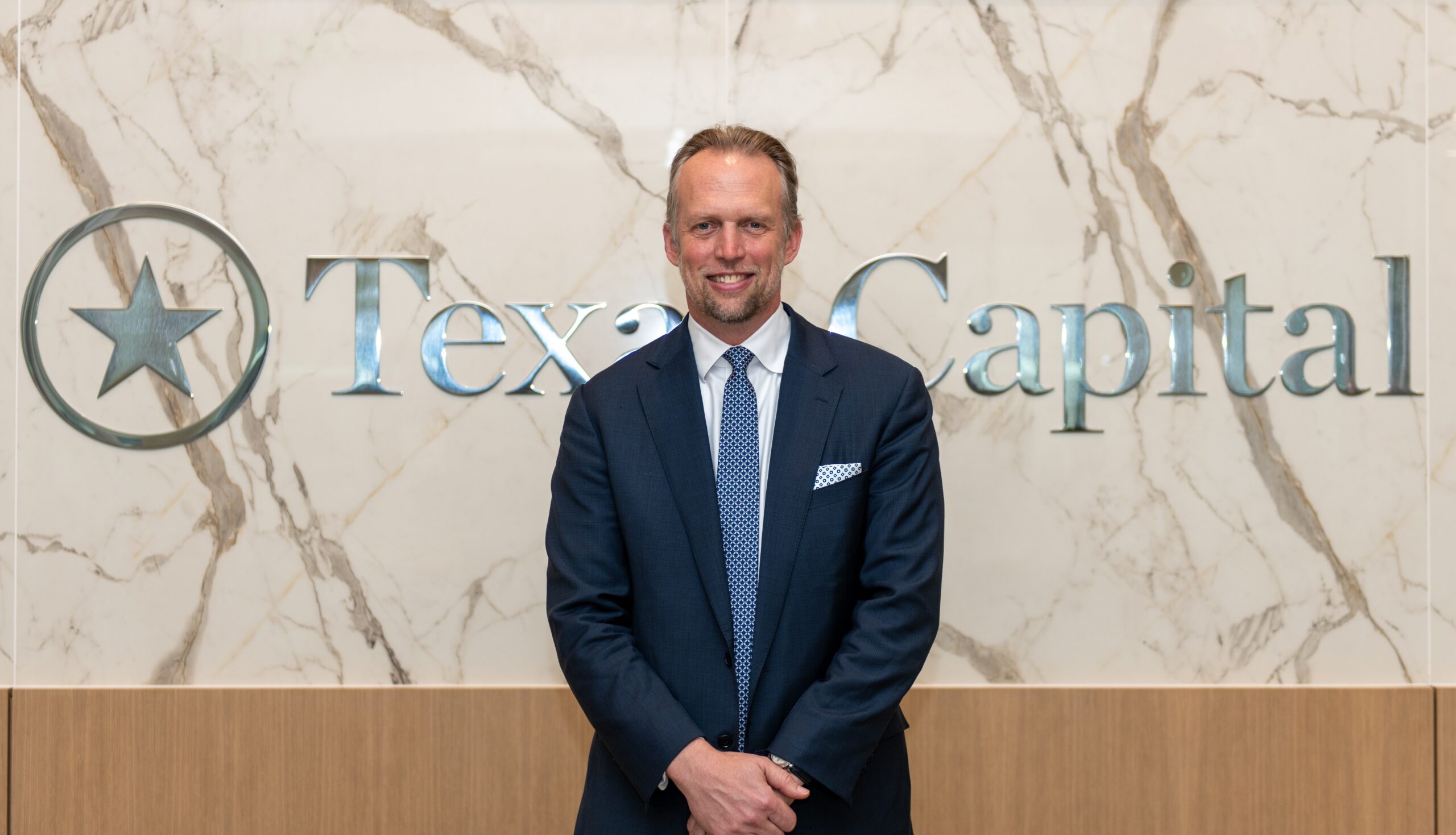
Looking back, what was the single most formative experience early in your career that still shapes how you approach your role at Texas Capital today?
There are two different things that are important: first, the discipline you get from being an attorney. Words matter. A good attorney will understand how the legal contract allocates risk, and a really smart banker will understand how that risk allocation impacts the transaction itself.
It’s also given me an understanding of how to solve problems. A lot of the time, our job, whether you’re a banker or an attorney, is to have the foresight to avoid pitfalls. The attention to detail I gained as an attorney was a prerequisite for my current role.
Second, by the time I got to UBS, I had to start thinking more about the outcome rather than about the process. At Kirkland, it was very much about understanding how to manage and run a process efficiently and precisely. But investment banking is about finding a way to deliver an outcome. Attorneys bill by the hour. They don’t sometimes mind that there isn’t an outcome right away. Investment bankers are very different.
Particularly as we got closer to the financial crisis, the problems we faced required an enormous amount of creativity. They also required creativity within very strict boundaries: what is possible, what can be disclosed and what you’re allowed to do.
The combination of those two kinds of factors showed me that there was a way to deliver truly exceptional value by marrying the fundamental understanding of what the things are that we have to comply with (and what are the constraints on our ability to be creative), and then translating that into what the client wants to accomplish.
If you look at some of the transactions during that period that we actually got across the finish line, some of them were relatively outlandish, and you would only try it in the middle of a financial crisis. For example, we raised equity capital for the Bank of Butterfield in Bermuda. It was a 10-year preferred that was guaranteed as a dividend payment. Two of the rating agencies decided to give it a rating. A third rating agency told us it was ludicrous and wouldn’t rate it at all.
We tried to sell it to sovereign bond investors, who, because it was a preferred security, couldn’t really wrap their heads around the fact that it was a sovereign bond equivalent. So, we ended up selling the entire thing to Bermudian retail on a syndicate that we put together in order to try to move $200 million to get paper to save the second-largest bank in Bermuda. You would never even think of doing that transaction outside of a financial crisis, but you need to understand how all of these different things interact quickly.
You’ve worked in global financial centers and now lead a major platform from Dallas, a rapidly expanding global center for finance. What entices you about the opportunity Texas Capital offers and about returning to your home state?
I was born in Houston and moved to Austin when I was seven. I graduated from Austin High School. After I decided I didn’t want to be a fireman or a surgeon, I wanted to go into what I thought was international business. Nobody knows what that means, other than you have conference calls late at night. The reality was that, when I grew up (and actually, before COVID even), it was difficult to be proximate to decision-makers and to be in the financial services industry.
The basic idea that Texas should have had a full-service firm and didn’t was always kind of mystifying. Of the hundreds of banks that went out of business in Texas between 1980 and 1994, the only bank in the Top 10 in 1980 that still exists today is Frost. It was a wave of consolidation and poor risk management that left Texas businesses with a desert of financial services firms, in one of the most patriotic states. Some might call Texas more than a state, but we can all agree that it’s patriotic.
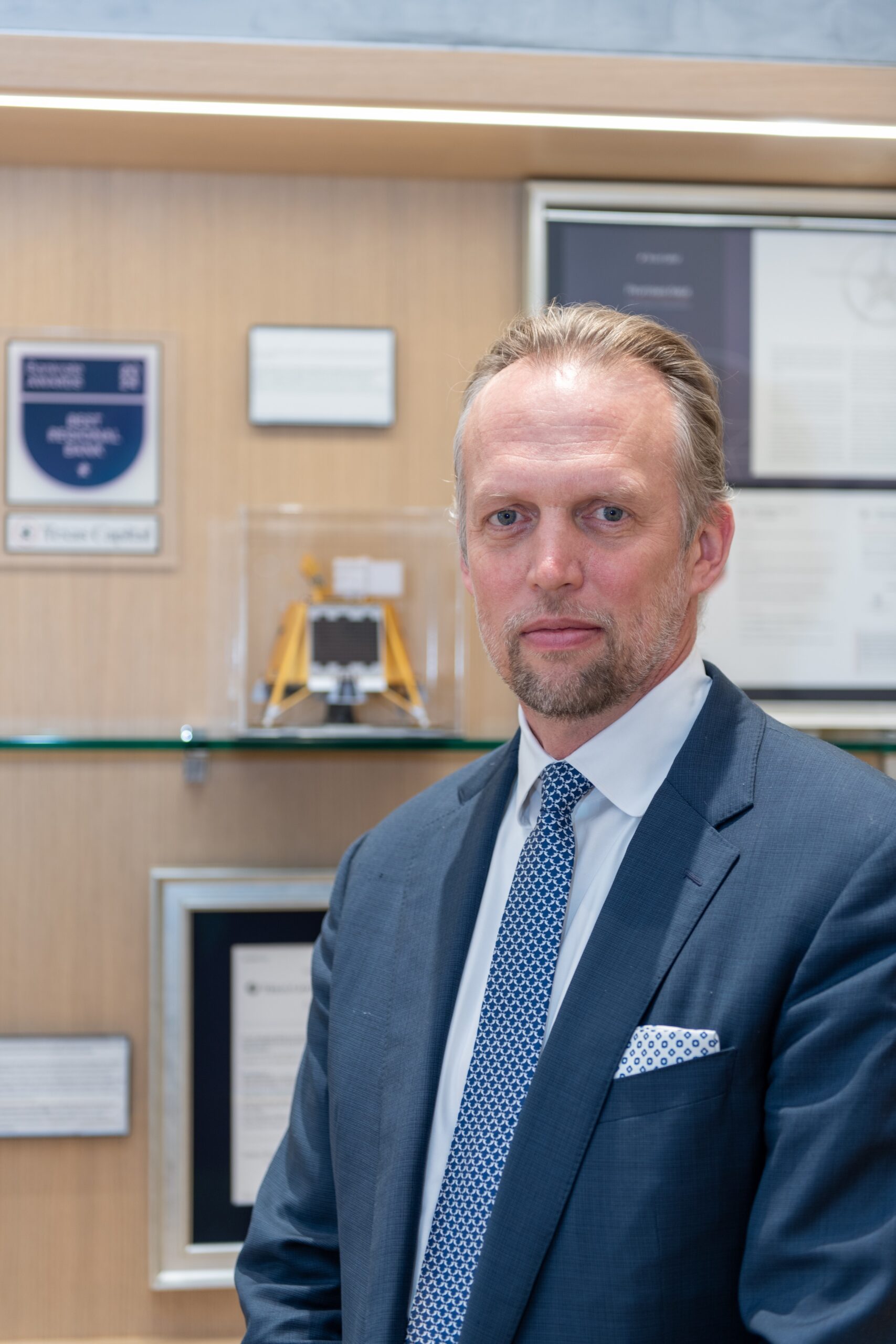
The idea that Texas is the eighth-largest economy in the world, and it should have had a locally dominant financial services firm. That seemed so self-evident that you couldn’t look at that and say that it was anything other than deeply unfortunate that one didn’t exist.
When Rob Holmes took over as CEO a few years ago, I learned what his strategy really was: We want to build that financial services firm for Texas. Texas Capital was large enough that we had some resources to invest to make that vision a reality.
The time period that we had was somewhat reasonable in the sense that you can’t build anything of value in six months, because if that were possible, everybody would build it. We had a mortgage finance business at Texas Capital that gave us unique access and relevance to Wall Street, so every single one of our mortgage warehouse clients borrows money from us to help homeowners buy houses, and they’re providing a mortgage to the homeowner.
That mortgage is hedged in the MBS market as a security. So, our sales and trading business could be built by going to an existing client, selling them a product they already use, and delivering it at a price equivalent to what they would get from everybody else. It’s a little bit unique relative to anybody else in Texas who could build a sales and trading floor. Once you’re connected to the market and you have a balance sheet that you can organize around industry expertise, you can then build all of the advisory and intermediation products in between, including underwriting, M&A and everything else that a company might need.
Thankfully, we’ve been able to attract the talent, the right clients, resources, vendors and everything else. As such, we’re the only Texas-based firm that can take a company public on the Texas Stock Exchange. It seems wholly unnatural that you would have to go to a bank in New York in order to go public on the Texas Stock Exchange.
You’ve accumulated a long list of professional designations and required licenses, from FINRA, MSRB and more. How did those stack up against the bar exam?
I took the bar exam and the first two rounds of the CFA exam at the Javits Center in New York, where thousands of people were taking both exams. The only thing that you have to tell yourself is that maybe 50 percent of the people pass, and you can almost always pick out the 50 percent of the people that you think will. You can pass the Level One CFA exam with a first-year foundation in business school. Levels Two and Three are varying degrees of things you have to remember, particularly when it comes to portfolio reporting. The FINRA exams are in that same bucket, but they’re intensely personal, because you walk into the test office and you sit at your little quiet booth where they’ve taken your ID and your phone. You click all the buttons and hope you passed.
What specific capabilities or sector focuses are you building out on your team that you think most differentiate Texas Capital?
From a capability perspective, we’re truly full-service. And it’s not full-service in the way some super-regional banks talk about investment banking, which they almost treat as a hobby. They can tell you a lot about a market, but if you gave them the opportunity to lead a transaction, they wouldn’t be capable. That’s because, in large part, there are two types of investment banking transactions that are really high-level. There’s a transaction where you’re looking for one, hopefully a rational buyer or investor, where you need to run a process in order to identify that one person. Every sell-side M&A transaction is that type of deal: you’re looking for somebody who sees an enormous and hopefully unachievable amount of value, and they’re willing to pay you for it today.
The other type of transaction is priced by the marginal buyer or investor. For example, if you’re going to run an auction and you’re going to sell something like an IPO or a follow-on deal or a high-yield bond, where you need to have the largest possible audience, because the more people you have that are betting, you’re going to price that transaction at the best last dollar that satisfies the capital needs of your client. We’ve built a distribution network between institutional accounts, family offices and beyond, where we have the real ability to price those transactions whose success is determined by the marginal buyer.
I think that is very different from anyone else, except the bulge brackets. In many ways, we really only have two competitors. We have competitors that are limited-service, not because their service is limited, but because the scope of services available on their platform is limited. They might be really good at M&A advisory, but they can’t give you a loan to make that transaction possible. They can’t run your payroll. They may not be able to handle your private wealth or estate planning, foreign exchange or a dozen other things.
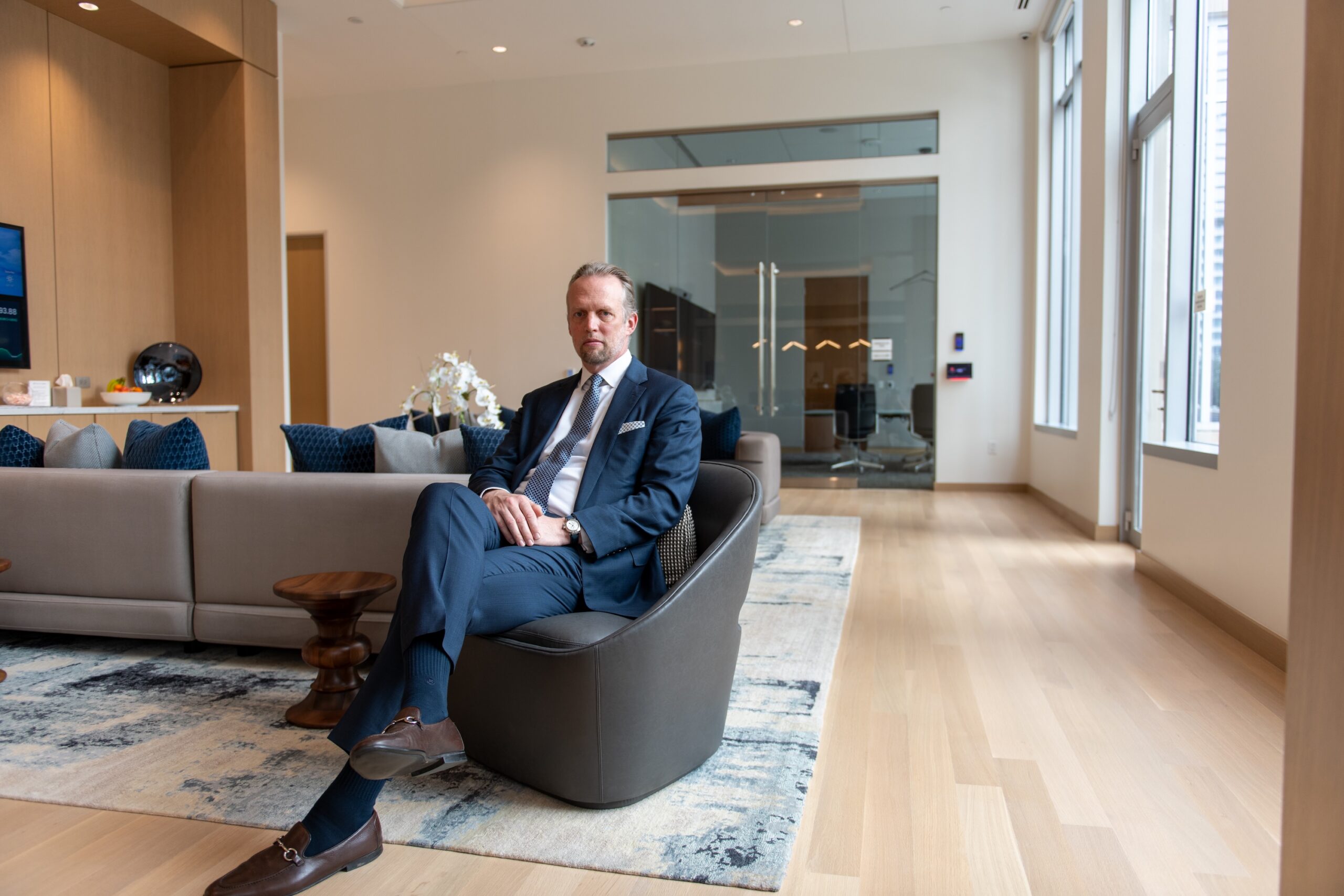
For those clients, we compete on the breadth of our platform, which means that if you’re investing in a relationship. Why would you invest in a relationship where you just hire them for a transaction, and then there’s no more relationship after that? You should really invest in that relationship so that you can sell your company when the time comes. That’s a very large and significant transaction for you; probably the most significant transaction you will decide to make in your entire life. Wouldn’t you want the same people managing your money, so that the value you have in that firm is more than a single deal you did this year, and next year, you have no value to them because the deal’s already done?
The other side of it is competing against the bulge brackets. They’re very good at what they do. If your need fits the solution that they provide, they’re enormously good at delivering against the kind of process that the machine is designed to deliver, but if you need something that is unique or bespoke or on a different timetable or requires something that is outside the norm, they’re very slow to react to any bespoke requirement that you might have, and that’s what we do really well.
We’ve partnered with a large number of the bulge brackets because there are some things they do well, and we acknowledge that they’re going to lead. You need to borrow somebody’s office in London. We don’t have one yet (maybe one day), but today you’re going to need to call a bank in New York and have that relationship and use their office in London. But we’re not competing directly with the bulge bracket banks. We’re trying to build strengths where they have weaknesses, so that we end up being exceptionally complementary to what they do.
How would you characterize the current deal environment for Texas‑based businesses (both public and private) and which sectors do you think are driving the most sophisticated financing and M&A work?
The way I’ve characterized the deal environment is that “A companies” are getting “A+ outcomes,” and “B companies” and those below “B company” status are struggling to get deals done.
The credit markets remain very liquid. Banks still have a lot of capital. There’s been some degree of discipline, obviously. We have seen absolutely no reason why a great company can’t access the market. What we have seen, though, is that if you are not in an “A company,” it does take longer. We’ve seen the time required to complete transactions significantly extended in some cases.
Sometimes it’s diligence. Sometimes it’s just the lack of predictability in the economy: at the beginning of last year, everybody was ready to transact; nobody really knew what to make of the tariffs; it took a little while for stability to return, and people felt comfortable transacting again. This year we had a great start. We’ve now got conflict in Iran, the Strait of Hormuz, and people are not sure how long it’s going to last, and you try to plan appropriately.
RELATED: Texas Capital Bank GC Anna Alvarado ‘Knows What Hard Work Really Is’
So, if you have a domestic supply chain, then that’s great. If you do not have a significant amount of food or commodity input, that’s probably very good if you have longer-term customer contracts. Maybe you’re not subject to market volatility in terms of market pricing. If you do have exposure to the data center sector, do you have a long-term contract in place? Some of our clients have been very fortunate with the performance of their companies. For example, HVAC clients in Texas who thought they were going to do “X” amount of revenue, and now they’re doing 10 times that because they got a very large contract with a data center manufacturer, someone building a power plant, and so on.
A lot of the investment areas have been focused on finding great companies. So, if you’re investing in critical minerals or electrical transmission and distribution, infrastructure or anything on the energy side, especially if you have specialty components, there are opportunities. Health care, in particular, has been a very strong area for us.
How is your team leveraging AI to unleash possibilities that weren’t thought of a few years ago to free up resources or otherwise?
I think we have to take the position that AI will change the way we work, and if you are not leading, you need to be a fast follower. The pace of change will be exponential and not linear, and if you are one step behind on Day One, you’re going to be two steps behind, and then four, and then 16, and so on.
We are very highly focused on doing two things. One is making sure we use AI in a supervised, responsible way. That means you have to be maniacal about the sanctity of your clients’ and your own data, and about how it is organized and what AI has access to, and then you need to make sure you are supervising the use of AI.
Talent is a differentiator in banking. What are you looking for when you hire senior bankers into your team, and how do you evaluate whether someone will thrive inside Texas Capital’s model?
So we are a little different because the corporate investment bank is managed as one group. That drives an enormous amount of collaboration and, hopefully, more transparency than you would see between a corporate bank and an investment bank on another platform. At the end of the day, the opportunity is so much bigger than we are, so our strategy for talent is really to find good people first who fit our culture and fit with the other people here.
RELATED: Texas Capital Associate GC Ashley Ahn’s ‘Truly Inspirational Story’
We want people who understand that if you spend 20 percent of your day helping others and you can demand a proportionate investment in return, then all of us are going to be better off. We’re looking for good people first that fit the culture, and then hopefully they have clients that they can bring to the firm that that will help define us, because we believe Texas Capital is defined by the value of the clients, and if you can bring great clients in an industry that we don’t cover, or in a vertical where we’re not present, then there’s no end of the ability to find success here.
When you’re not working on transactions, what do you do to unplug?
I have three children. Have you heard of the anthropologist test? It’s a thought experiment whose premise is this: If you weren’t here and someone came to examine the artifacts of your life, what would they conclude you value? And if I had to be scrutinized, they would assume I value youth sports above all else.
I played lacrosse at Yale. Odd fun fact: I’m the first high school All-American from Texas for lacrosse.
Now I have two daughters who play lacrosse. One daughter is in college and plays at Columbia, and the other daughter is in seventh grade and plays lacrosse. And then I have a son who is a swimmer and is now studying data science and mathematics.
In terms of fun things I enjoy, besides spending time with family, I also play the cello. I grew up playing it, so I still do that from time to time.
Fun Facts: Dan Hoverman
- Favorite music group: If you look at what I listen to, most of it is probably going to be the Dave Matthews Band or Coldplay. I get made fun of repeatedly by my children and by my wife, but also because my wife doesn’t listen to music after 1987.
- Favorite movie: Super Bad or The Hangover
- Favorite DFW restaurant: Princi Italia. Mi Cocina, too, because it’s across the street from the office, and they have the Mambo Taxis. It’s a great place to have a work get together, which we also call a “special project meeting.”
- Favorite beverage: Pallets of 20-ounce Topo Chico from Costco. Alcoholic drink wise, I’d probably say a Tito’s and Tonic.
- Favorite vacation: New Year’s Eve in Buenos Aires
- Hero in your life: My grandfather. He was dropped off in the Great Depression at an orphanage in Northern New Jersey. He went to Princeton on a scholarship from the orphanage, joined the Marine Corps in June 1940, before Pearl Harbor. He left the Marines in June 1946, went to Harvard Law School, moved back to Princeton and was a small-town family attorney for his entire career. My grandfather and my grandmother took care of 87 babies from the orphanage, so every time I visited them, they had a different child under the age of three months, because when babies were dropped off at the orphanage, the paperwork was never ready for them to be adopted. Some of them had severe drug withdrawal symptoms, and some of them were perfectly healthy babies that had incredibly unfortunate circumstances. The fact that he lived this life of giving back to the community and giving back to the institution that had made his life possible. I think you don’t see that in a lot of people.