
Greenberg Traurig shareholder Mike Gruber sometimes wonders how close he came to never having the legal career that has brought him so much fulfillment.
A highly successful business litigator whose roster of clients has included members of the prominent Hunt family and businesses such as Securus Technologies, Gruber was born the youngest of nine children in a family where, as he put it, no one so much as “sniffed college” except for a brother who went to seminary. College — much less a career in law — was not a path anyone mapped out for him.
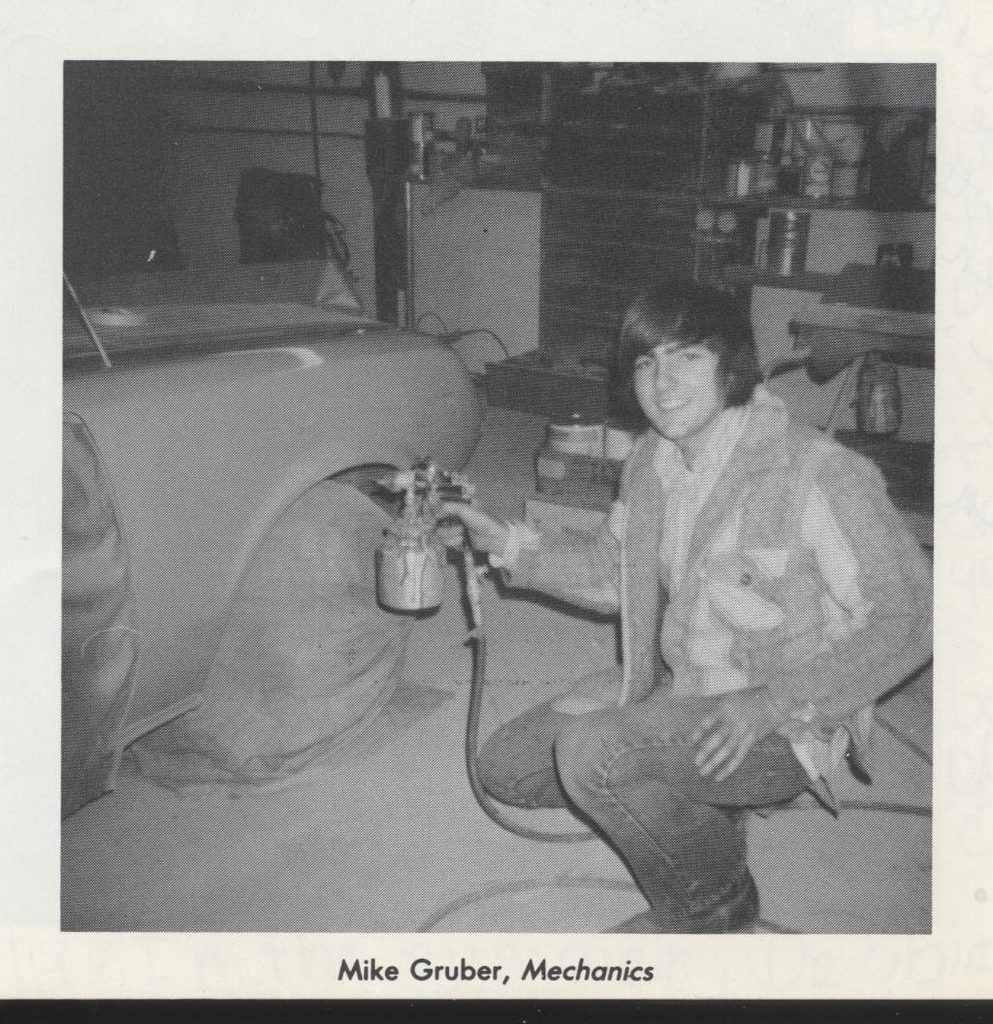
Until he met Nancy Solana, a civics teacher at Thomas Jefferson High School in Dallas.
“She just didn’t know what it meant for somebody to take an interest and just tell me that I could be something other than a mechanic,” Gruber said.
Solana’s intervention changed the trajectory of Gruber’s life. He has spent much of the decades since quietly paying that opportunity forward, leveraging his bar card, relationships and resources to help shape Dallas beyond the courtroom.
His latest project is Halperin Park in South Dallas, a sprawling new development that community leaders say is poised to help drive economic opportunity in one of the city’s historically underserved areas and reconnect neighborhoods divided decades ago when Interstate 35E cut through the community.
The park is only the latest in a long list of civic projects Gruber has quietly pushed forward over decades in Dallas, particularly in the southern part of the city. His work has ranged from helping guide the Dallas Zoo through decades of growth and leading a $1 million effort to build and refurbish homes to his pro bono representation of a Dallas mayor and school board president during public crises.
This is the story of the heavyweight Dallas litigator behind the scenes of some of the city’s major civic projects.
Someone Took an Interest
In Nancy Solana’s civics and history class, the teacher used legal cases to explore the major issues in American government.
Solana recalls a bright young Gruber expressing a natural interest in legal reasoning.
She assigned what she called “Six-Weeks Projects,” which allowed students to pursue independent study or action in an area of interest for class credit. For his project, Gruber worked on the successful 1974 campaign of Dallas ISD school board member Bill Hunter. Hunter had served on the board for about a year when redrawn district lines forced him to run again. The Texas Observer called him “decidedly the underdog.”
Gruber spent much of his senior year knocking on doors and making calls to help elect Hunter, continuing his work well beyond the required six weeks. Hunter won and went on to serve as vice president and president of the board.
Gruber, now 70, considers Solana’s decision to take an interest in him one of the most consequential events of his life.
Solana said she did not realize then that the possibilities she saw for Gruber were options he had never considered for himself.
“What I saw was a bright student who was interested in what I was teaching,” Solana said. “He was willing to see another possibility for his future and had the courage to act on it.”
“What is truly extraordinary is Mike’s constant gratitude for the help and encouragement I was able to give him,” she said. “He has paid that forward many times over.”
At Southern Methodist University, Gruber reconnected with former high school classmate Diane Bucy, the daughter of former Texas Instruments CEO J. Fred Bucy Jr.
They had both attended Thomas Jefferson High School, where Mike said everyone wanted to date Diane, a popular member of the cheer team. Though they shared a Spanish class in high school, it was at SMU that they really got to know each other.
One day in September, Mike spotted Diane carrying a package across campus. Knowing her parents lived only a short drive away, he asked why she was receiving a package on campus.
Diane explained that a friend who had moved away sent her a birthday present. Mike responded by offering to take her to lunch for her birthday.
“It was like an instant connection and a very surreal type of experience,” Diane said.
They went to Raphael’s on McKinney Avenue, where they were met with a long wait. To pass the time, they wandered through a nearby antique shop and found themselves admiring a grandfather clock. Before the lunch was over, they were discussing the house they might someday share and where that grandfather clock would sit in the entryway.
“We were just connecting on this level, but we really didn’t know each other at the time,” Diane said.
Several months later, Diane’s father needed someone to retrieve a sailboat he had left in the Bahamas but was unable to go himself due to work.
“Doesn’t that Mike kid sail?” Diane recalled her father asking.
Mike’s experience at that time was with much smaller boats, but Diane said he knew the drill. So he sailed the boat back with Diane, her mother and brother. The trip went so well that not long afterward, Mike asked Diane’s father for his blessing to propose.
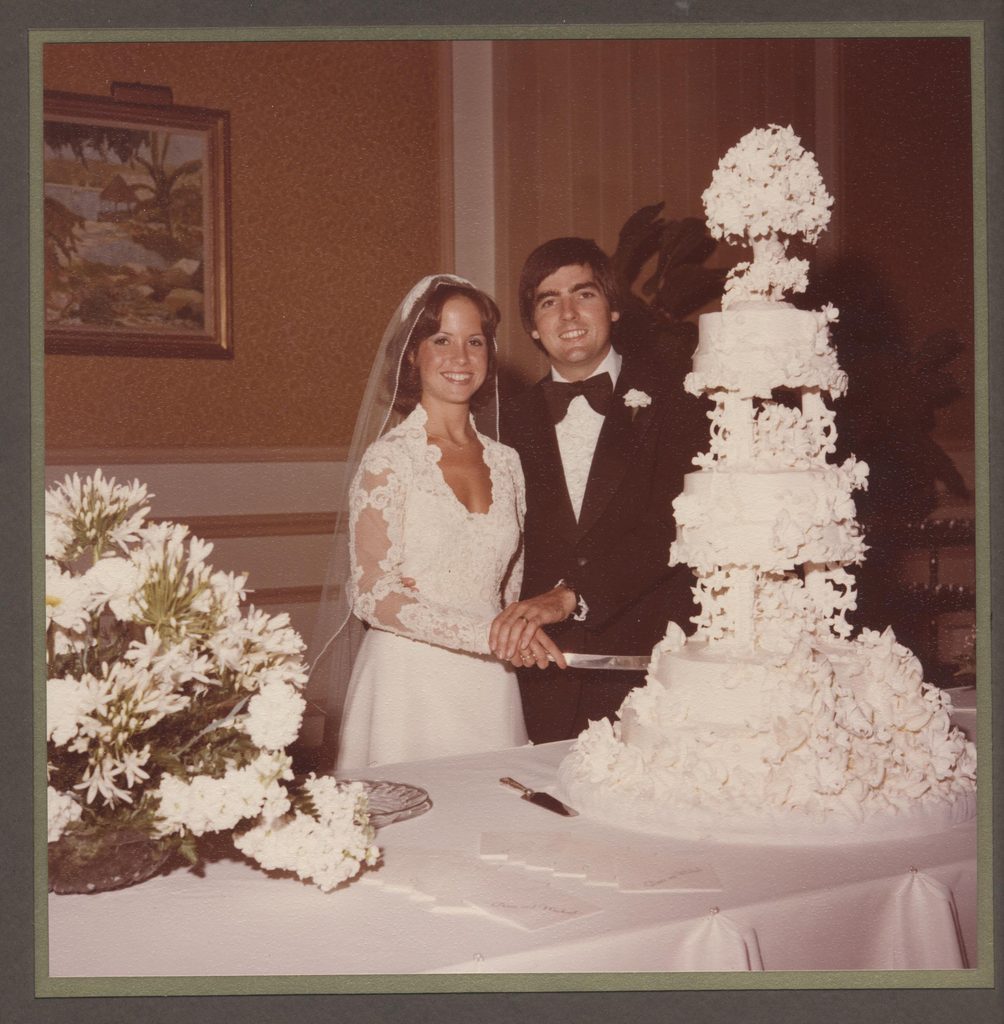
The couple wed in 1978. After a weeklong honeymoon on Mexico’s Pacific Coast, Diane went to work at Republic National Bank and Mike started law school. Their first home as husband and wife was a room in the house of a Highland Park woman who liked the security of having married law students living on the property. She also imposed a 6 p.m. curfew.
South of Downtown
After Gruber graduated from law school in 1981, the couple looked for a house in Dallas’ Kessler Park neighborhood. But even with Gruber’s associate salary and a signing bonus, the leafy Oak Cliff neighborhood was out of reach, particularly with the era’s high interest rates.
So they kept looking further south.
They landed in DeSoto, a suburb along Dallas’ southern border, where they found a new 2,500-square-foot home on half an acre that had fallen into foreclosure after the builder went bankrupt.
At first, friends thought they were crazy to live south of downtown Dallas, an area historically under-resourced and a world away from the comforts of North Dallas and the Park Cities near SMU’s campus. Long referred to as a “grocery store dessert,” shopping options were sparse, and it took some convincing to get friends to drive across town to visit.
But the Grubers enjoyed it. They lived there nine years and had two children.
Gruber eventually began hearing rumblings about a project that would eventually become Joe Pool Lake, a 7,400-acre reservoir that spans Dallas, Tarrant and Ellis counties. Gruber thought it might be smart to buy land in Cedar Hill overlooking the future lake site and build a home.
They lived there for a decade and had their third child before eventually returning to North Dallas to care for Diane’s ailing mother.
But those years in DeSoto and South Dallas proved pivotal to Gruber’s future civic contributions.
He became a volunteer and board member with Best Southwest, a joint chamber serving DeSoto, Cedar Hill, Duncanville and Lancaster, and participated in its Leadership Southwest program. He then served on the school board at St. Elizabeth Catholic School in Oak Cliff, where all three of his children attended.
He chaired the park department, joined the DeSoto City Council and became a park board member in Cedar Hill, co-leading the creation of a half-dozen or more parks, athletic facilities and one of the earliest hike-and-bike trails in South Dallas, running along a 10-mile creek.
In the late 1980s, Gruber started volunteering at the Dallas Nature Center, joining its board in 1990. He and fellow board members worked with Dallas County Open Space and the City of Dallas to create the foundation of what is now the Cedar Ridge Preserve. Today, the 633-acre natural sanctuary in far South Dallas is managed by Audubon Dallas and draws about half a million visitors annually, making it a key entertainment venue south of Interstate 30.
“The Preserve is a major asset for Southern Dallas including forest, prairie and escarpment features, and over nine miles of trails and diverse wildlife, in a part of the city with very limited recreational and open space,” Gruber said.
Behind the Scenes
In 1990, Gruber also joined the Dallas Zoo board, eventually serving as vice chair and chair. In 2009, the Dallas City Council voted unanimously to turn its operation over to Dallas Zoo Management Inc., with privatization completed in 2015.
Gruber also worked to clear blighted properties around the zoo, putting up down payments himself and recruiting a major Dallas philanthropist to help purchase neglected properties and repurpose them.
Then there was the famous giraffe.
When the zoo’s main entrance moved to the Interstate 35E service road in the mid-1990s, the Texas Department of Transportation would not allow the new signage Gruber and zoo management believed was urgently needed.
He turned to state Sen. Royce West for help.
Sen. West determined that while he could not change TxDOT’s position on signage, a “monument” would enjoy significant First Amendment protections beyond the agency’s control.
And thus the idea for a very large giraffe marking the zoo’s entrance was born. The giraffe is nicknamed “Royce” in honor of the senator.
That story captures the essence of Gruber, Sen. West said. Gruber gets involved, figures out a way forward and then often lets someone else have the spotlight.
When West and a team of attorneys at Gruber’s then firm — Gruber Hurst Elrod Johansen Hail Shank — obtained a verdict for more than $21,000 in a bench trial for a sexual assault victim against the owner of a popular pizza restaurant, Gruber was barely quoted in press coverage and left the talking to other members of the trial team.
“That’s Mike Gruber,” Sen. West said. “I’ve urged Mike to run for mayor because he is the type of person that’s in the background making sure things get done.”
Gruber has also lent his legal skills pro bono to high-profile disputes involving Dallas’ most important public institutions.
In 1998, at the request of a Dallas foundation, Gruber agreed to represent Kathleen Leos, then president of the Dallas Independent School District board. Though some of his fees were eventually paid by the school district, Gruber took the case pro bono and absorbed an estimated $275,000 in legal services.
According to news reports at the time, Leos was among the school board members who initially supported then-Superintendent Yvonne Gonzalez, whose tenure became fiercely contentious amid investigations into possible financial and contracting improprieties.
One of the central figures in the dispute was Matthew Harden, DISD’s chief financial officer, who was represented pro bono by John Bickel and Bill Brewer’s Storefront. Harden contended that Gonzalez and her allies were trying to force him out and discriminating against him because of his race.
The controversy did not end after Gonzalez tendered her resignation in September 1997. Harden’s lawyers said they believed people within DISD were still trying to get him fired. Leos was one of the people they targeted in a November lawsuit seeking $10 million in damages.
Leos was a single mother of five children who had attended a high-poverty elementary school in East Dallas. She was working two jobs while serving on the school board.
Protesters showed up to her workplace. Leos said her phone lines were tapped. At one point, she sent her kids to stay with her sister to shield them from the intense backlash.
“I was not in a position to hire a real effective litigator,” Leos said.
That’s when Gruber came in. He called Leos and told her he was willing to represent her pro bono. She was astonished.
Gruber responded aggressively, filing a motion for sanctions against Harden, the Storefront and the Bickel & Brewer firm, seeking half a million dollars. The filing alleged that Harden was using litigation to shield himself from scrutiny over his own conduct, particularly vendor contracts. Subsequent filings made much more serious allegations involving possible kickbacks connected with DISD maintenance contracts. Harden denied receiving kickbacks.
The litigation eventually became mired in discovery fights, competing sanctions motions and disputes over who could be deposed. A judge sent the parties to mediation. They settled shortly thereafter with Harden agreeing to resign from DISD and the district agreeing to pay $600,000 to resolve his claims. Leos was not required to pay anything, and all claims against her were dismissed.
Leos said Gruber treated the case as if she were a paying client, leaving no stone untouched.
“He just made such a profound impact on this enormous institution that’s so important to the kids in Dallas,” Leos said. “It wasn’t just a question of representing me, for which I was eternally grateful. But he followed it through and said everything is going to get straightened out, and the right financial systems were put in place because of all that litigation.”
As a result, Gruber later became chairman of Basic English, a program Leos founded in the early 1990s after seeing immigrants who spoke little or no English show up at Parent Teacher Association meetings wanting to participate.
“He’s kind and humble, and that’s why you don’t necessarily know a lot about what he does ‘behind the scenes,’ because he’s not egotistically driven,” Leos said. “He’s not tooting his own horn about what he’s involved with and what he has chaired and what fundraising he’s done. He’s just been very quiet about it.”
‘The Art of the Possible’
Nearly two decades later, Gruber again found himself in the middle of a crisis involving one of Dallas’ major public institutions.
In 2016, the Dallas Police and Fire Pension System was hemorrhaging money. Retired police officers and firefighters had withdrawn nearly $600 million from the Deferred Retirement Option Plan as fears mounted that the pension system could become insolvent, according to news reports at the time.
Mayor Mike Rawlings turned to his friend, Mike Gruber. Gruber, Rawlings knew, was a good lawyer who loved police and understood the pension fund was in dire straits and needed to move quickly. And he trusted Gruber.
“He was the art of the possible,” Rawlings said. “You want to be around people in tough situations that say, ‘This is what we should be doing, and this is how we can approach it.’”
Represented by Gruber pro bono, Rawlings sued the pension system in his individual capacity as a Dallas resident and taxpayer, seeking emergency court intervention to halt the lump-sum withdrawals. Suing in his capacity as a citizen of the city was key to the plan, Gruber has said.
The judge stated she would grant a TRO. The board members then agreed not to make any payments until they had a meeting, during which they voted to freeze the distributions. The following month, after the pension board adopted a resolution limiting withdrawal amounts, Rawlings dropped his request for a longer injunction but kept the lawsuit alive.
Gruber provided about $450,000 worth of services pro bono, though the Dallas Citizens Council and a “civic-minded billionaire” provided a significant amount of compensation after the case was over, Gruber noted.
Gruber remained involved working on the legislative effort that resulted in a bill passed in 2017 stabilizing the pension plan for about five years. Gruber worked with then-Lt. Gov. Dan Patrick and Sen. West to forge bipartisan support, which he said was extremely important.
Gruber called Rawlings the “hero” of that matter, deflecting credit as he often does.
“[Rawlings] really had to stick his neck out in a politically hazardous situation, when the city wouldn’t take action as the city of Dallas,” Gruber said.
The fact that Gruber tells the story that way — calling Rawlings a “hero” — says something about Gruber himself, Rawlings said.
“He’s a partner. We get things done when we partner together. We don’t get things done when somebody is a hero and somebody is a bum,” Rawlings said. “Mike is that type of person. In his other philanthropy efforts, he’s not the person who wants to have the limelight on him. He can be the point of the spear, but he wants to do it in a low-profile way. And that’s why he would say something like that, because that’s in his nature.”
‘The Thread’
His latest civic project, Halperin Park, reflects that same instinct to work behind the scenes, Rawlings said.
“This is an idea that a lot of people said was never going to get done,” Rawlings said. “Slowly and surely, it got to this place, and the thread from the beginning to today has been Mike Gruber.”
After nearly three decades on the board of the Dallas Zoo — during which the annual attendance rose from about half a million to almost 1.2 million visitors in 2018 — Gruber left to focus on his duties as chairman of the Halperin Park project.
By 2015, the Texas Department of Transportation was preparing to rebuild Interstate 35E, the highway that decades earlier cut through Oak Cliff neighborhoods. The reconstruction presented a narrow window to build a deck over the highway and reconnect the communities on either side. Civic leaders seized on it in 2015.
With Gruber as chairman, the Southern Gateway Public Green Foundation formed in 2017, replacing the original entity headed up by developer Edwin Cabaniss. The undertaking would require a complicated marriage of public infrastructure dollars and private philanthropy. Government agencies would fund and build much of the underlying deck, while the foundation would raise tens of millions of dollars to create the park above it.
Gruber had seen what Klyde Warren Park did for the neighborhoods surrounding it north of downtown. He believed a major public space could similarly become an economic engine for South Dallas.
“You really do put your money where your mouth is when you’re a city, and you tell people what you think of them by how much you put into the ground and invest in concrete and steel,” Gruber said.
The Grubers were among the project’s early donors as the foundation began raising private money. The organization also embarked on an extensive community engagement effort, soliciting input from hundreds of residents, business owners and nonprofit leaders about what they wanted from the park and the development it could spur.

Gruber is quick to shift equal credit for what happened starting in 2020 to April Allen, the foundation’s president and CEO. Gruber, along with others, brought Allen on to lead the charge. Allen has an MBA from Harvard Business School and a degree in mechanical engineering from the University of Waterloo. She moved to Dallas to work for the Neiman Marcus Group, married an Oak Cliff native and now lives in the area.
Under Gruber and Allen’s leadership, the foundation assembled tens of millions of dollars in private donations while navigating partnerships with the city of Dallas, TxDOT and regional transportation officials. One of the largest breakthroughs came in 2024, when the Halperin Foundation committed $23 million to the project, which was subsequently renamed Halperin Park.
Construction costs continued to climb, pushing the price of the first phase to about $75 million, separate from the underlying deck infrastructure. The city council approved another $8 million in early 2026 to help close the remaining funding gap.
The first 2.8-acre phase of Halperin Park opened May 9, reconnecting neighborhoods and creating a new public gathering space overlooking the Dallas Zoo and downtown skyline.
Yet when Gruber talks about the years it took to get there, he again points elsewhere.
It’s been a team project, he said, and it likely would not have happened without Allen, he said. “Nobody could’ve executed like her.”
Chances Nearly Missed
Gruber, who turned 70 this year, said the milestone has made him more reflective.
After marrying “the girl of his dreams,” Gruber has enjoyed a highly successful legal career.
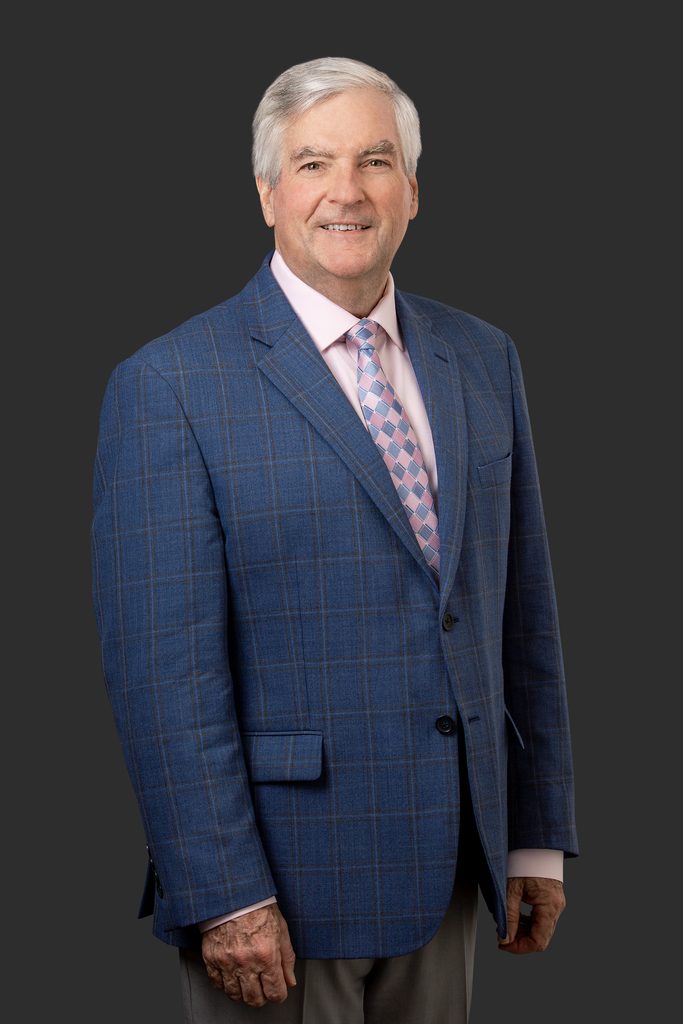
He started his career at Shank Irwin, which did much of the legal work for one wealthy family. When the family divided its business interests, Gruber left with two partners to form a three-lawyer firm, Williamson Johnson and Gruber. He was just in his third year of practice.
Later, at Cowles and Thompson, Gruber was lead counsel for the original investor in Blockbuster Video in a six-week trial that resulted in a $123 million judgment.
It was one of a string of high-stakes matters Gruber would handle over the ensuing decades. In 1999, he obtained a $20 million jury verdict in a sexual harassment case against Hoffman-La Roche. Two years later, he was brought into a case against Shell Oil just six weeks before trial and ultimately obtained a $30 million verdict for his client.
His work has taken him from bankruptcy court to the U.S. Supreme Court. Gruber represented institutional investors in Enron-related litigation against Merrill Lynch, which settled for $40 million on the first day of trial. He later served as co-counsel in Wellness International Network v. Sharif, a bankruptcy jurisdiction case decided by the U.S. Supreme Court in 2015.
In 2021, Gruber represented a creditor in the National Rifle Association’s bankruptcy case, helping persuade a federal judge to dismiss the Chapter 11 filing after a 12-day trial. The judge found the bankruptcy had not been filed in good faith.
In the last 15 years, Gruber has handled six family disputes involving estates valued at more than $1 billion.
Among them, Gruber represents the estate of Albert Hill Jr., the grandson of H.L. Hunt and son of Margaret Hunt Hill, whose name is on a Dallas bridge. Gruber also represents Hill’s executor, former state District Judge Margaret Keliher.
Hill died in 2017, but litigation over his estate continues.
Keliher said high-caliber lawyers often have the book smarts but lack the street smarts. Gruber, she said, has both. He is also a great listener who doesn’t make clients feel like he thinks he is smarter than they are, she said, and he was willing to change direction during the dispute when she had a different idea.
Just as impressive as his legal work, Keliher said, is Gruber’s commitment to his community. Indeed, each person who spoke to The Lawbook for this article added another project or cause to the long list Gruber has devoted his time to over the years.
It all comes back, he said, to the idea that a person’s environment should not determine their destiny — and to the help he got from a teacher.
“Just knowing how many people must miss that chance just because opportunities aren’t made available for them — and that’s what separates us,” he said.
A 2013 editorial in The Dallas Morning News hit home for him. The headline read: “ZIP codes are tied to a Dallas child’s destiny.”
The article reported data from Stand for Children – Dallas showing what the article described as a cradle-to-prison pipeline in southern parts of the city. Ten Dallas ZIP codes that accounted for more than 3,100 prison inmates also had low levels of college readiness.
“I still remember reading that article that day and thinking that just can’t be the way the world works — not talent, not intelligence, not hard work or hard-working school, but where you were born deciding your fate,” Gruber said.
By then, Gruber was about two years into chairing the Dream Dallas Project, an effort to raise $100 million in public and private funds to build and refurbish 1,000 homes, primarily across South Dallas.
“During the project, I saw a lot of neighborhoods I had never seen before and just how different the living conditions were in some areas of the city compared to others,” Gruber said. “What really bothered me is that, based on the limited amount I had witnessed, the article rang true.”
In his own experience growing up, Gruber said, he developed a sense of himself and his future that was reinforced by the people around him. A brother-in-law first brought him along to clean warehouse bathrooms when he was 8. Later came work at a body shop, and, eventually, a night shift loading and unloading freight.
A school counselor, he recalled, signed him up for vocational classes. He left school early to work at an auto shop, painting cars and doing body and mechanical work.
Gruber is careful to not disparage those jobs. He notes that some of the work can be more lucrative than what a recent college graduate earns in the first years out of school. He also remembers how physically demanding it was, working in the backs of trucks where temperatures could reach 150 degrees.
For years, Gruber assumed that was the kind of work he would do. Then he landed in Nancy Solana’s civics class.
Solana helped him apply to SMU, secure a scholarship and encouraged him to register for the college entrance exam. The opportunity changed the trajectory of his life — and, decades later, helped shape the way he thought about children whose ZIP codes seemed to be narrowing their possibilities before they had a chance to choose for themselves.
“The most terrifying thing to me, is the path I was on would not have led me to Diane, the most important person in my life and the person who accepted and supported me from our first date until at least this morning. She is very broad minded, but I had a better chance running into her on the SMU campus than I did when we were in high school and I was a mechanic.”
“But the impression [of Solana] on how I would live my life was enormous. I learned we are all on a path, for better or for worse, set for us by the circumstances of our birth and early life experience — the ‘your ZIP code is your destiny syndrome.’ But more importantly, that it doesn’t take much of a push to get you off that path. One of the programs I worked with put mentors for an hour and a half a week in poverty-level middle schools. Just by asking every week, ‘How are you doing in class? What do you want to do for a job some day?’ the kids averaged going up a grade level and, with encouragement, picked up an extra-curricular.
After understanding that, it became very easy to provide opportunity wherever possible.”