Steptoe, Blank Rome Add Litigators to Houston Offices
The firms announced new hires Monday to their Houston offices. Claudia Wilson Frost comes to Steptoe from Orrick, while Audrey F. Momanaee leaves Balch & Bingham for Blank Rome.
Free Speech, Due Process and Trial by Jury

The firms announced new hires Monday to their Houston offices. Claudia Wilson Frost comes to Steptoe from Orrick, while Audrey F. Momanaee leaves Balch & Bingham for Blank Rome.
Jennifer Harris’ attorney, Brian Sanford of Sanford Firm, told The Lawbook he plans to appeal the ruling either by seeking rehearing en banc at the Fifth Circuit or by petitioning the U.S. Supreme Court to hear the case. Harris was awarded $366 million, including $365 in punitive damages, by a jury that rejected her claim of racial discrimination but did find that Harris’ firing was retaliatory.
Twenty lawyers, including several former Texas appellate and trial court judges, have applied for appointment to the newly created business courts and intermediate appellate court. They include prominent figures such as former Texas Supreme Court Justice Scott Brister, appellate specialist David Gunn and Houston MDL Judge Sylvia Matthews. Five candidates from the Texas AG’s office also are seeking positions. Gov. Abbott will appoint the judges and justices, who begin hearing cases in September. The Texas Lawbook obtained the applications through a public information request.
Six Texas Supreme Court justices peppered three lawyers with about two-dozen questions during an hour of oral argument Tuesday morning in an effort to determine whether the state’s Public Utility Commission was within its power to manually set electric rates at $9,000 per megawatt-hour during the four days of Winter Storm Uri in 2021 or if a massive, multibillion-dollar repricing needs to take place.
“The question before this court is a narrow, legal one: Does the plain text of PURA authorize the PUC to order ERCOT to restore competitive scarcity pricing signals to the electricity market and ensure the reliability of the electric grid?” Macey Reasoner Stokes, an appellate partner at Baker Botts in Houston who represents Calpine and Talen Energy, told the state’s highest court. “We submit the answer is a resounding yes.” Lawyers for Luminant disagreed. The Texas Lawbook has the details.
In this week’s edition of Litigation Roundup, the Dallas appellate court undoes a $20.8 million award in a fight between a landlord and a grocery company after finding “red flags” during the negotiation process were ignored, a federal jury convicts a software company CEO of bilking investors out of at least $25 million and prosecutors go after a business mogul who they say hasn’t paid taxes since 1992.
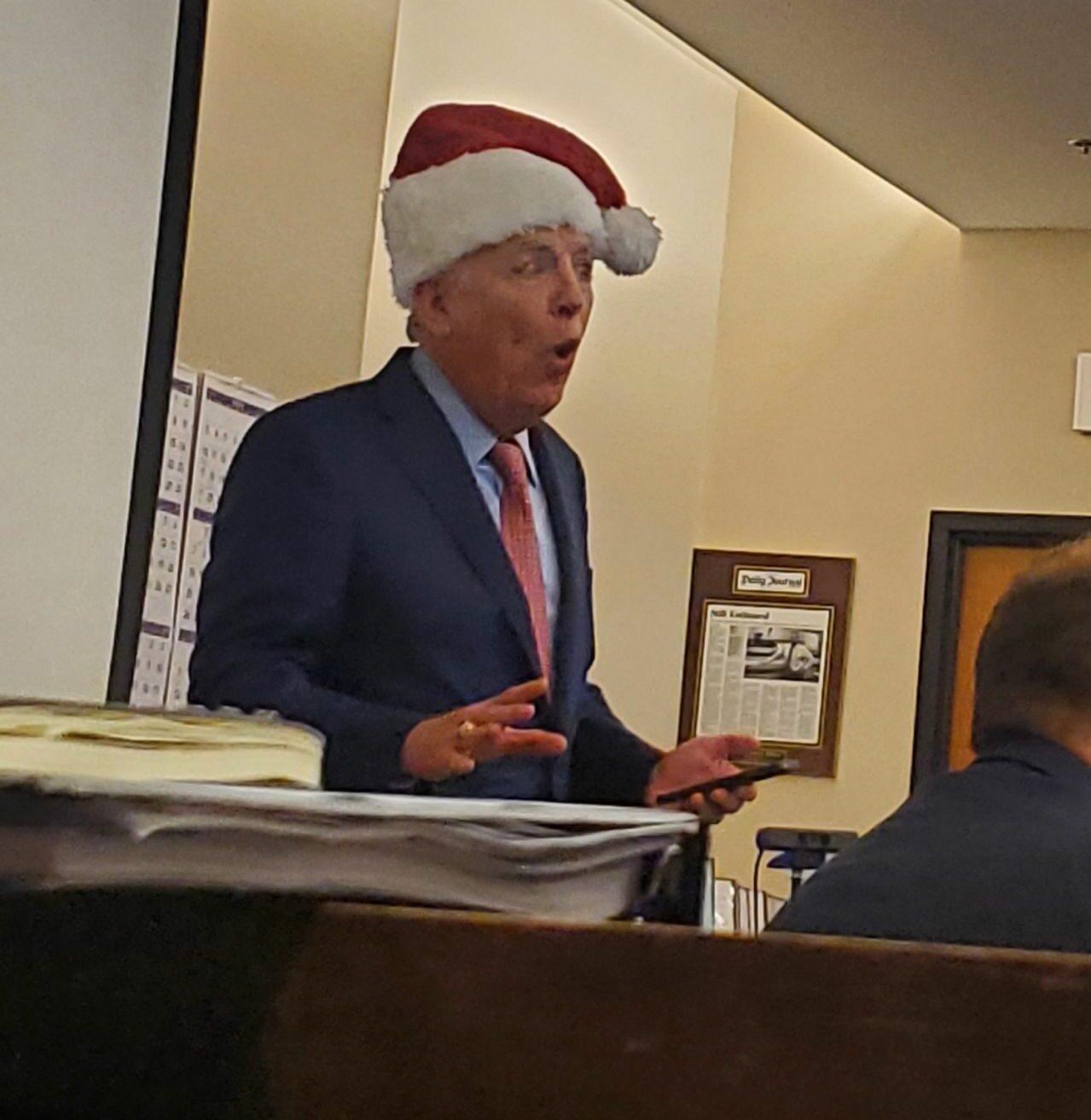
A lawyer walks into a courtroom, puts on a Santa hat and reads a Christmas poem to the jury. That’s no one-liner, but rather a factual account of something that happened in San Diego the week before Christmas. And I know that because I’m the lawyer who did it.
Now, of course, this whole thing was not without risk. But a favorable verdict in the trial last week proves the spirited move didn't hurt either.
After Texas Disposal System successfully persuaded the Travis Appraisal Review Board to lower the valuation of its landfill by more than 80 percent, the Travis Central Appraisal District sought a district court’s review. TDS successfully argued that the trial court did not have subject matter jurisdiction over the appraisal district’s claim that the property was below market value because it had brought only an unequal-appraisal protest. SCOTX will review a court of appeals decision to allow the appraisal district to proceed with its case. Business taxpayers are weighing in as the dispute presents major questions for the handling of appraisal protests.
More than a dozen of the largest electric power companies operating in Texas will face off with their state regulator Tuesday at the Texas Supreme Court. At stake are billions of dollars paid and received under emergency circumstances during Winter Storm Uri three years ago. The energy companies, led by Dallas-based Luminant and Houston-headquartered Pattern Energy, claim that the Texas Public Utility Commission illegally and unnecessarily increased the rates to buy and sell electricity for the four days that unprecedented cold temperatures and freezing rain engulfed the state in February 2021 — rate increases that caused some companies to lose billions of dollars while providing other energy companies billions of dollars in sudden profits.
A group of 10 attorneys have left Alston & Bird to launch their own law firm focused on serving energy industry clients. Rob Vartabedian and Conrad Hester, who have been working together since 2008, will be name partners in the new venture.
Michelle Scheffler, formerly of Haynes Boone, joins Skadden as a litigation partner in its Houston office. Scheffler has led high-profile energy litigation across the country.
When Google changed its policy in 2020 to require all businesses selling apps through the Google Play Store to use Google’s electronic bill pay system, officials at Match Group quickly realized that this meant hundreds of millions of dollars in lost revenue. The alternative was even more devastating — being booted off Google Play, which generated billions in revenues from Android users for Match brands, such as Tinder, PlentyofFish and Match.com. The Match legal team — including Chief Legal Officer Jared Sine, Associate General Counsel Jeanette Teckman, Senior Litigation Counsel Stephen Myers and Litigation Counsel Katie Johnson — tried to work with Google on a resolution for two years, but finally decided in March 2022 to sue its largest business partner on allegations of market manipulation, broken promises and abuse of power.
The challenges for the Match legal group included Google’s extraordinarily positive public reputation and its army of successful lawyers, three million documents of discovery to review, an expedited trial plan set by the judge and co-plaintiffs combined into the litigation that did not always see eye-to-eye with Match on all issues. Winning at trial was anything but a sure thing. In fact, Apple had defeated a nearly identical lawsuit in 2021 and 2023. Efforts to reach an out-of-court agreement were fruitless.
In this edition of Litigation Roundup, Exxon Mobil sues two activist investors, a propane company draws a $150 million lawsuit over a fatal crash and the Texas Supreme Court issues an opinion clarifying premises liability law.
© Copyright 2026 The Texas Lawbook
The content on this website is protected under federal Copyright laws. Any use without the consent of The Texas Lawbook is prohibited.