
Hillary Holmes was early on in the most important deal of her professional life when she realized she would have to make some adjustments.
A young associate tapped for the team was struggling to keep up with the physical demands of a transaction on a five-alarm timeline.
By their nature, capital markets issues are sensitive to time, market attention and discretion. Seasoned lawyers know how to sweat quietly against the tensions and deadlines set by lenders and investors.
But this particular transaction was an initial public offering for Elon Musk’s Space Exploration Technologies — an $87 billion offering with underwriter options, the largest such transaction in history.
From the first of the year through its June 12 close, wave upon wave of Gibson Dunn lawyers would be drinking due diligence from a firehose — and only weeks in, a bit of fray was beginning to show.
Holmes, a long-distance runner with around 50 marathons on her resume, was managing teams virtually around the clock in Houston and the operational home of SpaceX in Hawthorne, California. But as co-chair of Gibson Dunn’s global capital markets group, Holmes realized she needed to alter the pace she had set.
“This was hard on a lot of the team members, just the workload and being in the office multiple days at a time,” recalls Holmes of the experience in an exclusive interview with The Texas Lawbook. “They were up there on weekends because they needed to be present.”
So was she.
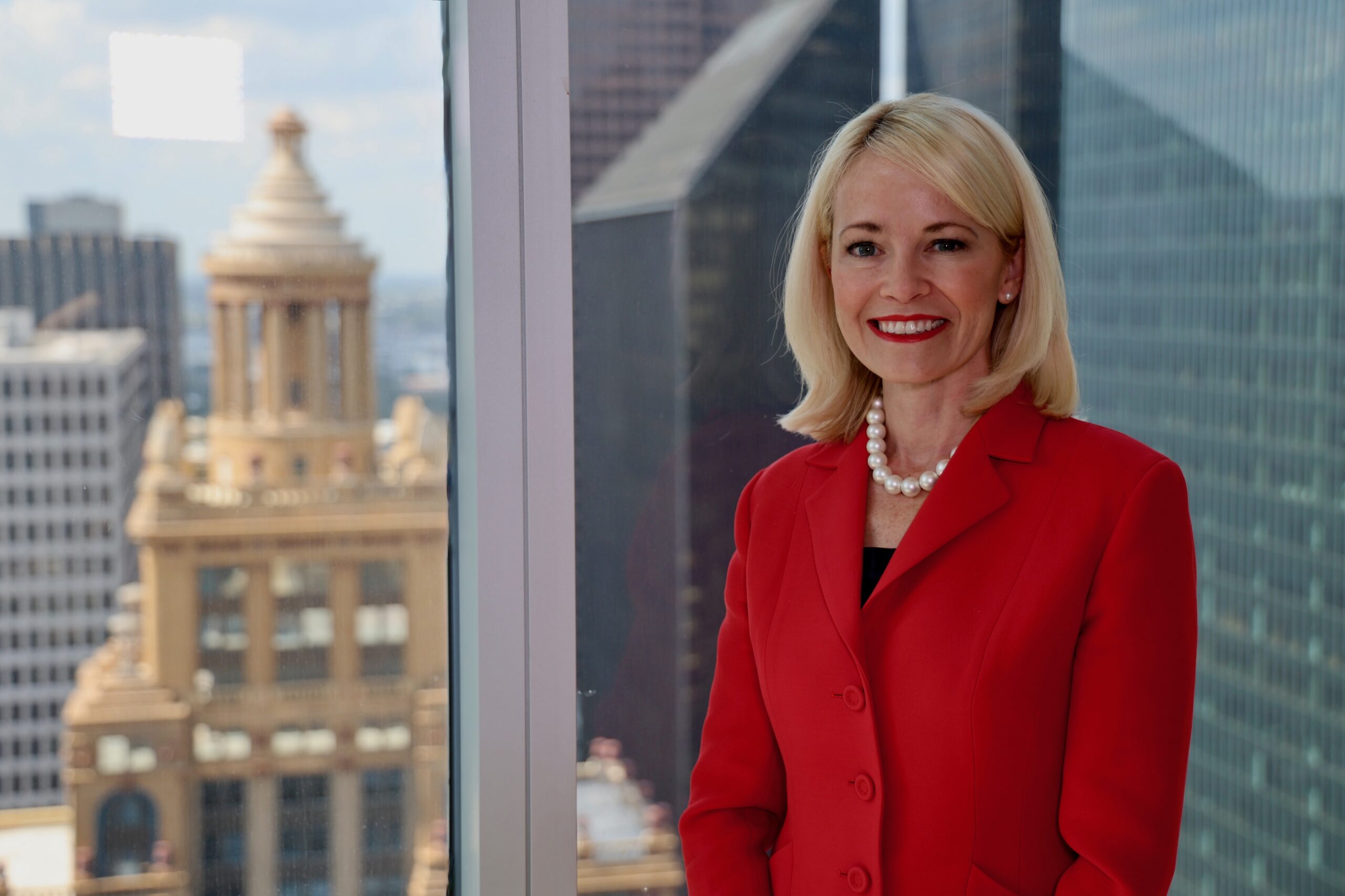
“There were days, plural, that I did not sleep. Really, it was physically and mentally exhilarating,” said Holmes. At one point she recalls working through a 70-hour stretch without so much as a nap. Still, the veteran dealmaker quickly recognized that she couldn’t expect others to maintain the same blistering pace.
It was over a weekend when Holmes noticed the associate struggling. “I just realized I needed to be more attuned to the fact that not everybody can go a hundred miles an hour for a hundred miles,” said Holmes. She told the team to start taking breaks when they needed them.
“This was towards the beginning, and we figured out a way to do that, which served us well for the next couple of months.”
It is not uncommon for law firms to have multiple practices represented on large corporate transactions. But Gibson Dunn’s SpaceX IPO team came to involve more lawyers than most. The size and complexity of Musk’s empire demanded as much, along with the ambitions of the filing itself.
SpaceX, even then, wasn’t simply a big business.
It was the corporate colocation of three massive Musk enterprises: SpaceX, which pioneered reusable launch systems for the placement of more than 9,600 satellites; Starlink, the global communications network that uses those satellites for communications; and xAI, Musk’s developer of agentive artificial intelligence — inside of which was tucked the social media platform X, formerly known as Twitter.
Moreover, SpaceX was a company in motion, absorbing new assets and businesses before, after and even during the IPO registration process, with each addition strengthening the company’s valuation and supply chain. And Holmes and her Gibson Dunn colleagues had a hand in them all.
In May 2025, the company bought Akoustis, an upstate New York manufacturer of radio frequency filters, out of bankruptcy for $30.2 million. By year’s end, the company had acquired $19.6 billion in radio spectrum licenses and $1.25 billion of its own stock.
On Feb. 2, 2026, with IPO preparations underway, SpaceX acquired xAI in an historic merger that valued their combination at $1.25 trillion. But just three days later, SpaceX acquired Hexagon Masterworks, a Maryland company that makes cylinders for SpaceX rocketry.
On April 1, SpaceX filed a confidential draft of its prospectus. The Securities and Exchange Commission declared it effective May 20. In between, the company pitched institutional investors on its “road show,” struck a $60 billion deal for an AI software provider and kept up a running dialogue with the SEC.
“We were arguing with the SEC in the last thirty minutes before we were declared effective over Texas law stuff,” said Holmes.
The result, finally made public, may prove to be, in both style and substance, the most remarkable S-1 ever produced.
Weighing in at 405 pages, including footnotes and appendices, it is a capital market compliance document whose purpose was to provide a semblance of legal transparency to the hyperbolic capitalism of a corporate operation unlike any other.
Aside from those needed for the usual stuff of business — the 22,000 or so employees, their compensation and benefits; the taxes paid to hundreds of governmental entities; contracts for acquisitions and operations, valuations for real estate; environmental risks; regulatory issues; legal exposure, accounting concerns and the like — there were other needs.
The stock was being dual registered on the New York Stock Exchange and NYSE Texas; equities were being made available through more than two dozen underwriters on at least 11 foreign markets. And since Musk, the world’s richest man, would still be in control, able to name and fire the corporate board that would be advising him, lots of lawyers were needed to disclose what needed to be disclosed.
It was their job to assure, verify and frame it all for the investing public — every comma, figure, definition, source and syllable of a corporate history that includes the solar orbit of a mannequin-driven Tesla Roadster and a corporate mission statement that includes the intent to bankroll an extension of “the light of consciousness to the stars.”

And to approve artwork, including 70 photos of fiery Falcon rocket launches, reusable booster landings and orbital tableaus of Earth, the Moon and outer space worthy of desktop wallpaper or a coffee table book.
And the one-of-a-kind, black-edged framing of each page on the SEC website against a grayscale background.
And the 15 pages of dark mode, white-on-black typography, signaling the digital zeitgeist of the Gen X founder of everything X.
“(The typography) was part of the design; it’s their style,” said Holmes. “So, we decided to see what it would look like if we made the prospectus black.
But for Holmes, it is also what a capital markets prospectus should be: a discernible business case for investment, a reasonable and defensible accounting of the risks involved and a look and narrative that reflects the values of the client, both in form and in substance. The aesthetic of the prospectus is only part of an overall professional package that has made her a familiar and important name among dealmakers in Texas and beyond for the better part of two decades.
Crystal Simpson, a longtime client, thinks there is substance in the style. “I feel like Hillary takes her mandate to the ‘nth degree’ with every one of her clients,” said Simpson, a senior managing partner in Washington, D.C., for global investment bank Evercore.
“You might say ‘Do the aesthetics in an SEC filing matter?’ Well, when you’re raising $85 billion dollars and that’s your key marketing document. So, yeah, I’d say that’s very important.”
Simpson has known Holmes for more than two decades. They met when Simpson was at Lehman Brothers and Holmes was a young associate at Baker Botts. The two have since worked together, or across from one another, on dozens of capital markets issues raising scores of billions of dollars.
“I love when she works with me,” said Simpson. “We share a desire to pull out all the stops for our clients.”
Hugh McGee is co-founder and CEO at Intrepid Financial Partners, a New York-headquartered investment banking firm with a heavy presence in Houston. He says Holmes has crafted a unique position of trust that cuts across the usual boundaries of corporate finance.
Beyond her role as a capital markets lawyer, McGee said, Holmes has become one of the top advisors to the ad hoc corporate committees created to avoid or solve conflicts of interest and issues of governance.
“She seems to get on virtually every committee assignment,” said McGee. “She’s the best in the business at this, and clients trust her. The other side knows that she’s going to handle things in a professional manner and that the transaction probably will get done, but it’ll get done in a way that protects everybody,” he said.
Amanda Brock, CEO of Solaris Energy Infrastructure, has known Holmes since she was a child. She thinks of Holmes, not just in terms of SpaceX, but as part and parcel of the global arc of Texas, both in capital markets and corporate law. In just the last few years, Texas has created the business court, revamped its structural corporate governance and landed three stock exchanges.
“People like Hillary have emerged as motivators — no, more than that, facilitators. She has a brilliant mind. She understands not only the deals she’s working on, but the context of that deal in the larger ecosystem.”
“Her ability to actually think out of the box, to think like the businessperson she is representing, is the best I’ve seen, really. As a consequence, her counsel, her judicious approach, her pragmatism, and at the same time, her bandwidth and ability to just get shit done is phenomenal.”
Barbara Becker is chair and managing partner of Gibson Dunn in New York. She says Holmes has become a “force of nature” at the firm.
“She is an exceptional problem solver. She can take an incredibly complicated situation, cut through that complexity, find the path forward, and get everybody marching in the same direction. Which, as a transactional lawyer, part of what we need to do is get everybody on team and moving. You tell her the deadline of what has to get done, and she will put everything possible into it to accomplish it,” said Becker.
“Which is what she did on the SpaceX IPO. I don’t know how many hours she slept in the days that IPO got done, but it was not a lot. It was due to her that timelines were kept, and we got through the SEC in the manner that we did.”
In sum, Holmes, who turned 49 while working on the SpaceX IPO, is a corporate lawyer at the top of her game, whose pivotal position in the richest market offering ever, once understood, seems both sensible and inevitable. And, in a signal moment of Texas ascendancy across the business of law, perhaps no one lawyer epitomizes that ascendancy better than Holmes.

From Tolstoy to Texas
Hillary Hunt Holmes was born in Houston in 1977.
“Born and raised,” noted Holmes. “My father was a Houstonian and his father. And my grandparents and great-grandparents.”
But the chronology is a little more complicated, and more interesting, than that. It’s a fluid history of family continuity girded with durable lifespans, an appreciation for education and straightforward attention to the satisfaction of work.
Her parents met at the University of Missouri where both were instructors pursuing their doctorates. Her father, Harry Holmes, was earning his Ph.D. in public policy. Her mother, Patricia Hunt, was finishing a Ph.D. in Russian and South Asian history. Her 400-page dissertation, Leo Tolstoi as a Theorist of Non-violent Social Revolution and His Relationship with Mohandas Gandhi, was later published by the school’s academic press.
The two married and spent a year teaching at the University of Tennessee before heading to Houston, where Harry Holmes’ family had lived for generations and where he began to work for healthcare institutions. For her mother, the job market in Houston proved scarce for women experts in Russian history.
She found a job at Vinson & Elkins, however, where her research and teaching skills were needed. She wrote legislative histories for the lawyers at the firm on emerging laws and issues: coal slurry pipelines, housing and the Foreign Corrupt Practices Act.
By the time Hillary was born, Pat had left the law firm and decided to enter law school, earning a J.D. from the University of Houston Law Center before returning to V&E for what would become a 30-year career as a capital markets lawyer.
Hillary has grown to appreciate her upbringing as a gift of generations.
She remembers her great-grandparents, her father’s grandparents. They were still alive when she reached middle school. They owned a house on Tangley Road in the West University section of Houston, which was still rural in the early 1980s. She recalls a pecan orchard where she and her cousins climbed trees.
“I used to go over to their house. They were championship ballroom dancers in their younger days,” remembered Holmes. Her paternal grandfather balanced two callings, real estate investing and the Methodist ministry, and still made time to drive her to ballet lessons.
Her father’s mother, Ruth Holmes, died in 2023 at the age of 101. At a party Holmes hosted for her 100th birthday at Houston’s Coronado Country Club, Ruth danced.
On both sides of her family, longevity is a thing.
“My mother’s mother lived to be 98, almost 99. She was just like a month shy of her ninety-ninth birthday,” said Holmes. “Both of them lived at home until 99. My mother’s mother passed away in her own living room at home, the same home they bought when my grandfather came back from World War II.”
Her mother’s grandparents, Julia and Edward Hunt, owned a home in Egg Harbor, a small township in New Jersey dating to the Colonial Era.
Holmes spent summers there, away from the heat and humidity.
She recalls her grandfather Edward as “scary” to a young child. Adult meaning: He was a former B-29 pilot, disciplined and purposeful. “He was a strong Midwestern man. Everything was regimented. He was a World War II vet. He had been a pilot in the Asian theater and had worked on radar when it was still a secret,” Holmes recalled.
Early on, Holmes nursed her own dreams of flight. “I wanted to be an astronaut,” said Holmes. And growing up in Houston, the operational hub of the National Aeronautics and Space Administration, it was a goal that didn’t seem far-fetched.
“I went to space camp at NASA,” said Holmes. “I just thought it was the coolest thing. I used to stand in my front yard, and I had a telescope. I had a little journal and would track the stars from the yard of my house in Houston.”
The high point of her space career was meeting a real astronaut, Jeffrey Hoffman, a veteran of five space shuttle voyages who showed up at her school dressed in his official NASA zip-up. But it wasn’t long afterward that she discovered the reality.
“I figured out that I wasn’t very good at science. I was good at math, but not [good enough], so I knew it wasn’t my future.”
After attending River Oaks Baptist for her elementary years, she was accepted to the Kincaid School, a Houston private academy that boasts William Hobby, George W. Bush and James Baker III among its former students.
She discovered another career trajectory through her father, a well-regarded lobbyist in the healthcare sector, best known for his work with M.D. Anderson, Houston’s world-renowned cancer center. She began to gravitate toward public policy.
Part of it was fun. Her father had an apartment in Austin where he’d stay while the Texas Legislature was in session. She was a regular visitor, landing jobs as a Senate page or a House messenger, both in Austin and Washington.
Her father lobbied for funding to build hospitals, coaxed legislation to ban smoking in public places and other tangible benefits that forged her appreciation for public service.
While at Kincaid, she decided to become an elementary school teacher. Having finished her core requirements for graduation early, she concocted a plan to begin work as a teaching assistant while she waited to graduate. She spent much of her senior year in high school as an assistant in the school’s lower-level classes.
When it came time to decide on college, she gravitated toward Duke University, primarily because of its reputation as a top-tier school for education policy. She spent her first year at Duke on a degree path in elementary education, but she realized along the way that teaching might be harder than being an astronaut.
“I decided this is not really what I want to do for the rest of my life,” said Holmes. She recalls thinking: “This is really, really hard. I mean, this must be the hardest job on the planet.”
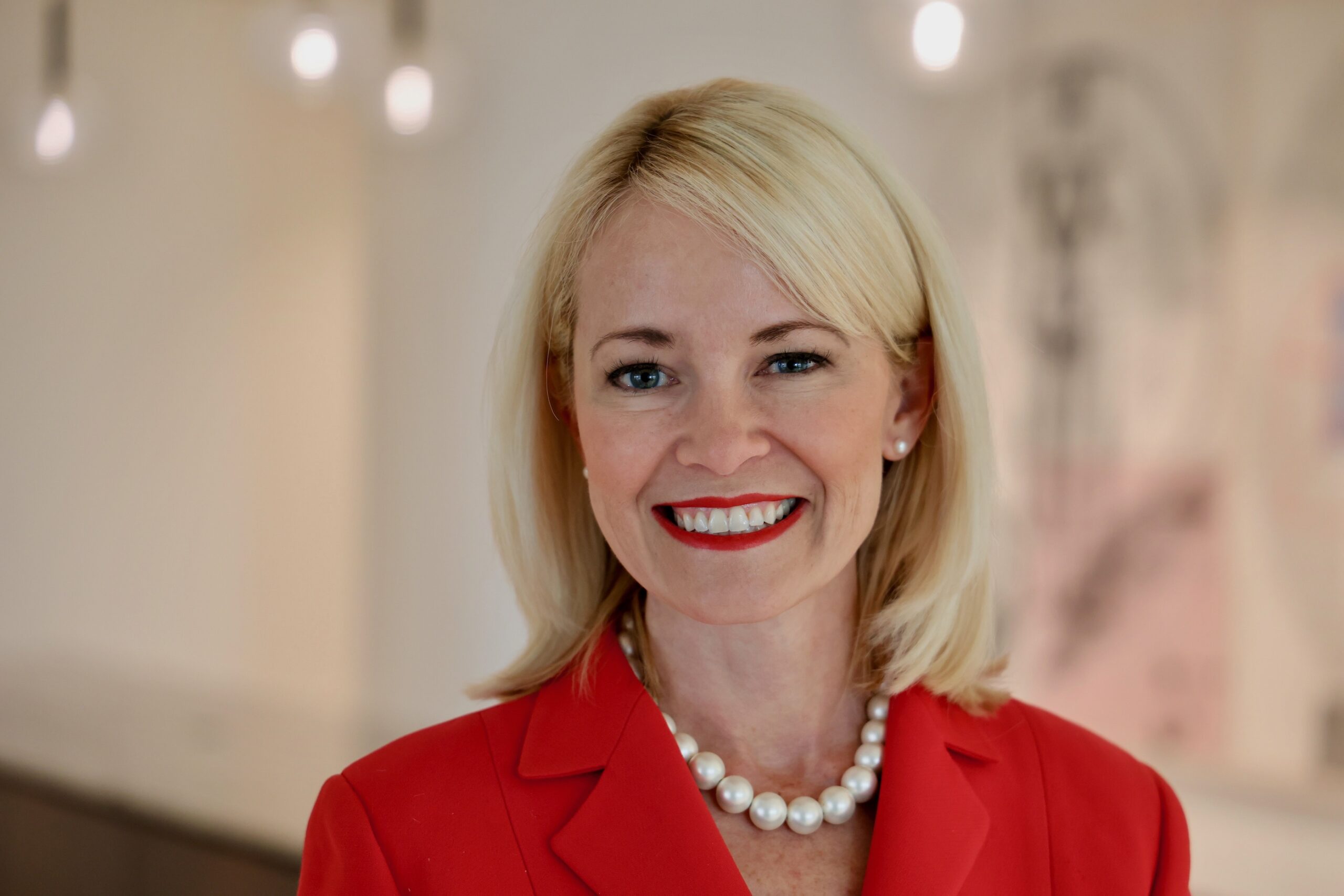
Switching gears and degree plans, she graduated cum laude from Duke in 1998, with a degree in public policy, women’s studies and history.
Before and after graduation, she became active in some of the key issues that were percolating among the women at Duke. Much of campus life at the time revolved around the fraternities and male “selective housing” that occupied the physical core of campus quad.
“The women’s rooms were at the back of the quad and on these side quads. It was just that, in and of itself, signaled that men come first, women go second. Space and language are a proxy for what we value. Who sits at the head of the table? What name do you say first? Things like that. Hierarchy.”
In her junior year, she was elected president of the Panhellenic Society, the student organization that exercised oversight for fraternities and sororities.
She lobbied for office space, welcomed Black and foreign student organizations into the Panhellenic fold and conducted scientific surveys to help guide new policies and projects. And in her senior year, she was reelected as Panhellenic president.
As she had at Kincaid, she finished her degree requirements early and decided to stay, continuing some of the projects she was working on and working with undergraduate admissions. She developed “Blue Devil Days,” an open-house program for new admissions and their families that still exists.
She applied to law school at the University of Pennsylvania but deferred her admission for a year to work for the nonprofit arm of her sorority, Kappa Kappa Gamma, establishing college leadership programs for young women. For a year, she lived out of a suitcase, traveling in the U.S. and Canada.
“I was very passionate about empowering women’s opportunities and traveled around to different college campuses meeting with deans of students, or whoever the equivalent was, and talked about issues they were having with or opportunities for women’s leadership development,” said Holmes.
“I highly recommend not going straight from college to law school,” Holmes advises new graduates. “I wish I’d even taken a couple more years, especially traveling around meeting new people.”
She was young, travel was fun and she was being paid to visit new places and help people. But she was also developing and refining the mind-and-skill sets that later became important in corporate boardrooms: the tools of preparation and the power of persistence.
“Sometimes, I’d show up on these campuses; and they did not want me there because I had been brought in because there was a problem and I was there to help solve it. And I would come back multiple times during the year to check in on how things were going, helping them warm up to me and then finding a way to get them to accept the path to the solution and/or figuring out what path might work for them,” she said.
“Even if it was 70 percent of the way there, that’s still an accomplishment. So, figuring out how to get them to 70 percent, or whatever, was a real learning experience that I think benefited me long term.”
For Holmes, the choice of Penn for law school had been a no-brainer, a decision related to both size and culture. It was smallish, Ivy League and located in Philadelphia, a city she had grown to love during childhood — a two-dollar train ride from Egg Harbor.
Early on, she discovered another attraction: Matthew Archer.
He was a 3L. She was a new arrival, in line at the cafeteria when she noticed him. He was wearing a Baker Botts backpack, and they started to chat. When her newly issued meal card didn’t register, he bought her food. She offered to pay him back. He suggested a date. They clicked.
“He says it was lunch. I say it was breakfast. I, of course, am right,” said Holmes.
Archer is a fifth-generation Texan from a ranching family in the Panhandle who studied accounting as an undergraduate at Texas A&M. He had applied to only two law schools, the University of Texas and Penn — the former because it was Texas, the latter because of its proximity to Wharton Business School, where he had once taken a tour.
“Obviously, it was meant to be. I just didn’t know it at the time,” said Holmes.
By contrast, Holmes’ choice of transactional law had nothing to do with serendipity. It was a calculated, conscious choice — a by-product of genetics, lived experience and the process of elimination.
Throughout her earlier school years, her summer jobs included law firms, several involving litigators. She was old enough, she said, to be put off by the sense of hostility that seemed to permeate even simple tasks.
“I hated all of it,” recalled Holmes. Whether typing letters or taking notes at a deposition, the tone oozed passive aggression, tripwire questioning or outright rudeness. “I was like, ‘This is ridiculous. I have no time for this. I want stuff done.’”
“That’s why I liked watching my dad [in] politics and why I liked watching what my mother did. It was about getting things done. There is a problem, we need to solve it. There is an opportunity, let’s make it happen. Simple as that: transactional.”
More complicated was the choice of Houston over New York. The latter was the epicenter of corporate law, particularly for capital markets. But the choice was made easier by a single fact: She had lived in New York.
“When I had that year between college and law school, I had a home-base apartment in New York that I shared with six girls in two bedrooms. Whoever came home last had to sleep in the pantry of the kitchen on a twin mattress. So, I got a little taste of being in New York,” said Holmes. “It’s a lot of work to live there.”
And then there was a Texas-based hive of corporate lawyers at a time when oil and gas was thriving on public exchanges. She interned at both Akin Gump and Fulbright & Jaworski during the summer after her first year of law school, and the work itself made an impression.
“I really enjoyed my experience. I began thinking, ‘I’ll just come back here and practice, because this was amazing,’” she said.
“I was in the action sooner and at a deeper level than probably I would be at some New York law firm.”
Moreover, Matt was already there, an associate at Baker Botts in Houston. And, of course, there was family.
“This is my hometown. I also knew a lot of people. And they knew my mother.”
The Dining Table Deal Room
By the time Hillary returned to Houston for good, Patricia Hunt Holmes was deep into her 30-year tenure at Vinson & Elkins, a career in public finance and capital markets that Hillary had witnessed up close.
In the days when the term “paperwork” was literal, Holmes remembers her mother flipping through mounds of paper strewn across their dining room table as she took call upon urgent call as deadlines approached.
On the weekends, she and her sister often played at the offices of V&E; no school, Dad traveling and no babysitter meant time with Mom at First City Tower. She and her sister, Ashley, would spend hours concocting their own projects with V&E office supplies. Holmes said she was struck by how much her mother enjoyed it.
“She was there all the time because there was no such thing as remote work. I saw her work all the time. I thought it was interesting because she loved her work,” said Holmes.
When they drove around town, her mother would explain the relationship between the buildings they passed and the capital raise that helped build them.
“She’d say, ‘Oh, I built that hospital,’ or ‘I built that Boy Scouts headquarters.’”
Brock worked at V&E at the time in an adjacent office. She recalls seeing young Hillary and her sister at the office with Pat, quietly marveling at what was happening.
“I remember when her mother was balancing having young girls and a very demanding career. I used to watch that as a younger woman, knowing that was most likely in my future. And how the hell do you do that, when you are also trying to execute, make partner, do all of this?”
With time drawn full-circle, Brock marvels at the irony.
“I actually go back that far to hearing about Hillary on the playing fields, smart little girl, pictures of little girls as they grow, and then we come back together again.”
Brock says she was CEO at Aris Water Solutions, as a client of Hillary’s, when she was struck by the young girl transformed into a fully formed lawyer with preternatural people skills.
“It was really at Aris, working with her, where I realized she was incredibly good, incredibly insightful and truly the type of lawyer that I like to work with because they are beyond just a scribe,” said Brock.
“She is disarmingly smart. She is intuitive and so aware of everything that is going on around her. Her EQ is way up there. And then there is this innate ability to take a deal in the larger context, thinking forward to how it is going to live post-deal. Where does that come from? That instinct about the deal not just being a deal, but something living and breathing and having context in the real world?”
“She got that early on, almost like a maternal impression,” said Brock.
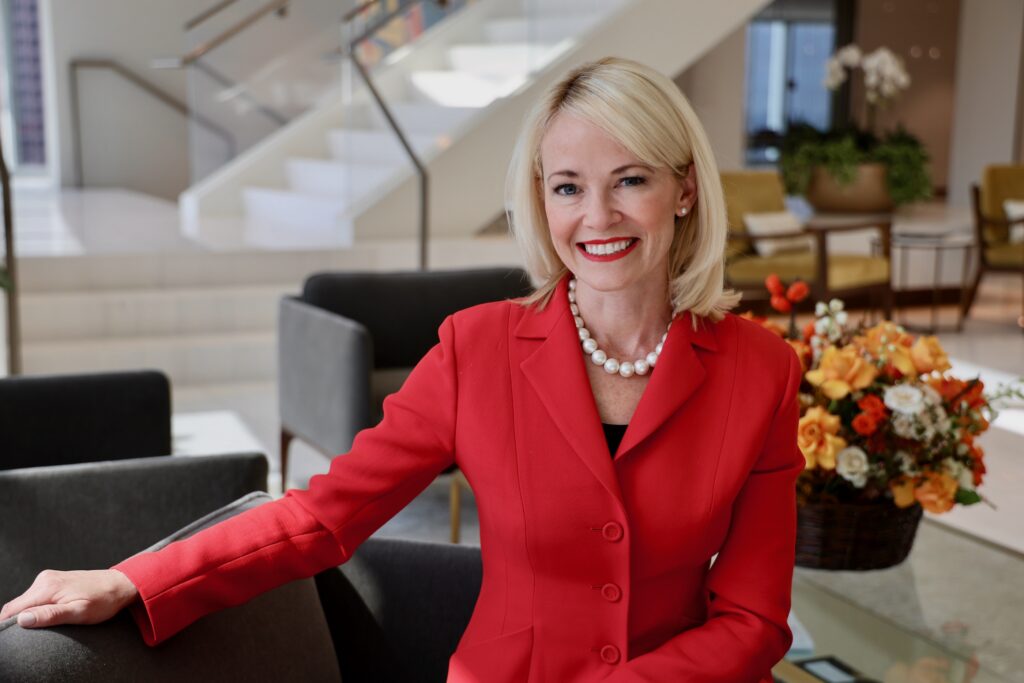
Holmes finds a place for her mother in nearly every conversation. She bears her mother’s smile and the outsize glass pearls she often wears, part of her signature look — a gift from her mother when she got her first job.
“I bought them from Harriet Hart,” Pat recalls. Harriet Hart is one of Houston’s most prominent fashion consultants, advising Houston’s professional women for decades. “She’s known Hillary since she was a toddler.”
“Harriet Hart is like a godmother to me,” said Holmes. “When she still had her store on River Oaks Boulevard, she dressed me for my law firm interviews when I was in law school. And when I got my first job, my mother gave me these pearls, which Harriet helped her with the order. They’re heavy, and I’ve had them since the beginning of my career.”
When she decided to return to Houston — first for firm internships and then for her first job upon graduation — it was her mother who pressed her thumb heavily on the scale.
“My first summer I came back because my mother said, ‘Well, give Houston a try.’ She’s trying to get me to move back.” Holmes recalls liking the idea. Matt was working in Houston. She had friends. People knew her. And, perhaps most important, they knew her mother.
“That’s not a bad thing when they’re like, ‘Oh great, you are Pat’s daughter. Let me take you to lunch and tell you about being a lawyer.’ Why not use that a little bit?”
Having decided to return to Houston, Baker Botts seemed an easy choice to begin her career: It was one of the nation’s top firms, ranked in the top half of the AmLaw 100, and one of the leading energy firms with a heavy-duty capital markets practice. And with the other obvious choice, V&E, precluded by her mother’s partnership there, that pretty much left Baker Botts.
Although they were not yet married, Hillary said she was afraid their relationship would have a negative effect on one career or the other. But Matt was involved in renewables projects and Hillary would be raising money for oil and gas, and all sides convinced themselves that the twain of their careers would not likely meet.
At first, they didn’t. She spent her first year at Baker Botts in Riyadh and Dubai. And by the time they were married and expecting their first child, the twain had collided.
“The year I was pregnant with our first kid, our offices were next door to each other, and that was actually fun because we were pregnant together,” said Holmes. In 2010, Matt left Baker Botts for McDermott Will & Emery with three other partners. Holmes stayed, and by the time she made partner at Baker Botts in 2012, the two were expecting their second child.
A Mentor, a Boom and a Break
While it was her mother who guided her both to capital markets and to Houston and Baker Botts, it was Josh Davidson, a young Baker Botts partner who became the lodestar of her early career.
“I remember being terrified because every associate was absolutely terrified of him. He’s very scary. Why? Because he’s very scary,” grinned Holmes, who was assigned to work with Davidson. “He’s very serious. He’s very intense. He was a top capital markets lawyer in energy.”
“Josh changed the trajectory of my entire career,” said Holmes. “I am the lawyer I am because of Josh. He’s one of the most brilliant lawyers I’ve met in 25 years. I learned to think a certain way. I learned to analyze issues a certain way; the most complex problems a certain way.”
As it happened, Holmes’ graduation from law school in 2003 coincided with the eruption of the “shale revolution” in Texas. New oil and gas technologies married up with a rekindling of capital markets that had languished following the burst of the “Dot-Com Bubble” in 2000 and 9/11 terror attacks in 2001.
Tensions across the Middle East created a surge of interest in “energy independence” across the hydrocarbon basins of Texas, Appalachia and beyond. And modern refinements of existing hydrofracturing technologies offered new tools to achieve just that.
Microseismic mapping took the guesswork out of drilling. Slickwater solutions reduced a key cost of traditional hydraulic fracturing. Refinements in horizontal drilling made previously unreachable pockets of hydrocarbons both reachable and extractable at higher rates than ever before.
As a result, Texas and its two major energy firms, V&E and Baker Botts, found themselves at the center of a reinvigorated energy universe. While a few national firms had established footholds in Texas during the savings & loan and banking crises of the 1980s, the Texas energy space was ceded to Lone Star firms. And when Holmes took her first job, she found herself in the thick of a revived deal market brimming with more and better career opportunities than she could have hoped for.
“Baker Botts and Vinson & Elkins were part of a different legal market than what we’re talking about [now],” said Holmes. “There was a high volume of capital markets deals because we were in the middle of a lot of capital raising for the build-out of the energy infrastructure in America.”
“The capital markets were just very, very busy,” said Holmes. “We would do an equity deal and a debt deal every week. I would do maybe two. I would have days where I would price multiple offerings. In a day, I would go from one pricing call to the next pricing call to the next pricing call.”
Those early years proved what most associates know, but many come to resent. She says she learned the cumulative value of hard work; not just in the marquee measure of heavy billing, but of the learned and lived experience, the foundational relationships developed inside and outside the firm.
“I was the first there, the last to leave, all cliché things to say,” said Holmes. “I was there on weekends, all that kind of stuff because we couldn’t work from home.”
“And then also people at other law firms across the table from us, because it was such a small community. You learned from those across the table constantly. And being at the table was the other thing back then. You were in person all the time. So, we were at the printer, for days on end, for every deal.”
“We had meetings in the hallways. I am walking around every office and every lawyer for capital markets is just doing an equity deal and a debt deal, like, every day. Especially for the MLPs.”
While capital markets and private equity seeded the early Shale Boom, it was the development of the Master Limited Partnership that pushed it into overdrive, both in upstream and midstream investments. And the heavy lifting for MLPs early on helped shape her later career in ways Holmes now has come to appreciate.
MLPs were not new. The first was formed in Texas in 1981 by the late Houston entrepreneur Raymond Plank, whose Apache Corporation had redomiciled in Texas from Minnesota. Plank and Apache formed Apache Petroleum Company, which, in turn, created public investments through an innovative structure: limited liability partnerships operated and controlled through a general partnership.
The advantage was simple: Because of their structure, MLPs were not subject to the usual corporate double taxation. Distributions were regular and generous, and appealing to retirees. And it was in that context that Holmes bonded with Davidson.
Davidson had joined Baker Botts out of Harvard Law School in 1985. He became a key partner in the firm’s capital markets practice in Houston. Davidson pulled a very willing Holmes into the vortex of Baker Botts’ thriving deal pipeline, often closing as many as three deals a week.
“From the day I walked into One Shell Plaza on Day One, I was literally doing capital markets 18 hours a day,” said Holmes.
She says she was guided and influenced by others at the firm — like Gene Oshman, now senior counsel at Baker Botts (and Oshman’s wife Karen, then a partner at Sussman Godfrey), David Kirkland, who died in 2018, and Kelly Rose, who recently retired as general counsel at ConocoPhillips.
But it was Davidson, Holmes said, who taught her the importance of those relationships; of ignoring the churn, to eschew the notching of deal volume and value rankings and approach each transaction on the basis of its own aspirations, a mindset that became particularly important across their work with MLPs.
While tax-light payouts proved a bonus for both sides, the structure of MLPs generated its own kind of risk. Unit holders paid fewer taxes than corporate shareholders, but they had virtually no recourse over management conflicts of interest. And the energy business, where deals are often built on ad hoc relationships and handshakes, conflicts of opportunity or timing or interest are a matter of fact.
As a result, MLPs relied heavily on committees of independent directors to, in effect, arbitrate the interests of investors and lenders on significant transactions where parties often overlap. And it was through her early exposure to those committees that Holmes, with Davidson’s advice and encouragement, began to build her brand.
Dealing with the committees, Holmes said, she began to discern and decipher the sometimes-complex politics of corporate boardrooms. She learned to look beyond the transaction, first understanding the client’s business and then the role the deal would play in its future. She learned the importance of understanding the business of each business and the role of any individual deal in the broader context of the business itself. She learned to regard deals as opportunities to build relationships, not only with specific clients, but with everyone involved.
“We grew up on the underwriter side. So, we were caring about what it meant for the investment bank. We were [also] caring about the company and the banks, developing two sets of relationships. And that also is very much the way I think. I mean, that’s just innate, like who I am. I care very much about what I’m doing and what it means to the client and how it comes out.”
In practical terms, here’s what that means.
In 2010, she advised the underwriters for the IPO of Chesapeake Midstream Partners, an MLP created by Chesapeake Energy. In 2012, the year she made partner at Baker Botts, Chesapeake sold its interest to Global Infrastructure Partners, changing its name to Access Midstream. Holmes took Access as a client and handled at least 15 securities offerings for the company over the next two years. And in 2014, when Chesapeake decided to list its wholly owned oilfield operations on the New York Stock Exchange as Seventy Seven Energy, it turned to Holmes and Baker Botts to handle the esoteric spinoff.
It’s a foundational career path structure that worked in good times and bad.
She moved quickly, not only into board presentations, but into the circle of trust in the capital markets practice at Baker Botts.
In 2014, only two years into partnership, she led the firm’s representation of the underwriters in the $1.2 billion IPO of Shell Midstream Partners, then the largest MLP offering in history.
In 2015, she advised Sempra Energy on an IPO for Sempra Infrastructure Partners, an MLP through which the California energy company had proposed to provide investment capital for its Liquid Natural Gas processing and terminal facilities on the Gulf Coast. In a moment that provided yet another pivot point in Holmes’ career, she was asked by the client to present to the Sempra board.
She remembers the moment as seminal. “You need to present to the board,” she recalled hearing from the client. “Fly out to L.A., you’ll have 30 seconds. Fly out, stand in front of this board and present to them.”
When she practiced her presentation before Sempra CEO Debra Reed and several company lawyers, the reviews were not good. She spoke for about four minutes and watched Reed’s jaw drop.
“Her face was like, ‘Who is this person?’” Holmes recalled. When they practiced again, things were better. She dropped the lawyer jargon and kept her observations crisp and to the point: The market for MLP IPOs was beginning to slide.
She made the trip and the presentation. Holmes said the experience before the board of one of the top energy companies on the Fortune 500 gained her the realization that she could stand on her own.
“I started to see things where I was OK; I am on my own two feet,” she said.
The Sempra board also had a realization; it didn’t follow through with the proposed IPO.
In 2015, having worked their way through the up-arc of the MLP market, Holmes and Davidson found themselves watching it begin to falter under the weight of reputational regression, market glut and regulatory change. A growth in hydrocarbon supply, an ironic byproduct of the U.S. Shale Boom success, and a drop in global demand, began to make MLPs less attractive to investors. Even worse, the market changes exposed the reliance of many MLPs on debt and creative accounting to fund their distributions.
As such, MLPs began losing their appeal to investors. And as distributions diminished or disappeared under the weight of their own economics, corporate MLP sponsors began the process of “simplification” — buying out the limited and managing partnerships they had helped create. Both Davidson and Holmes became a part of that.
The trend of simplification had begun in August 2014 with Kinder Morgan. In the largest oil and gas transaction since 1999, the Houston-based company rolled back its MLP with three internal acquisitions valued at $44 billion. Baker Botts advised the company on the various conflicts involved.
In 2017, a 14 percent reduction in federal income tax diminished the tax advantages of an MLP investment. In 2018, a rule allowing midstream energy companies to write off federal taxes in cost of service was rolled back by the Federal Energy Regulatory Commission. Some MLPs, in efforts to make themselves more attractive, simply bought out their general partners.
Energy was changing dramatically. Upstream exploration was diminishing. Alternative energies were slowly gaining traction. Massive LNG export facilities were growing along the Gulf Coast.
Corporate law, especially energy law, was also changing rapidly as national firms began to move to Texas or expand their offices in the state to respond to an increasingly sophisticated market.
In 2010, Latham & Watkins opened in Houston. McGuireWoods and Simpson Thacher & Bartlett followed suit in 2011. Kirkland & Ellis countered with its first Texas location in 2014. Others expanded their existing Texas presence: In 2012, Sidley Austin opened a Houston office to supplement the Dallas location it launched in 1996.
From the time she was named partner, Holmes watched as Baker Botts began hemorrhaging corporate partners. Sean Wheeler, Ryan Maierson and Michael Darden left for Latham. Herschel Hamner, Alison Boren and William Howell jumped to Sidley Austin, and Chad McCormick hooked up with Kirkland.
In April 2017, Holmes and five other corporate partners announced they were leaving Baker Botts to open a Houston office for Gibson, Dunn & Crutcher, a Los Angeles-founded firm with a national profile.
The decision to move from Baker Botts, Holmes said, took years. She enjoyed the people she worked for and with. She was given professional opportunities not normally granted to lawyers of her age or experience.
Moreover, she enjoyed the work itself. And that became a problem.
It was following her command performance before the Sempra board that she noticed the gap between what her clients needed and what she could promise. The Sempra meeting, coming as it had behind the IPO for Shell Midstream, gave her belief in herself, and for the moment, that was enough.
“I was having those moments where I was called up to bat, and that was cool,” said Holmes. “A move wouldn’t be a good idea then because you’ve got momentum.”
Those successes exposed an uncomfortable truth for Holmes. Each new opportunity underscored the same tension: Baker Botts was formidable in Texas, but the regional firm’s reach did not always match the scale of her clients’ needs.
“I was having moments where I was like, ‘God, I wish I had a better toolkit.’ I hate to say that, because again, things were going well. But I also was starting to feel like I didn’t have the best toolkit to do everything I wanted to do for my clients and for my career.”
“I saw some of the things that some of my friends had at these global firms that just had more resources,” said Holmes. “A simple example would be in capital markets; you are doing an IPO. It’s really nice to have partners on your team who used to be senior at the SEC. That’s a very simple example; Baker Botts never had [that].”
And clients, she said, began to notice.

“I think there was a time where energy companies in particular just called their default lawyer at the three or four law firms they’d always used. And they just accepted that they got that kind of service or product, and that was it. They didn’t realize they could get something better.”
It was a feeling reinforced when, in the course of hammering out deals, she sat across from friends who had already moved to one of the larger national firms. There were recruiting calls, some of them quite lucrative. But she was waiting, she said, until it felt right.
She got a call from Rob Walters, head of Gibson Dunn’s Dallas office, who, along with Dallas partner Jeff Chapman, had been tasked by the firm’s upper management to help ramrod the opening of the firm’s new office in Houston.
By then, Gibson Dunn had been in Texas for more than three decades, having opened the Dallas office in 1984 at the suggestion (read: demand) of one of its largest clients, Texas-based American Airlines. Walters, a legendary antitrust lawyer, was advising AT&T in its long-running battle with the Justice Department over its acquisition of Time Warner. Chapman was an M&A partner with a regular presence on the Chambers tier 1 band of global practitioners.
The firm had developed a considerable oil and gas practice, in addition to its more general corporate clients. Chapman himself, who joined Gibson Dunn from V&E in 2011, had handled some of the highest-profile energy deals in the nation, but the firm’s management realized that an upper-tier energy practice needed to have an office in Houston, the visible center of an increasingly complex global energy sector.
Chapman said that had been clear when he joined Gibson Dunn in Dallas.
“When I interviewed with the Dallas office, one of the very senior partners in our New York office looked at me, and he smiled and said, ‘I’m really glad you’re coming to our Dallas office, but what we really need is to have a big Houston office, a preeminent Houston office.’ And almost at the minute Rob and I arrived here, we started working on that project.”
Walters said he and Chapman knew what they were looking for.
“We had to start with a youngish corporate securities lawyer, a capital markets lawyer, who by any standard would be among the handful of two or three most elite in that market, the international center of energy. One who would blend quickly with our platform — put their peanut butter with our chocolate.”
“We scoured the market, and kissed a lot of frogs,” said Walters. “All roads kept coming back to Hillary Holmes.”
Holmes knew neither, but both had worked at V&E, so Holmes called her mother.
“I asked my mother, ‘Should I take the call from this guy, Rob Walters?’ And she said ‘Yes, absolutely.’”
Walters remembers being on the pier in Santa Monica when the pivotal call took place.
“We had about a two-hour conversation as I sat on the beach in Santa Monica looking out at the Pacific, and I felt like we resonated on what the law business would look like and how she could fit in.”
“Hillary is tough, and she cross-examined me and asked all the right questions — pretty damn skeptical of one Rob Walters, and my pitch,” said Walters. “But, over time, she really started to warm up and understand what the industrial logic was, what the thesis was and how this represented an opportunity for her to take her game with our platform to a completely different level.”
She ended up meeting with Walters, Chapman and Rob Little, another Dallas partner who ended up leading several M&A transactions that were part of the run-up to the SpaceX deal.
The process of recruiting Holmes was a long one, a four- or five-year process as Chapman recalls it. He said she was clearly interested but relished the kinship she’d found with Davidson and others at Baker Botts. Over time — and lots of lunches and dinners — they created a vision of the Houston office that she found attractive.
When a deal was cut in February 2017, the final package included eight current and former Baker Botts lawyers. But Gibson Dunn’s announcement included only the two Baker Botts alumni: Darden, who’d left Baker Botts for Latham in 2010, and Justin Stolte, a former Baker Botts associate who joined from an in-house position at Apache Corp.
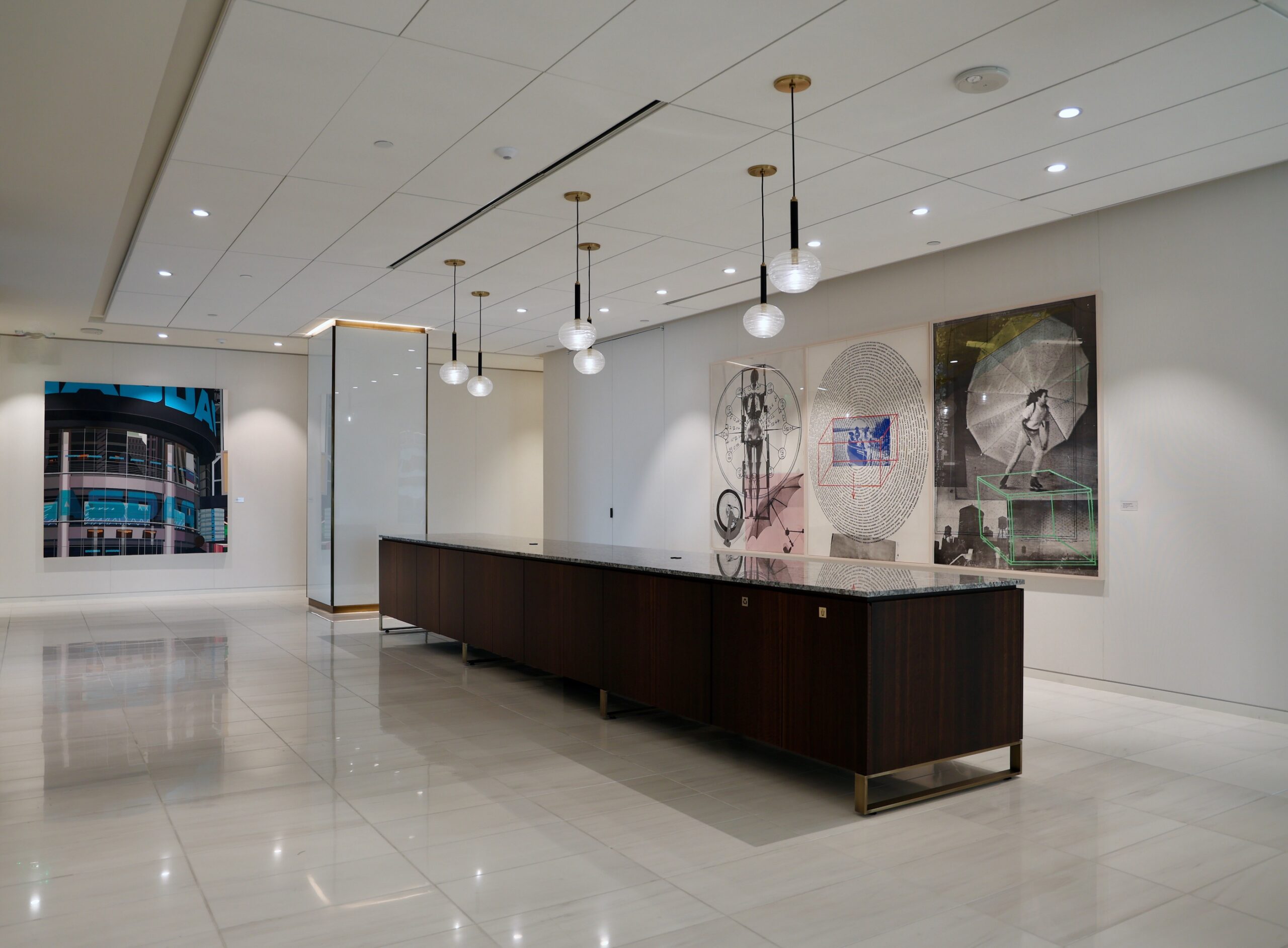
The partners still at Baker Botts — including Holmes, James Chenoweth, Tull Florey, Shalla Prichard, Doug Rayburn and Gerry Spedale — went unannounced until April, when firm management decided to enforce a 90-day hold under their partnership agreement.
“Obviously, she left; but it wasn’t easy for her,” said Chapman. “Any of those lawyers at Baker Botts, I think, took great pride in their firm.”
Holmes says her leaving did not break her relationship with Davidson. She says they remain close and still find a way to see each other when he is in Houston.
Davidson, after nearly 40 years at Baker Botts, has stepped back from his practice. He still keeps an office at Baker Botts and, for that reason, opted to deliver comments about their professional history through a firm spokesman. In full, his statement reads:
I have been a mentor to a lot of people at Baker Botts, and I enjoyed mentoring Hillary when she was at Baker Botts. She was very eager and quick to learn securities law, the capital markets practice, and how to serve the client in a way that moved the deal forward to all participants’ satisfaction. She was my closest collaborator during the MLP boom years following the great financial crisis. We had a great working relationship. I wish her continued success.
As co-chair of Gibson Dunn’s capital markets practice and co-partner-in-charge of the firm’s Houston office, her work since arriving at the firm has been not unlike her track record at Baker Botts. Her committee work is, in many ways, a literal continuance of her MLP work with Davidson, as she advises on MLPs in rollbacks in a variety of forms:
- Hess Midstream in its $6.2 billion acquisition of Hess Infrastructure Partners into an Up-C structure with Hess Corporation and Global Infrastructure Partners.
- BP Midstream Partners in its take-private of BP Midstream.
- Rattler Midstream in Diamondback Energy’s take-private of Rattler Midstream.
And in 2022, she advised Shell on a $1.96 billion deal that realigned it as a wholly owned subsidiary.
“I joke that there is a natural cadence to my career, which actually makes sense. As an associate and a younger partner, I would be raising capital or making my way into the boardroom [at MLPs]. And then, as a more senior partner, I’d be the one in the boardroom helping them figure out how to roll them down.”
And even before SpaceX, her capital markets transactions included some of the most significant in the market.
She represented:
- The underwriters in the $667 million Waterbridge Infrastructure IPO, a double listing with the NYSE and the NYSE Texas, the very first on the Texas-based exchange.
- Waste Management in multiple issues of more than $8.7 billion in notes.
- American Electric Power in its at-the-market equity program of more than $3.5 billion.
Overall, The Texas Lawbook‘s Corporate Deal Tracker, which follows corporate transactions by Texas lawyers, credits Holmes with 238 capital markets and M&A transactions since 2018 valued at $675.5 billion.

The View From the Cockpit
Holmes has the presence and confidence of someone who has found their exact place in life. She is animated and energetic, but gone is the nervous energy that betrays youthful ambition.
She and her husband, Matt, are now two careers, five law firms and two sons, 18 and 13, later.
Archer retired last year from his partnership at Orrick. As a fifth-generation Texan and, now 50, he’s decided to return to his family heritage — to run a ranch just north of Amarillo in Hansford County (county seat, Spearman), where his family settled as farmers and ranchers before Hansford County was founded in 1889.
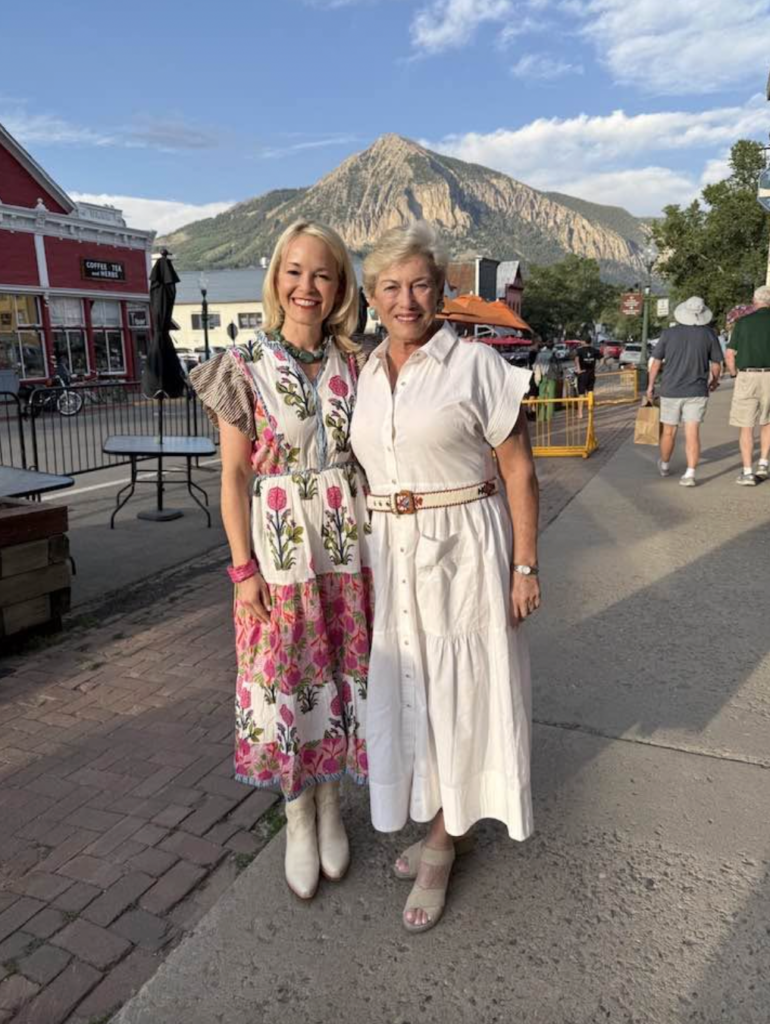
She and her family are avid skiers. They own a home in Crested Butte, Colorado, their refuge from the Houston hubbub and summer heat.
She is also, as noted, a runner of marathons. And she is training for the BMW-Berlin Marathon in late September, one of the Abbott World Eight marathons she’s yet to run.
“Running is my time for a kind of meditation,” she said. “I probably couldn’t sit still if you paid me.” She said she runs most often in silence. If there’s music or the soothing voices of NPR, she finds herself tuning everything out.
“It’s important for me to run in the morning. Before dawn if I can. There is the psychological element of doing something for myself before anyone is demanding something of me. In the calm of the morning or the still of the night — or whatever you want to call that twilight — in that void, you know, it’s just for me.”
But aside from the rigors of corporate law, one of the things she loves best is what others say she is the best at: working with corporate boards, or more specifically, the men and women who lead them. She loves the business of business.
“I love working with boards and directors in helping them think through opportunities and managing risks. It’s really fun to be in the cockpit of the corporation and then helping them understand how to navigate that landscape, what the options are and what the consequences are. And ultimately letting them make the decision but going alongside them.”
“I love that it’s very intellectual; that it’s very challenging. The hardest part of that is remembering. It requires a lot of patience and thoughtfulness and foresight and discipline, because you can’t be caught up …,” she said, then hesitates. “It’s not like deal lawyers doing deals.”
“Sometimes I have my deal lawyer hat on, and then sometimes I have my counselor hat on, and sometimes I have both at the same time.”
“In the counselor hat, we’re not solving necessarily for getting the deal done. We’re solving for giving the wise advice and outlining different options and consequences, risks, opportunities — even identifying new risks and opportunities that directors aren’t seeing. Bring them all out of the dark into the sunlight, bring clarity where there’s opaqueness so that these brilliant, experienced directors can make decisions for the corporation and then for, ultimately, the shareholders who they’re there to protect and do the best thing for.”
For that, she says, she sometimes tells them about her grandmothers, both of whom invested in equities on their own. Her mother’s mom in southern New Jersey, she says she tells them, “barely graduated from high school, never had a driver’s license, lived in the same house her entire life” after World War II. “But she was very smart with money, very disciplined. We would talk about the stock market at her folding kitchen table in her 600 square-foot house.”
“She would say, ‘I invested in this new MLP,’ and I would tell her, ‘I just worked on their IPO or did their bond offering.’ It was like these two worlds colliding.”
“I think about Grandma at the folding kitchen table, when I think about, ‘Who are we protecting? Who are we looking out for when we’re thinking prudently about what to do when we’re counseling, especially the independent committees, when we have a conflict situation — a related party transaction (with) a controlling shareholder or something like that.”
“So, it’s very rewarding when you see directors make smart decisions, especially on a conflicts committee or an independent committee that’s entrusted with a complex situation that they have to navigate, where their decision is of great consequence to the public who trusted them with their investment.”
She says that pitch is not lost on most of the clients she deals with, though a skeptical eye might suspect otherwise.
“There’s a balance to be made between doing what’s right for the corporation and for the shareholders. And that does require not over-lawyering things. But when people say that — ‘not over-lawyering things’, basically you have to be experienced enough and thoughtful enough and, frankly, good enough at this.”
By any standard, SpaceX was a BFD, a signature transaction that would change the trajectory of any lawyer. But for Holmes, the deal confirmed the choices she made.
She’s grateful for the SpaceX experience, to be sure. It has brought her the kind of signature recognition by which she’ll be measured by those who care about such things. Since that includes clients and prospective ones, potential lateral hires and top-tier recruits, it carries incalculable value for Gibson Dunn and Holmes herself.
“She’s made a huge difference not only for our Houston practice, our Texas practice, but for our national practice,” says her colleague Chapman. “She’s truly a national player now.”
Holmes knows she will be known for SpaceX for the rest of her career, and she’s fine with that, as an achievement she both claims and shares, name-checking not only her Gibson Dunn colleagues, but the long line of extraordinary, durable women that populate her past.
Her mother retired from V&E in 2013. She spends her spare time writing, with two mystery novels and a Substack column to her credit.
Pat says she knew nothing about her daughter’s work on the largest capital markets deal in history until the day it was filed.
“You couldn’t find her [Hillary] over those couple of months,” she recalls. “She was always traveling. She was never around. But then she sent me and Ashley a copy of the [SpaceX] registration statement and said, ‘This is what I’ve been doing.’”
Asked what she thought at the moment she realized what her daughter had been working on, she seemed uncertain how to answer — whether as a mother, as a lawyer or as a woman.
“I just … ,” she stops, bowing her head in emotion. “Where I’m coming from, I wasn’t sure they even wanted us there,” she begins to explain.
Pat tells a story about her earliest days as a lawyer, invited by the head of her section along with a male associate to a “fellowship luncheon” at Houston’s Coronado Club.
“He showed us the invitation. It said, ‘Come bring your bright young stars to meet the power-players of Houston.’ So, the three of us went, and we’re standing around. Nobody brings us a drink. People I know aren’t making eye contact.”
Pat realizes that she was the only woman, and that her presence was a problem. She offers to leave. The group left together to have their own lunch nearby.
“And that’s what it was like when we started. I couldn’t even go into these private clubs,” she said. “But that is the background I’m coming from.”
It was a snub that still clings alongside her memories of a young Hillary and Ashley outside her office on weekends.
“Then I see Hillary, the lead lawyer on SpaceX. It’s phenomenal, and that’s just one generation.”
“I’m tremendously proud,” she said.
As for Hillary, it is evidence of the hard work and talent she is surrounded by at Gibson Dunn and the wisdom of her move. She is expansive about the resources that allowed her to work on the project, and the license to tap the professional brains of lawyers at Gibson Dunn who, because of the confidential nature of the project, didn’t know why she was asking.
Asked about Musk, she becomes both expansive and elusive. He is, after all, a client.
But she points out that his fingerprints are all over the SpaceX prospectus.
“You see quotes from him throughout the prospectus, and that’s intentional, so that his voice comes through, so that investors in the company feel that they can hear his vision personally,” said Holmes.
She cites, in particular, “The Algorithm” — the five-step program by which Musk claims to guide his business. It’s described in the prospectus thus: Make the process less dumb. Delete unnecessary processes or parts. Optimize the parts or processes that remain. Accelerate the cycle time. Automate, but only after the other processes are completed.
“It changed the way I think about our process,” said Holmes. “I do believe we are more effective and efficient in how we execute on transactions, especially in capital markets, where it is a lot of it is process focused. And we’re using AI at a very high level now in our capital markets process.”
“I would say that all originates from Musk and from the way he’s built this company. That’s just in their DNA. It’s just the way they think,” said Holmes. “They’re like, ‘Why would we do it any other way? Let’s find the fastest, most efficient, most effective way to accomplish whatever it is we want to accomplish. No boundaries. No limits.’”
There have been no obvious boundaries or limits for Holmes, whether personal or professional. If there have been, she has pushed past them or pushed them aside. She says she feels that there has, all along, been a purpose. Her job was to discover it. And because she is the lawyer she is, Holmes will lay out the evidence: Leaving Texas for school. Meeting Matt, a Texan, at school. Returning to Texas to grow at Baker Botts. And finally leaving with friends and colleagues for Gibson Dunn to establish something of significance she can show her own children, just as her mother did, in the city where she was born.
“All of this, I think, is guided by God, and it’s all where you are supposed to go. That’s my own personal faith.”
And what, exactly, is left for an encore?
“This is my legacy. This will be it.”
Allen Pusey is The Lawbook’s senior editor. He can be reached at allen.pusey@texaslawbook.net.