© 2016 The Texas Lawbook.
By Mark Curriden
(Oct. 20) – Trinity Industries, which manufactured thousands of miles of guardrails lining U.S. highways, is in a legal war for its financial life and its reputation.
Two years ago today, an East Texas jury ruled that the Dallas industrial supply company violated the False Claims Act – a 153-year-old law that allows whistleblowers to sue companies that defraud the U.S. government. The jury found that Trinity failed to inform federal officials that it modified its highway guardrail systems but kept promoting the product as approved by the Federal Highway Administration.
The verdict resulted in a $663 million judgment against Trinity – the largest in the history of the FCA – and opened the door to a flood of lawsuits that seek billions of dollars in damages against the company.
 Most corporations facing such a wave of litigation race to reach a global settlement agreement in an attempt to limit their liability.
Trinity is taking a different approach. It is fighting back and fierce.
“We do not believe that we did anything wrong,” Trinity Chief Legal Officer Theis Rice said in an exclusive interview with The Texas Lawbook. “We do not believe that this litigation should have ever made it to trial because we think it should have been dismissed by the court.
“We decided that it was in the best interest of the company to fight and not to settle,” Rice said.
Trinity has hired scores of high-paid corporate litigators from nearly a dozen different law firms to appeal the FCA verdict to the U.S. Court of Appeals for the Fifth Circuit in a case that could impact whistleblower lawsuits for decades to come.

“The legal question here is simple: Did Trinity falsely promote their guardrails as being federally approved and did they make money from it,” said George Carpinello, a partner with Bois Schiller who represents Harman. “The jury heard the evidence and answered yes.”
Eleven state attorneys general, five former high-ranking U.S. Justice Department lawyers and a handful of pro-business, pro-consumer and pro-safety groups filed their own legal briefs taking sides in the case.
“No doubt about it, lawyers across the country are watching this case very closely,” says Fish & Richardson partner Tom Melsheimer, who is an expert in FCA litigation.
“Trinity has some very strong legal arguments and could very likely get this verdict reversed,” he said. “But the corporate defense bar must realize that if they do not win this case, then ‘Katy, bar the door’.”
Melsheimer and other legal experts say False Claims Act cases like this one are highly fact-specific.
Trinity is an 83-year-old industrial construction supply company headquartered on I-35 just north of downtown Dallas. The firm makes barges, railroad cars, storage and distribution containers, guardrails for highways and several other industrial and infrastructure-related products.
Despite annual revenues of $6.4 billion and employing more than 24,000 people, Trinity maintains a low corporate profile and is barely known in its hometown.
The company faced very few product-related lawsuits – and almost none against its guardrails – until March 2012, when Joshua Harman, a competitor-turned-whistle-blower, sued under the FCA.
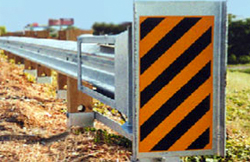
Harman claimed Trinity shrank its popular ET-Plus highway guardrail system in 2005 from five inches wide to four inches in order to save $50,000 a year in costs.
“Even though Trinity secretly modified the internal dimensions of the ET-Plus, and even though Trinity admitted that it needed FHWA approval for those changes, which it did not get, Trinity continued to certify to the states after 2005 that the ET-Plus it was selling had been tested and approved in accordance with [FHWA] standards,” Harman’s lawyers argue in court documents.
“The changes to the ET-Plus had a devastating impact on its performance,” Harman’s legal briefs state. “The head often locks up when hit, spearing cars – in some cases clear through the car – killing or maiming occupants.”
Trinity countered that its guardrails met industry standards and passed all the appropriate tests.
“We have an 80-year history of manufacturing market-leading products,” Rice said. “Litigation against our guardrails was rare. Keep in mind, the product is not designed to stop accidents. It is designed to reduce the impact of crashes.
“The plaintiff, who is anything but a whistle-blower, … was able to sell a story that simply was not true,” said Rice, who has worked in the Trinity legal department for 25 years.
Trinity argued that its failure to tell FHWA about its changes to the guardrails was unintentional and immaterial – pointing out that the FHWA eventually approved the smaller rail and never stopped reimbursing state and local governments when they purchased the ET-Plus.
“That alone should have defeated liability because any alleged false statement was wholly immaterial to the government’s payment decision,” Gibson, Dunn & Crutcher partner James Ho, who represents Trinity on appeal, stated in court documents.
After five days of trial in a federal courtroom in Marshall, a jury slapped Trinity with a $175 million verdict on Oct. 20, 2014.

As a result of the East Texas verdict, Trinity is now buried in litigation stemming from the fraud allegations. Four class actions and nine state false claims act cases – each one also demanding tens-of-millions of dollars or more – have been filed against the firm. A city in Canada also seeks $500 million.
About two-dozen individuals and families sued, claiming the guardrails are unsafe and either killed or maimed their loved ones. The U.S. Department of Justice slapped Trinity last year with a subpoena for records related to its guardrails. Shareholders levied two federal securities class actions against the company.
Instead of retreating, Trinity doubled down.
“The decision to fight was an easy one,” Trinity Deputy General Counsel Sarah Teachout said in an interview with The Texas Lawbook. “We are fighting aggressively because of our core belief that we did not commit fraud.”

Rice and Teachout hired Gibson Dunn, a national law firm that had just received widespread praise for helping oil giant Chevron escape a $7 billion judgment in an environmental dispute in Ecuador, to fight the Harman case and the three state class action cases.
Trinity hired Sidley Austin partners Yvette Ostolaza and Michelle Hartmann in June 2015 to represent the company in the securities class action cases in Dallas and Chicago-based Barlit Beck Herman to fight the products liability lawsuits. A team of lawyers from Roach & Newton and Alexander Dubose Jefferson & Townsend also are representing Trinity.
On the plaintiff’s side, New York litigation powerhouse Bois Schiller & Flexner, Dallas-based McKool Smith and Ward & Smith of East Texas are leading the charge for Harman.
None of these lawyers are cheap. Independent legal analysts estimate that each side has invested between $25 million and $40 million in legal fees and expenses in the litigation so far.
“Our strategy in hiring outside counsel was simple: what are our legal needs and who are the lawyers who have strengths and experience in those areas,” Rice said. “We hired the best lawyers and, yes, litigation is expensive. The investment is well worth it.”
Barry Barnett, a partner at Susman Godfrey in Dallas, said Trinity is taking the “shock-and-awe” approach.
“By hiring all these terrific lawyers, Trinity is showing how important this is to them as a matter of principle,” Barnett said. “The danger is that the Fifth Circuit judges may feel that hiring all these lawyers is too much. It can feel like ganging up sometimes.”
Trinity posted a $686 million bond with the federal court allowing it to appeal to the Fifth Circuit.

“The judgment cannot stand,” Ho stated.
Trinity has garnered high-profile support in its bid to have the case dismissed.
Five former high-ranking Justice Department officials in the Clinton, Bush and Obama administrations told the Fifth Circuit that “the government got what is bargained and paid for.” The verdict against Trinity was “gratuitous” and improper.
“The [FCA] can be employed abusively to the detriment of the government, the public interest and private parties,” the DOJ officials argue. “This case illustrates such abuse.”
Eleven states, including Texas, Oklahoma and Louisiana, told the Fifth Circuit that the verdict favoring Harman “violates the letter and spirit” of the FCA and permits the plaintiff “to commandeer the FCA for his personal advantage.”
“The potential consequences extend far beyond this case,” the states argue.
Melsheimer said plaintiffs can and should be able to win FCA lawsuits even when the federal government sides with defendants such as Trinity because federal officials may be part of the fraud or at least humiliated that the fraud occurred under their watch.
The better argument for Trinity, according to Melsheimer, is that the information the company failed to provide FHWA was immaterial or irrelevant to the safety of the product.
“The false statements must be ‘material’ or capable of influencing the decision about approving the guardrail,” he said. “If the facts are as Trinity states, then Trinity has a very powerful and probably winning argument.”
The question for the Fifth Circuit, according to legal experts, is whether the decision of materiality should be made by a judge or a jury.
“Trinity has given Fifth Circuit judges a few reasons to reverse the decision, but Trinity should tread carefully in arguing that its non-compliance and failure to report is no big deal,” Barnett said. “Trinity could very easily get three appellate judges who become as offended by the argument as the trial court did.”
While Trinity argues the judge should have stopped the case before it went to trial, Harman’s lawyers say the jury already heard the evidence and made a decision.
“If it wasn’t for whistleblowers, great trial lawyers and independent juries, there would be no honesty in government contracts,” said Dallas trial lawyer Sam Boyd, an expert in FCA litigation. “There was a jury trial and Trinity had great lawyers that presented their side of the case.
“Whistleblowers already face a huge uphill battle because judges look for backdoors to throw out large-dollar victories,” Boyd said.
The Fifth Circuit is expected to hear oral arguments in the case in December, but Trinity’s hardball legal strategy is already experiencing success.
Judges have stayed the three class actions and nine state False Claims Act cases until the Fifth Circuit rules. Trinity cooperated with the Justice Department, which officially closed its investigation on Aug. 18 without bringing any charges.
In March and April, two of the products liability lawsuits – one in Dallas and one in Virginia – were dismissed.
Trinity’s biggest courtroom win, however, came in July in Wisconsin, where LaCrosse County filed a class action 17 months earlier against the Dallas company. Potential damages were in the tens-of-millions of dollars.
“We were very aggressive in discovery,” said Gibson Dunn partner Brian Robison, who led the defense for Trinity. “We served open-records requests on every county in Wisconsin. The Court awarded us attorneys’ fees on a discovery dispute.”
In mid-July, lawyers for LaCrosse Co. called Trinity’s lawyers saying they were interested in a “walk away” agreement in which they would dismiss the case with prejudice.
“In my 20 years of practicing law, I’ve never seen anything like it in a class action before a ruling on class certification,” Robison said.
Lawyers in the Harman case are not likely to fold so easily, especially with a $663 million confirmed judgment under their belt.
Legal experts agree that most of the other cases pending against Trinity will rise or fall based on the Fifth Circuit’s decision – a bet that Trinity seems ready to make.
“We believe our position is strongly supported by a clear body of law and evidence and look forward to the Fifth Circuit deciding our appeal,” Rice said.
Guardrail photos courtesy of Trinity Highway Products
© 2016 The Texas Lawbook. Content of The Texas Lawbook is controlled and protected by specific licensing agreements with our subscribers and under federal copyright laws. Any distribution of this content without the consent of The Texas Lawbook is prohibited.
If you see any inaccuracy in any article in The Texas Lawbook, please contact us. Our goal is content that is 100% true and accurate. Thank you.